Romania’s inflation is still the highest in the European Union, and the persistence of price pressure is forcing the central bank to warn that relief may not come quickly even after fiscal tightening slows the economy.
Romania inflation stays highest in EU at 7%
That matters because Romania is now paying for a growth model built on strong consumption, loose price dynamics and a widening policy squeeze. With annual inflation at 7% in the latest EU comparison and 6.94% in October on the consumer-price measure, the country is again the bloc’s outlier just as the National Bank of Romania has lifted its year-end inflation forecast to 6.1% and said in October it expects inflation to overshoot that level by year-end on dearer fuel, energy, commodities and a weaker currency.
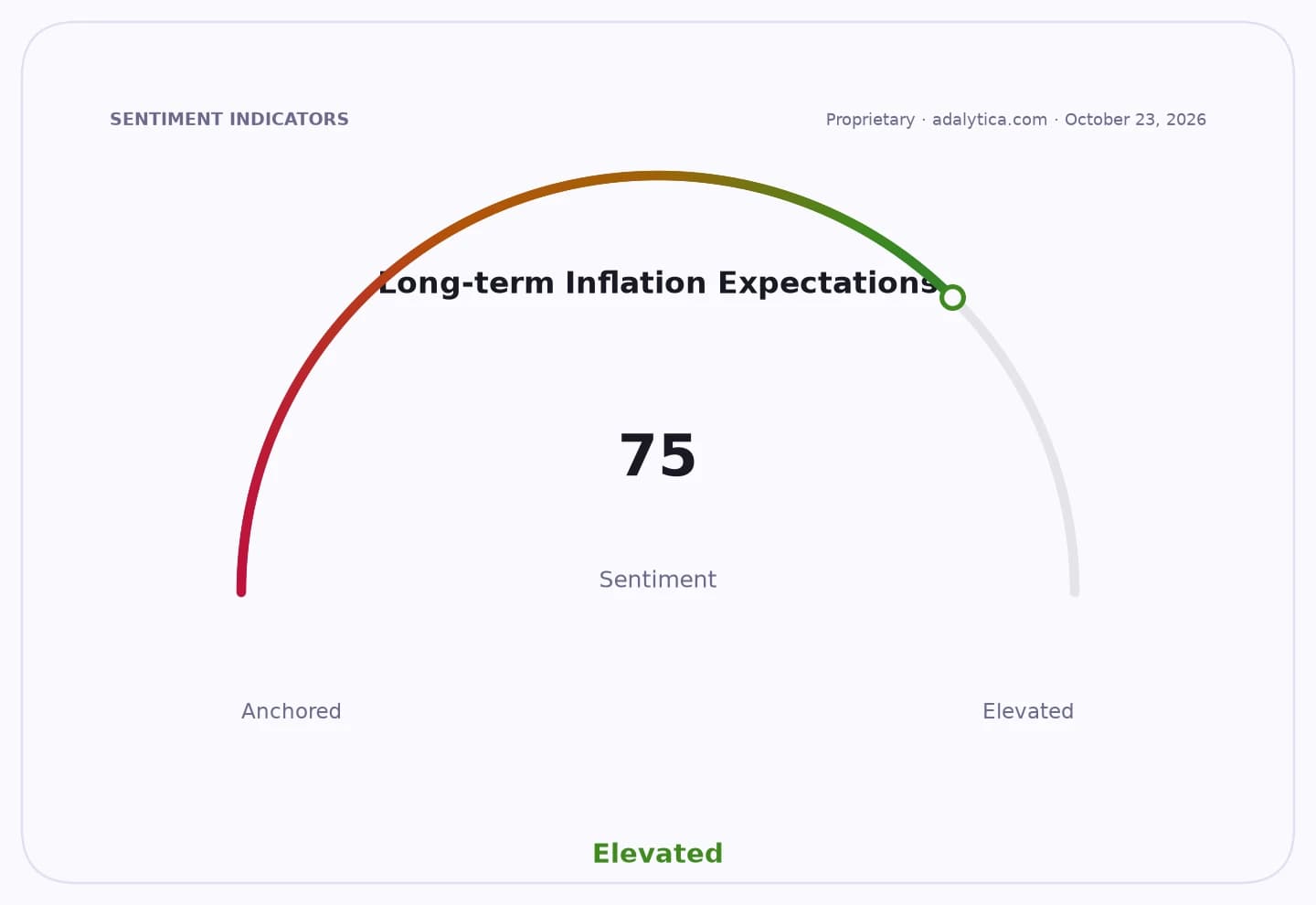
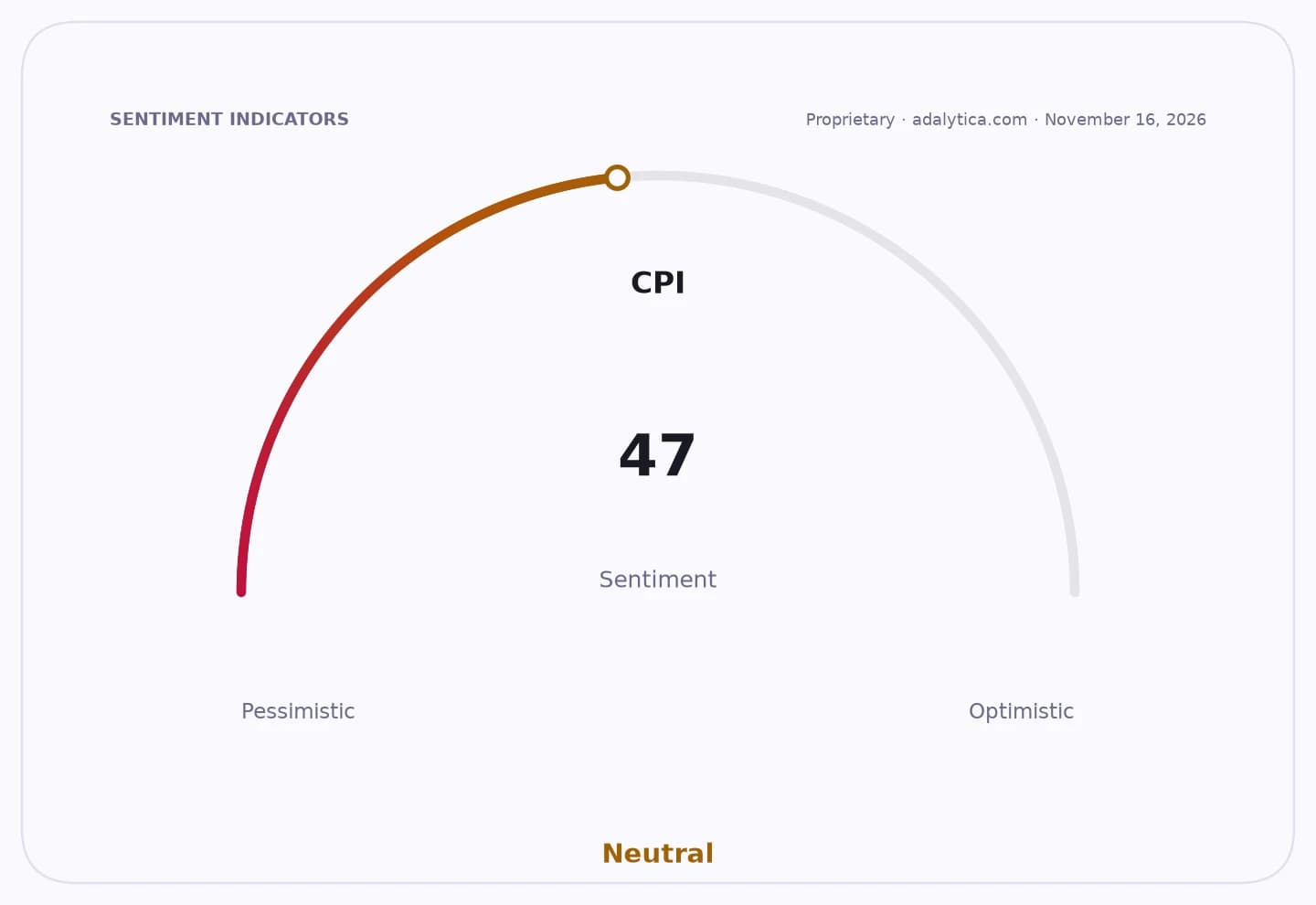
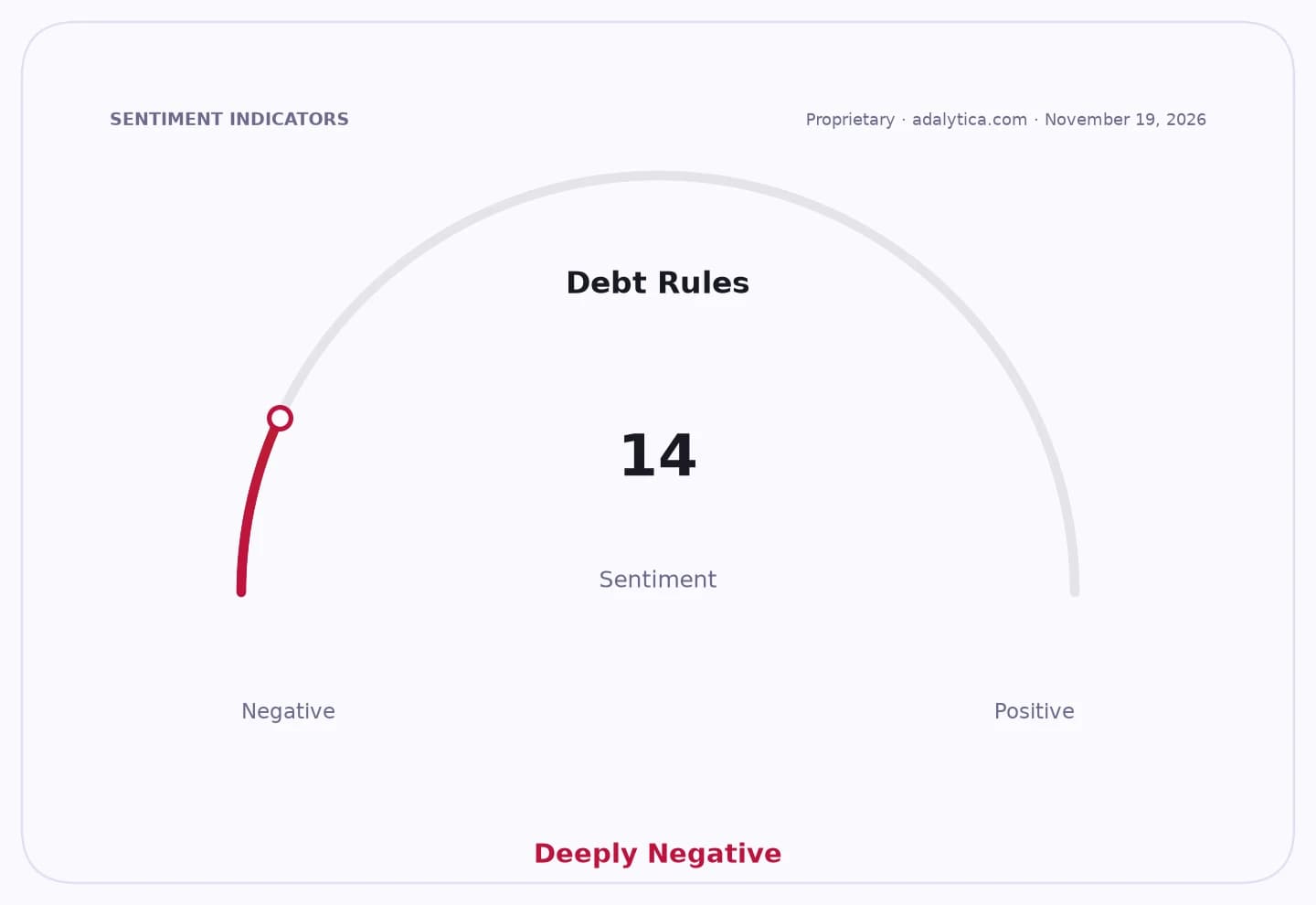
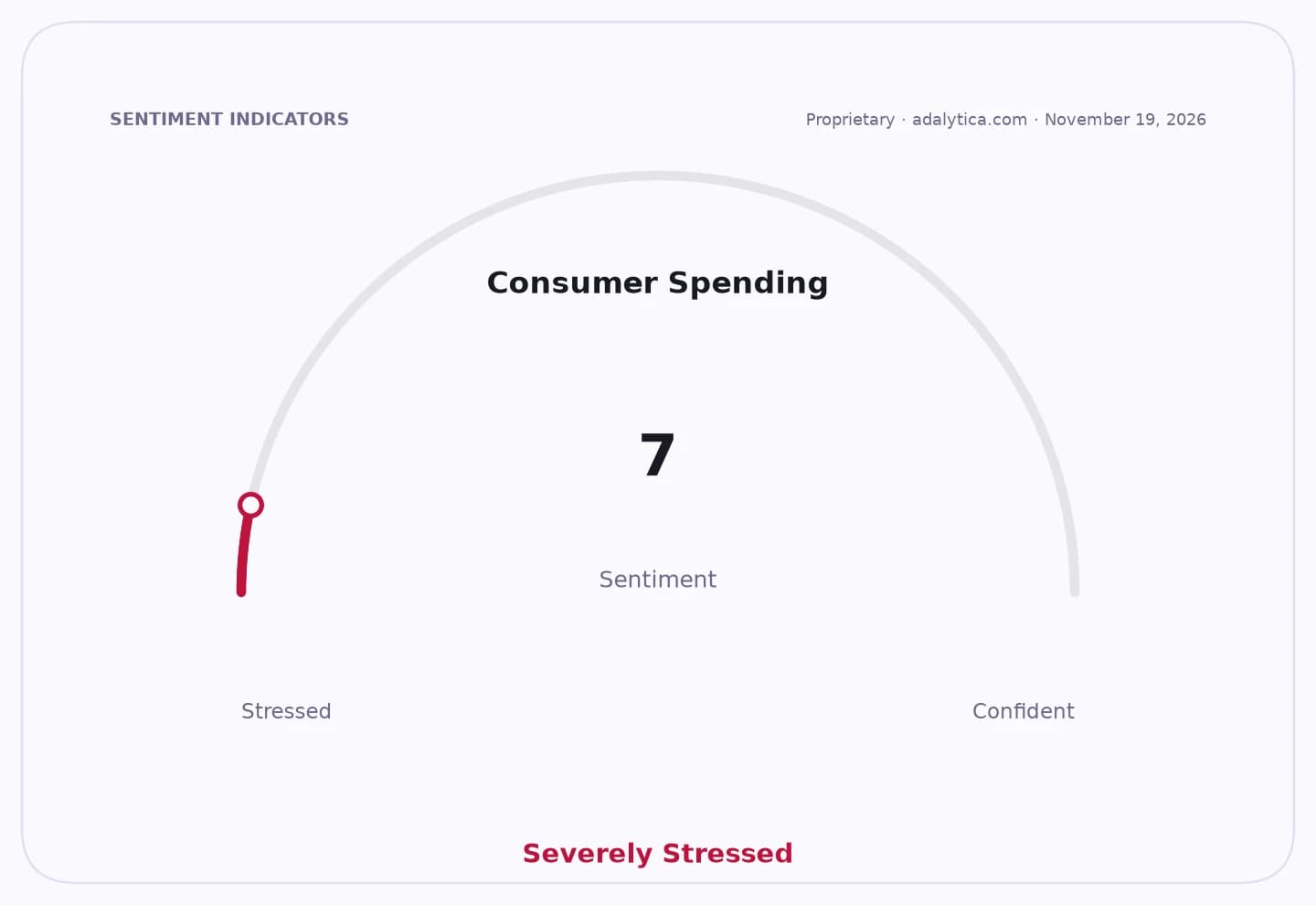
Sentiment Indicators
For investors, the message is clear: Romania remains a high-carry, high-volatility market where nominal yields can look attractive but real returns are being eroded by stubborn inflation. The pressure is especially acute for domestic consumers, whose purchasing power is being squeezed by food, non-food and service costs, and for policymakers trying to engineer a soft landing while keeping bond markets calm.
The latest EU data show Romania well ahead of the pack. While Sweden posted 0.6% annual inflation and the Czech Republic and Denmark 2.1% each, Romania was followed only by Lithuania at 6.1% and Bulgaria at 5.9%. Compared with September, Romania’s rate actually rose from 6.5%, underscoring that this is not a one-month aberration but a continuing deterioration relative to the rest of Europe.
The domestic breakdown is more troubling. Statistics office data showed annual inflation at 6.94% in October, with services up 11.23%, non-food goods 7.66% higher and food prices rising 3.07%. Month on month, consumer prices rose 0.82%, while the EU-harmonized measure also showed a 7% annual rate. Those readings are consistent with an economy where wage gains and imported costs are feeding through unevenly, even as higher taxes and fiscal consolidation cool demand.
That combination is why Romania is likely to enter 2027 from a weaker position than many investors expected. The central bank now sees inflation ending 2026 at 6.1%, up from 5.5% previously, and still only easing to 3.4% by the end of 2027. In other words, this is a multi-quarter disinflation story, not an imminent break lower.
Markets are already pricing some of that strain. The EUO euro bear fund has climbed to 33.86, with its 50-day moving average above the 200-day average and RSI readings around 70, a sign the euro has been under pressure even as U.S. yields remain elevated. Romanian inflation, by reinforcing the case for tighter local conditions and a weaker growth profile, keeps pressure on domestic assets and raises the premium investors demand for holding them.
The deeper investment thesis is that high inflation in Romania is not just a macro statistic — it is a capital-allocation filter. It supports nominal interest rates and government paper yields, but it punishes consumer-facing equities, raises funding costs for borrowers and keeps the central bank constrained. Until price pressures cool decisively, Romania will remain one of the region’s less forgiving markets, even if growth stabilizes later in 2027.
| Entity | Gains | Losses |
|---|---|---|
| Romanian government bond holders | ▲higher nominal yields | ▼inflation-adjusted returns |
| Local consumers | ▲— | ▼purchasing power |
| Romanian exporters | ▲weaker currency tailwind | ▼input-cost pressure |
| Banks and rate-sensitive lenders | ▲wider nominal spreads | ▼credit stress, slower demand |