Romania is preparing a targeted energy voucher scheme for vulnerable households, funded primarily with European money, as the government moves to blunt the impact of high power and gas bills ahead of winter.
Romania plans EU-funded energy vouchers for households
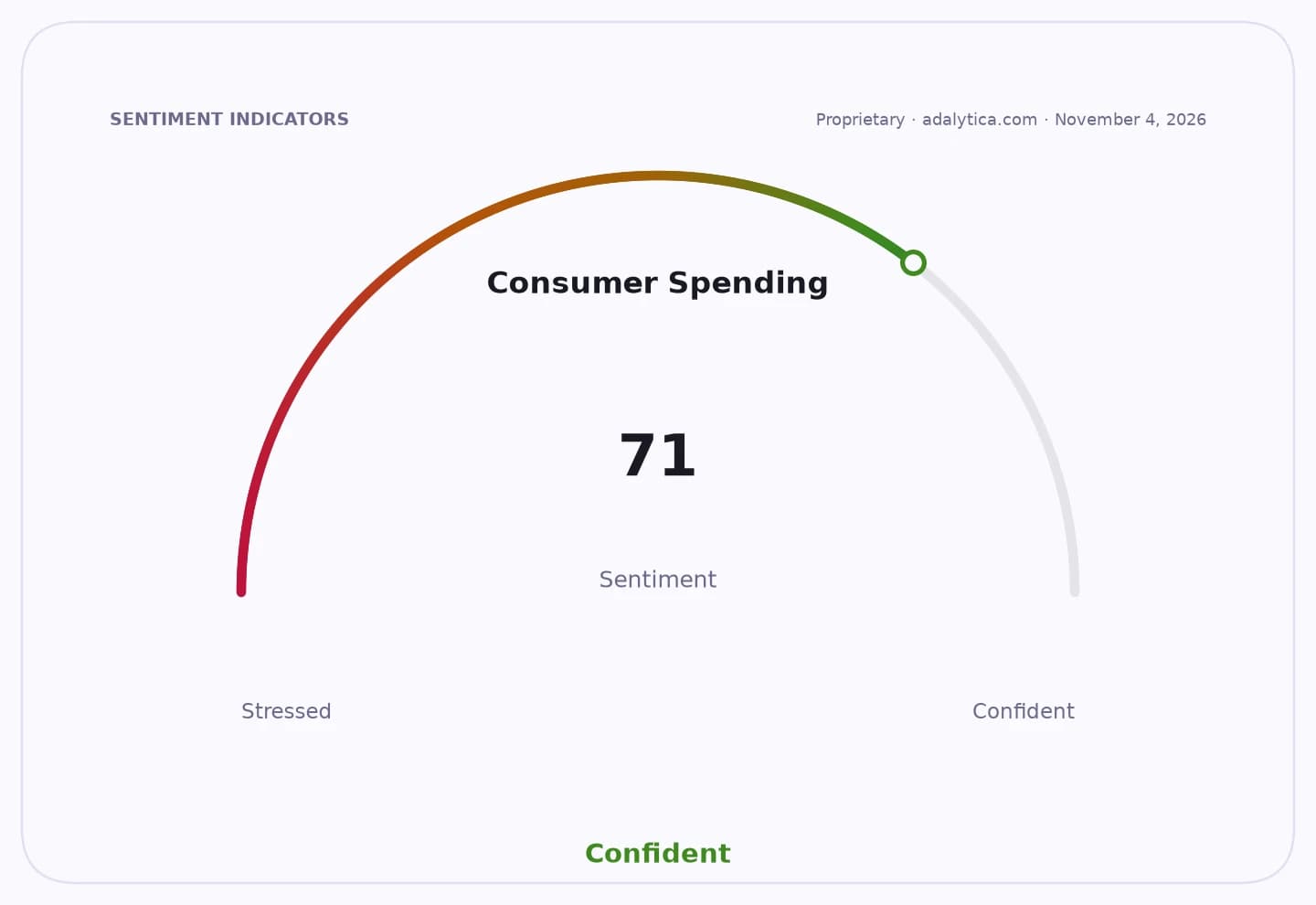
Consumer Spending
The plan, announced after Prime Minister Luca Niculescu met energy producers, gas suppliers and major industrial users, would deliver aid through support cards and be sized according to budget resources available, government spokesman Dan Cărbunaru said. That makes the program more than a social measure: it is a test of how far Bucharest can cushion consumers without widening the deficit or breaking EU state-aid rules.
Sentiment Indicators
Officials said the state wants to prioritize instruments financed from EU funds and those with no budgetary impact, a sign Romania is trying to keep support compatible with fiscal consolidation commitments. The Finance Ministry will assess each proposal for its budget hit, while a new task force led by the head of the Chancellery, Oleg Ungureanu, will coordinate energy, finance, economy, labor, environment and regulator ANRE.
The scheme comes as the government confronts a broad affordability problem. ANRE data presented at the meeting showed Romania has more than 10 million household consumption points, with about 4.7 million using less than 100 kWh a month. The World Bank has also flagged significant energy poverty in the country, giving the government political cover to move fast on a targeted rather than universal package.
For investors, the bigger issue is whether the state can keep households protected without distorting the sector’s economics. Support cards for vulnerable consumers could help stabilize payment behavior and limit arrears for suppliers, while also easing pressure on retail utilities facing politically sensitive pricing. The move also suggests continued reliance on public support even as Romania tries to normalize the market after a sharp rise in energy costs over the past year.
The government is also looking beyond direct bill help. The Environment Fund could provide up to 400 million lei for households buying and installing energy storage systems, a push that could lift distributed storage demand and support the domestic clean-energy supply chain.
On the supply side, officials said gas storage has reached 85%, while stronger flows on the Danube are helping nuclear units 1 and 2 at Cernavoda operate normally. Romania also expects 2,000 MW of electricity storage capacity by year-end, with more support from EU-backed schemes under the PNRR and the Modernization Fund.
For industry, the task force will review emergency needs for large consumers and may update four-year-old support schemes, but only within the budget envelope and EU aid rules. The next market test will be how quickly Bucharest turns the voucher proposal into an approved program and whether Brussels signs off on the financing model before peak winter demand.
| Entity | Gains | Losses |
|---|---|---|
| Vulnerable households | ▲Lower winter bills | ▼Less exposure to price spikes |
| Romanian government | ▲Political relief | ▼Budget flexibility |
| Energy suppliers | ▲Improved bill collection | ▼More state oversight |
| Large industrial users | ▲Chance of updated support | ▼Slower policy relief |