Petrișor Peiu accused Romania’s Niculescu-led government of leaning on inflation to boost budget revenues, warning that a fresh price surge could push consumer inflation above 10% and undermine purchasing power heading into 2027.
Romania inflation debate over budget revenues
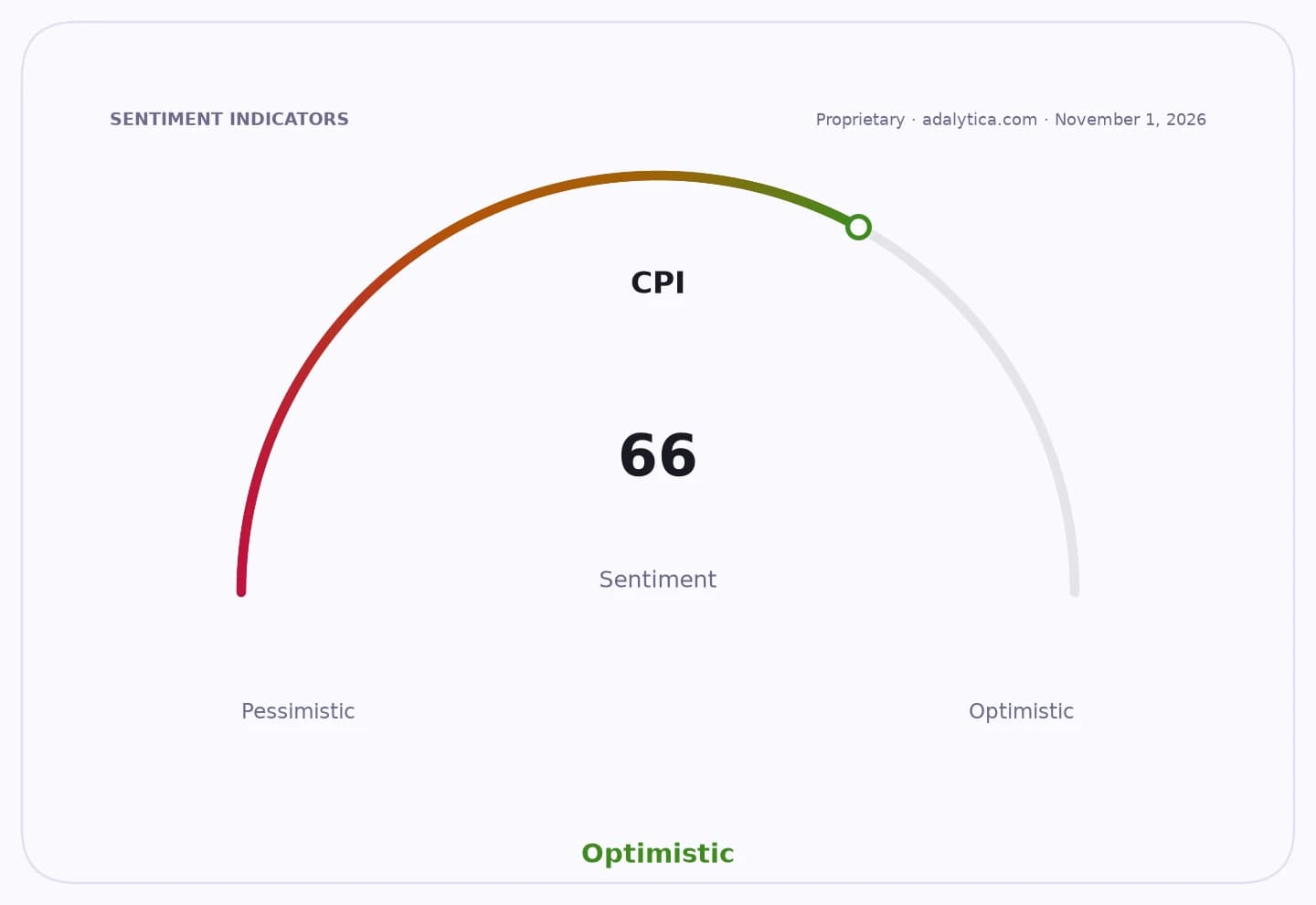
CPI
The AUR senator said industrial prices are already rising 14.9% year on year, a pace he argues will feed through to retail goods and services and force an inflation rate in double digits by the end of this year and into the first quarter of next year. For investors and policymakers, that matters because faster inflation can temporarily lift nominal tax receipts while eroding real household incomes, complicating budget planning and raising the risk of policy missteps.
Sentiment Indicators
CPI
Peiu’s comments land at a sensitive moment for Romania, where inflation remains a central economic risk even as the government tries to stabilize public finances. He argued that the cabinet is using optimistic forecasts from the National Forecast Commission to balance the budget, while relying on higher prices to reduce the debt burden as a share of GDP.
The criticism also highlights a broader market problem: when inflation runs ahead of wage growth and pension indexation, domestic demand weakens and companies face higher costs without necessarily passing them on fully. Peiu said the government’s promised 7.3% pension indexation would barely offset recent and expected price gains, leaving retirees with only a fraction of the inflation shock covered.
The dispute underscores how inflation is now shaping Romania’s fiscal narrative as much as its monetary one. If price pressures do stay elevated, the government may get a short-term revenue boost, but bond investors, consumers and businesses would face a less favorable mix of weaker real growth, tighter household budgets and a budget plan built on assumptions that could quickly prove too optimistic.
| Entity | Gains | Losses |
|---|---|---|
| Romanian government | ▲Higher nominal tax revenues | ▼Real credibility, household trust |
| Households and pensioners | ▲None | ▼Purchasing power, real incomes |
| Businesses | ▲None | ▼Costs, competitiveness |
| Bond investors | ▲Short-term fiscal improvement if inflation boosts revenues | ▼Longer-term policy risk, budget slippage |