Romania’s inflation debate is turning into a tax debate, with political warnings that elevated prices could be used to quietly increase the burden on households already squeezed by food, energy and other essentials.
Romania Inflation Debate Turns Into Tax Debate
CPI
Marius Lulea, founder of the nationalist AUR party, said the country will face high inflation for the next two years and argued that it will be used to “overtax the population,” a charge that speaks to a broader fear in Eastern Europe: when nominal prices rise, governments can lift revenues without formally raising headline tax rates.
Sentiment Indicators
That matters because inflation is already doing part of the fiscal work. When prices rise, tax receipts from consumption, wages and profits tend to increase in nominal terms even if real activity is weak. For governments under budget pressure, that can make inflation an attractive, if politically sensitive, way to preserve revenue. For households, however, the effect is the opposite: higher nominal incomes are often slower to adjust than prices, leaving disposable income under pressure and prompting complaints that inflation is functioning like a stealth tax.
The warning also lands in a wider regional context where inflation-linked policy adjustments are becoming more visible. In Iași, local authorities are planning to index taxes to inflation in 2027, a move that effectively raises the burden even if officials avoid framing it as a tax hike. That pattern is likely to resonate in Romania, where voters remain sensitive to the real value of pensions and salaries after years of price shocks.
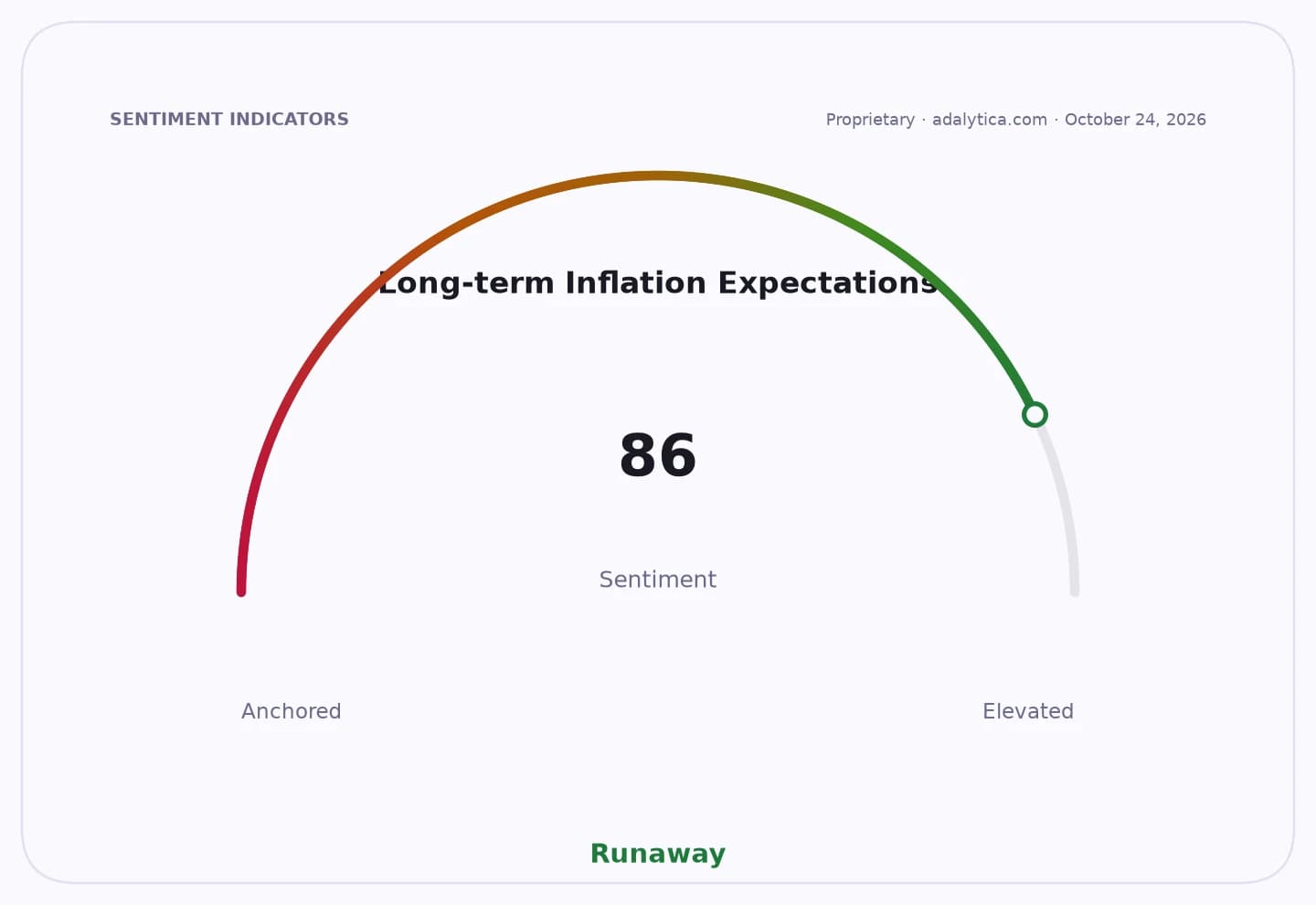
The macro backdrop gives the political message some bite. Inflation expectations remain elevated in markets even as long-term confidence in central bank price stability has weakened. U.S. inflation-linked Treasury ETF TIP has been trading above its 50-day moving average, while the long-duration Treasury ETF TLT has also firmed in recent sessions, a sign investors are still hedging against policy uncertainty and growth risks rather than assuming a clean return to low inflation. Adalytica’s Long-Term Inflation Expectations gauge remains in a fear reading, underscoring how fragile confidence can be when households and investors think prices may stay sticky.
For investors, the issue is less the rhetoric than the distributional effect. Persistent inflation tends to support nominal revenues for governments and some companies with pricing power, but it hurts consumers, wage earners and businesses that cannot pass on costs. It also complicates monetary policy, because central banks are forced to choose between defending growth and containing second-round price pressures. In bond markets, any sign that inflation is becoming politically embedded can keep term premiums elevated and limit the upside for sovereign debt.
The bull case is that inflation may remain high enough to sustain fiscal revenues without an outright recession, giving policymakers room to avoid more visible tax increases. The bear case is that households conclude they are being taxed twice — once through prices and again through policy — which would deepen distrust in institutions and intensify pressure on consumer spending.
For Romania, the next two years will likely hinge on whether inflation becomes a temporary fiscal cushion or a durable drag on real incomes and political stability. If prices stay sticky, the argument over taxes may prove less about legislation than about how much of the inflation burden the state is willing to pass through to voters.
| Entity | Gains | Losses |
|---|---|---|
| Romanian government | ▲Higher nominal tax receipts | ▼Public trust |
| Households/pensioners | ▲None | ▼Real purchasing power |
| AUR and opposition critics | ▲Political leverage | ▼None |
| Inflation-protected assets | ▲Better demand | ▼Nominal cash savers |