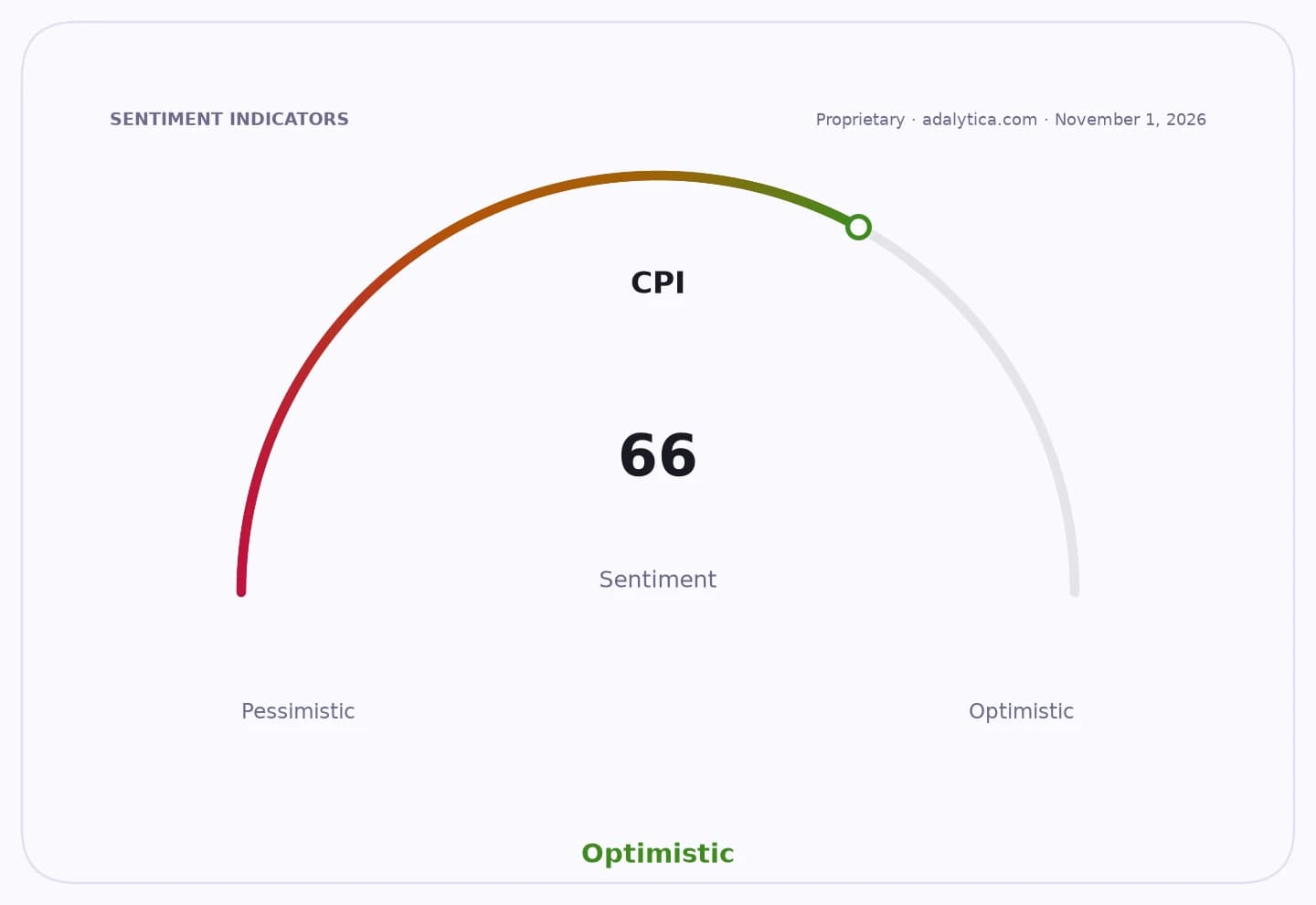
Romania’s inflation rebound to 6.61% in September has sharpened the gap between prices and pay, leaving households with less purchasing power just as economic growth slows and fiscal risks rise.
Romania inflation hits 6.61% as real wages fall
Wages
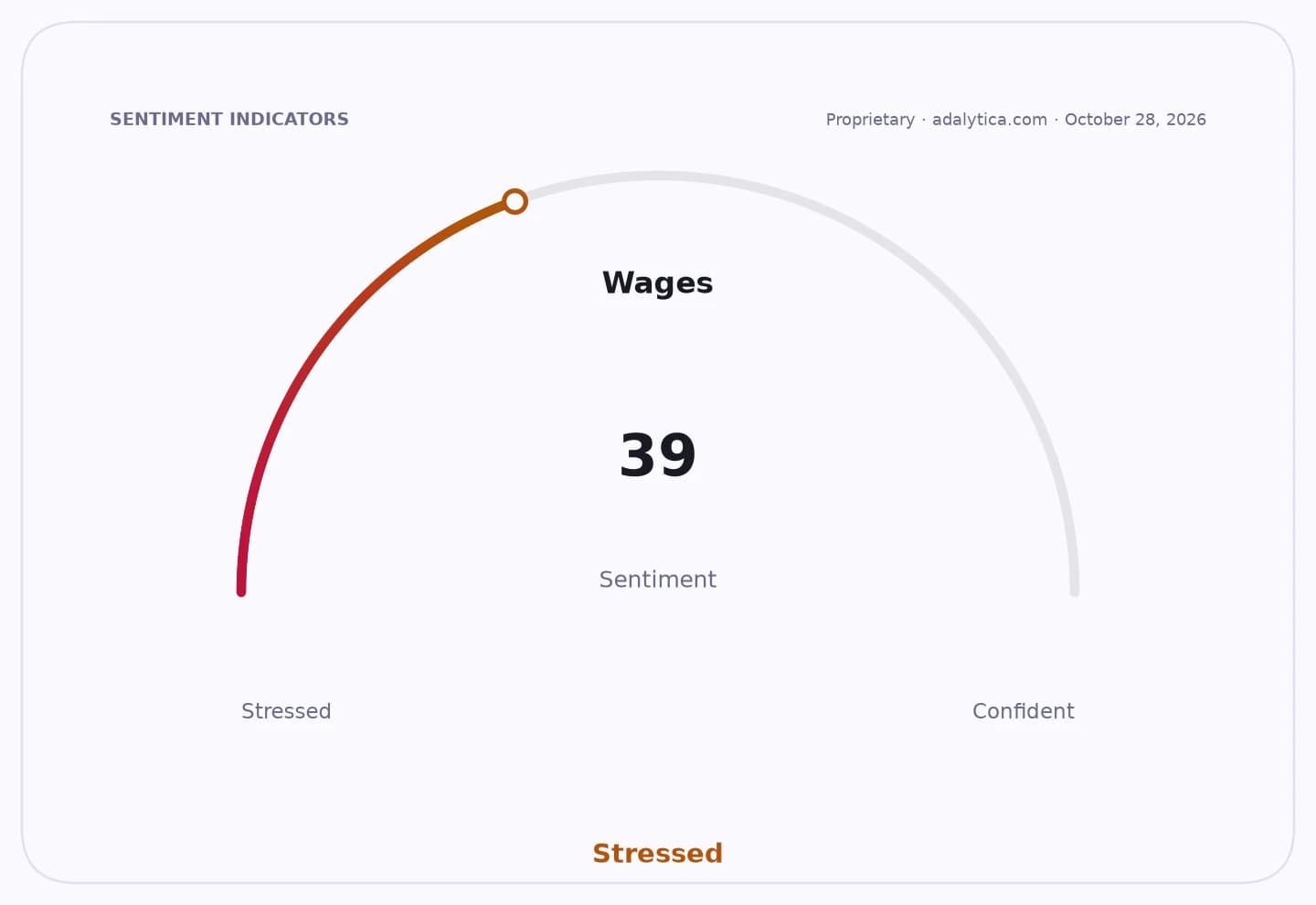
The most important economic shift is not simply that consumer prices are still climbing, but that wage growth has slipped below inflation for several months, eroding real incomes and making it harder for domestic demand to support the economy. That matters because Romania is already contending with one of the European Union’s widest budget deficits, meaning weaker consumption can hit tax revenues while also limiting corporate sales and hiring.
Sentiment Indicators
Services are doing most of the damage. Prices in that category were 11.12% higher than a year earlier in September, far outpacing the 7.06% rise in non-food goods and the 3% increase in food, according to the National Institute of Statistics. Services are sticky because they are driven heavily by wages, rents and other local costs, so they tend to fall slowly even when headline inflation eases. For households, that means the costs that are hardest to avoid — transport, housing-related spending, repairs and other recurring bills — are still rising fastest.
That dynamic is especially painful in an economy where nominal pay is no longer keeping pace. The average net salary rose 5.6% year on year in August, below inflation, so real wages fell. Economist Valentin Tătaru said the key measure is not nominal income but income adjusted for inflation, and that there are not yet clear signs real wages have returned to positive territory. In practical terms, that means consumers may be earning more lei on paper while being able to buy less each month.
The mismatch is also a warning sign for the broader economy. Softer household spending reduces companies’ ability to pass through higher costs, compressing margins and making firms more cautious on hiring and investment. Tătaru said persistent demand weakness could force companies to accept lower profits, delay capital spending or move more carefully on recruitment. Romania is already seeing signs of a cooler labour market through fewer employees in the economy, though he described it as an adjustment rather than a sharp deterioration.
For investors, the story points to a delicate balance. If inflation remains sticky in services, the central bank has less room to ease financial conditions quickly, while bond markets must also digest Romania’s heavy fiscal slippage. If wage growth continues to lag prices, consumption-led sectors face slower revenue growth and weaker pricing power. That would be a headwind for retailers, consumer discretionary names and domestic banks tied to household credit demand.
The bull case is that inflation could continue to decelerate if services inflation cools, core price pressure fades and wage growth stabilises above inflation again. The bear case is that sticky services inflation, external energy shocks and fiscal stress keep real incomes under pressure into 2027, prolonging weak consumption and leaving policymakers with little room to maneuver.
For now, the message for Romanian households is stark: lower inflation alone is not enough. Real purchasing power will improve only if wages start rising faster than prices and services inflation eases in a sustained way.
| Entity | Gains | Losses |
|---|---|---|
| Romanian households | ▲Higher real wages | ▼Services-heavy budgets |
| Consumers in general | ▲Lower inflation, eventually | ▼Current purchasing power |
| Domestic firms | ▲More stable demand if wages recover | ▼Margins and hiring now |
| Romanian government | ▲Easier social pressure if inflation slows | ▼Tax receipts and fiscal room |