Romania’s central bank added a sizable cushion in August, lifting foreign exchange reserves to 64.865 billion euros as fresh external inflows, including 2.5 billion euros from the EU’s SAFE defense instrument, strengthened the country’s ability to absorb shocks.
Romania reserves rise to 64.865 billion euros in August

That matters because reserves are the first line of defense for an economy like Romania’s when markets turn nervous, capital flows weaken or the currency comes under pressure. A larger reserve pool gives the National Bank of Romania more room to smooth volatility in the leu, reassure creditors and keep financing conditions from tightening too abruptly. For investors, that usually means lower near-term currency risk, steadier sovereign funding and a better backdrop for Romanian assets than if the reserve buffer were shrinking.
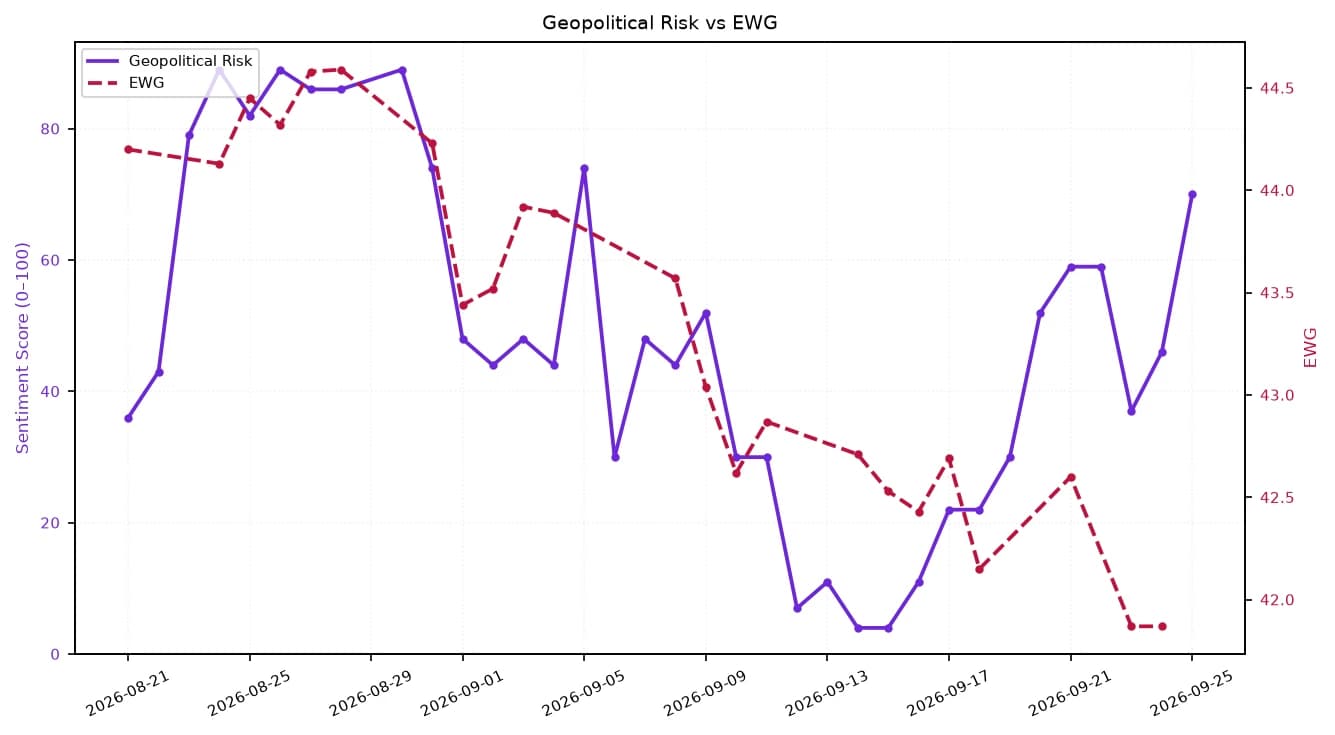
Sentiment IndicatorsⓘProprietary · adalytica.com · September 1, 2026
This is a snapshot — live sentiment, awareness and momentum for 130+ markets update continuously in the dashboard.Open AlphaPulse
The August increase of 1.635 billion euros came as inflows outweighed payments, with the SAFE transfer doing much of the heavy lifting. SAFE is not just another budget line: it is external financing tied to defense and infrastructure, which helps support public investment without forcing the state to rely as heavily on domestic borrowing. In practical terms, that can ease pressure on local yields and preserve fiscal flexibility at a time when governments across Europe are juggling security spending and slower growth.
The numbers also fit a broader story investors should not ignore. Romania sits at the intersection of higher defense needs, regional security concerns around the Black Sea and the need to keep macroeconomic stability intact. Stronger reserves help the central bank manage that balancing act. They do not eliminate risks, but they make it easier to handle them.
For long-term investors, the takeaway is straightforward: rising reserves are a quiet positive for Romania’s macro profile. They support confidence in the currency, reduce tail risk and give policymakers more breathing room as they finance security and infrastructure priorities. That is the kind of backdrop worth watching, especially for investors looking at Romanian sovereign debt, local banks and companies tied to domestic demand.
| Entity | Gains | Losses |
|---|---|---|
| National Bank of Romania | ▲Larger shock absorber | ▼Less immediate pressure |
| Romanian government | ▲More financing flexibility | ▼More scrutiny on spending |
| Holders of Romanian assets | ▲Lower currency risk | ▼— |
| FX speculators betting on weakness | ▲Less volatility to exploit | ▼Easier central bank defense |