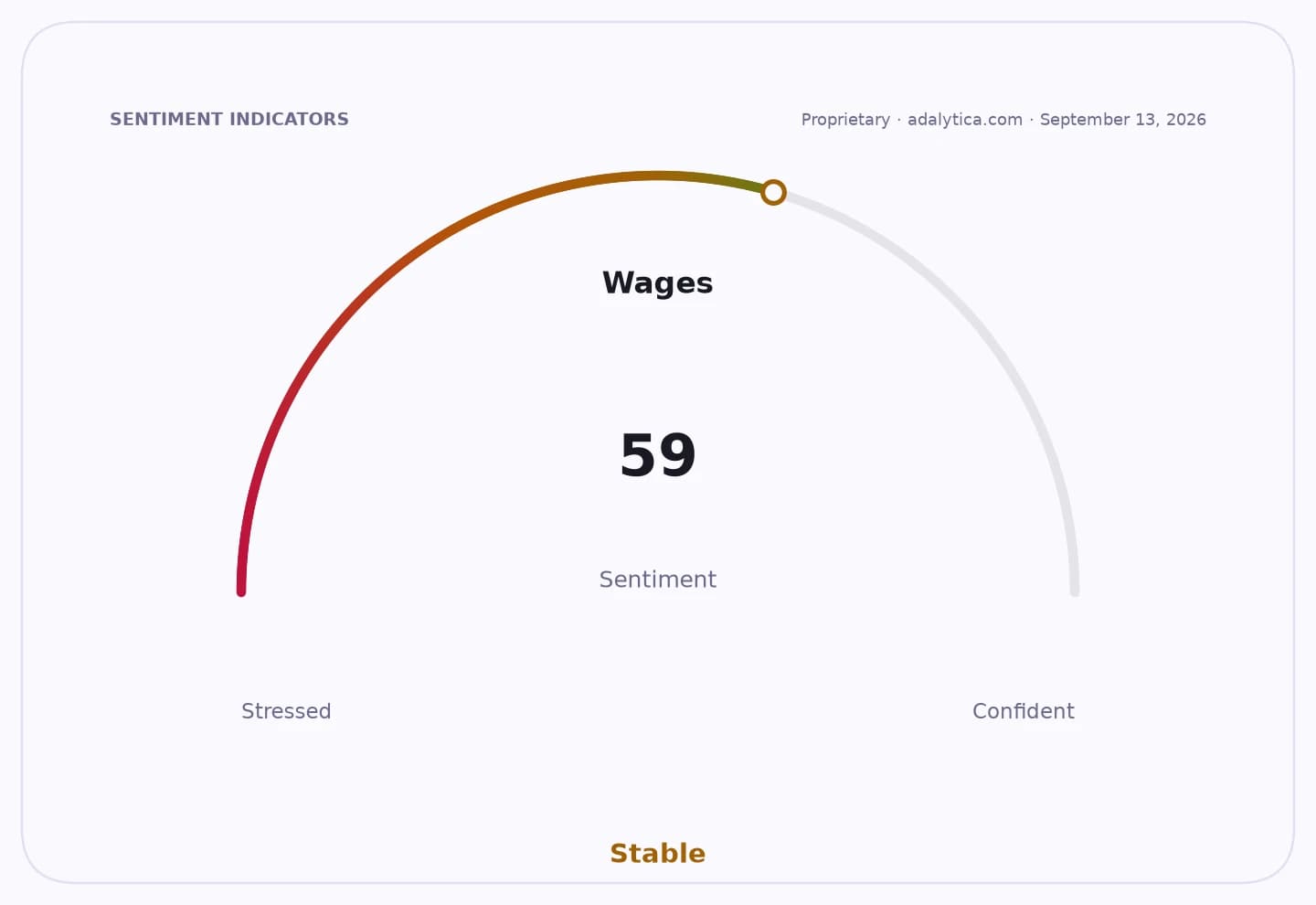
Romania’s nominal wage growth is failing to keep up with prices, leaving workers effectively poorer even as pay packets rise.
Romania wages lag inflation as pay demands rise
That is the central message from International Work Finder’s 2026 salary barometer: wages climbed 4.8% in 2025, but inflation of 9.7% wiped out almost all of that gain and pushed real earnings down by about 4.5%. For employers, the squeeze is showing up in a widening gap between what candidates want and what companies are willing to pay, with average salary expectations now almost 30% above offers.
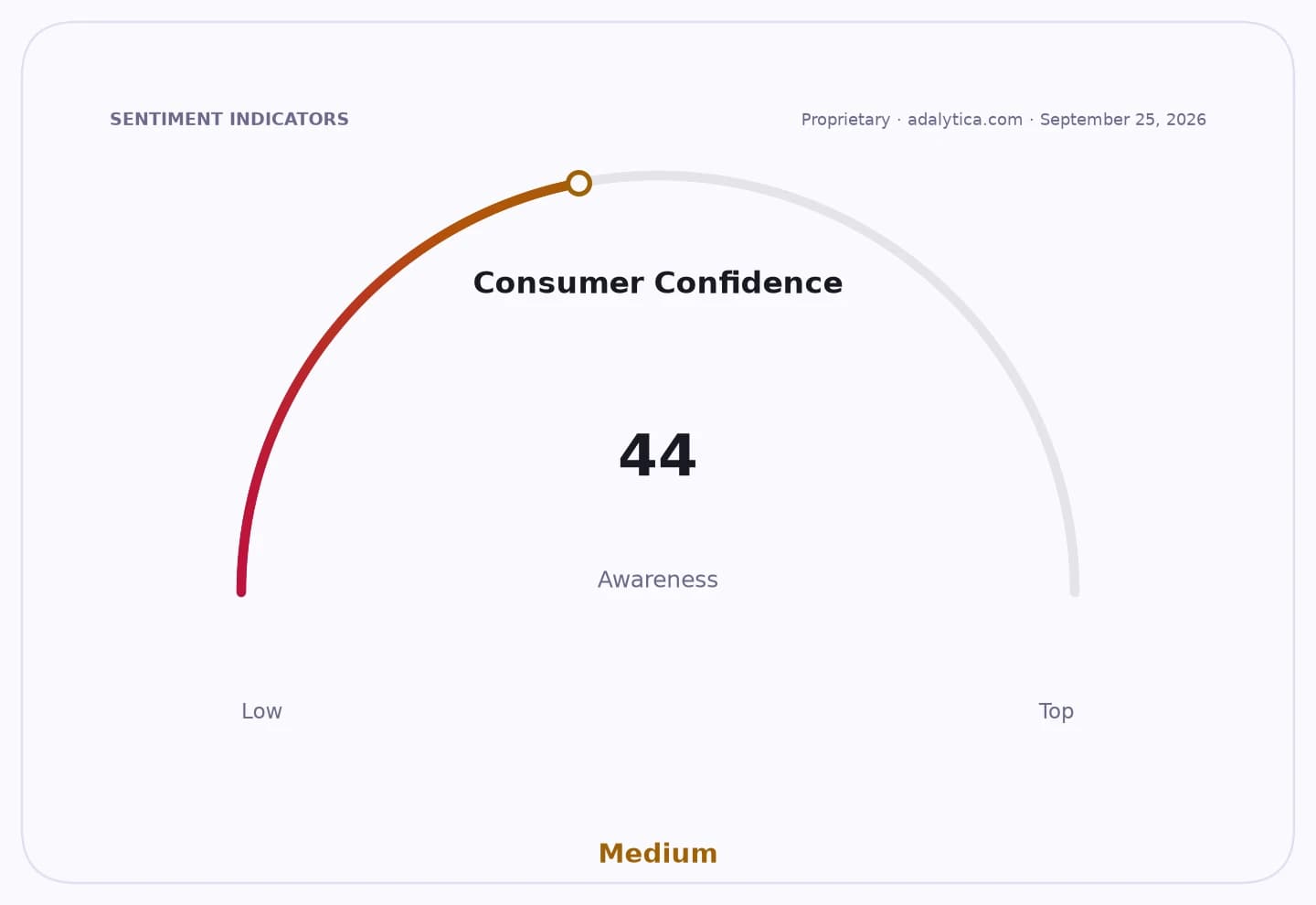
Sentiment IndicatorsⓘProprietary · adalytica.com · September 25, 2026
This is a snapshot — live sentiment, awareness and momentum for 130+ markets update continuously in the dashboard.Open AlphaPulse
The erosion of purchasing power matters because it affects household consumption, the main engine of Romania’s economy. When pay rises lag inflation, consumers cut discretionary spending, delay major purchases and become more selective about jobs, especially in lower-paid sectors such as retail, where median net pay is only 4,700 lei a month. The result is a labour market that is nominally tightening but real incomes are slipping backwards.
The pressure is uneven across the country. Bucharest’s average net salary of 7,073 lei is 46% above the national average across 42 administrative units, highlighting how concentrated high-paying jobs remain in the capital. Cluj and Timiș also sit well above the national mean, while Hunedoara is at the low end of the range. That regional split reinforces a broader labour-market divide: companies outside the main urban centres are competing for the same scarce talent without being able to match the highest wage offers.
The most expensive roles are being pulled higher by shortages rather than broad-based inflation alone. In IT, the median net salary reaches 11,750 lei, more than double the national average, while legal and pharmaceutical roles are at 11,000 lei and sales at 10,750 lei. At the top end, a medical director in pharma can earn up to 28,000 lei net, and a CFO or finance director as much as 25,000-26,000 lei net. Those numbers show that compensation is being set less by standard pay scales and more by the scarcity of specific skills in fields such as CISO, enterprise architecture and senior pharma functions.
For investors, the story is a mix of competitiveness and cost pressure. Romania still offers labour costs well below the EU average, with hourly labour costs at 13.6 euro versus 34.9 euro across the bloc, but that advantage is narrowing as pay rises 10.6% year on year, among the fastest rates outside the euro area. That matters for manufacturers, outsourcing firms and service centres that have long used Romania as a lower-cost base. If wage inflation keeps outpacing productivity, margins will come under pressure unless companies pass costs on, automate faster or shift hiring to cheaper regions.
The labour market backdrop remains supportive, but not enough to prevent wage tension. Unemployment at 4.1% suggests demand for workers is still relatively firm, while the Adalytica Job Market gauge points to deep fear around labour conditions even as broader consumer sentiment has surged. In practical terms, that combination usually means employers still need to hire, but candidates are increasingly unwilling to accept offers that do not compensate for inflation and regional cost differences.
The key risk for the coming year is that Romania’s inflation-wage gap becomes structural rather than temporary. If pay expectations keep rising while employer budgets stay anchored to slower productivity growth, recruitment could become more difficult, especially in technical and executive roles. If companies respond by raising pay broadly, they risk a further cost squeeze. Either way, the barometer points to a labour market where the fight for talent is increasingly being fought in real, not nominal, terms.
| Entity | Gains | Losses |
|---|---|---|
| Workers with scarce skills | ▲Higher bargaining power | ▼Inflation-adjusted income if raises lag |
| Employers in Romania | ▲Lower wages than EU average | ▼Hiring costs and margin pressure |
| Bucharest and Cluj employers | ▲Access to top talent pools | ▼Need to match higher pay demands |
| Retail and low-wage workers | ▲Limited benefit from labour demand | ▼Real wages and purchasing power |