Romania’s sudden shutdown of its WorkinRomania immigration platform is freezing hiring for foreign workers at the exact moment employers need every available labor source, exposing how dependent construction, agriculture, industry and hospitality have become on imported manpower.
Romania WorkinRomania shutdown delays foreign worker hiring
The most important economic issue is not the legal dispute behind the outage, but the damage to recruitment pipelines in an economy already struggling with labor shortages and weak consumer demand. When a government portal used to file D/AM1 and D/AM2 visa requests and process employer changes goes dark, companies cannot simply switch to another channel. Projects slow, contracts slip and payroll planning gets harder, especially in sectors where vacancies are already structurally high.
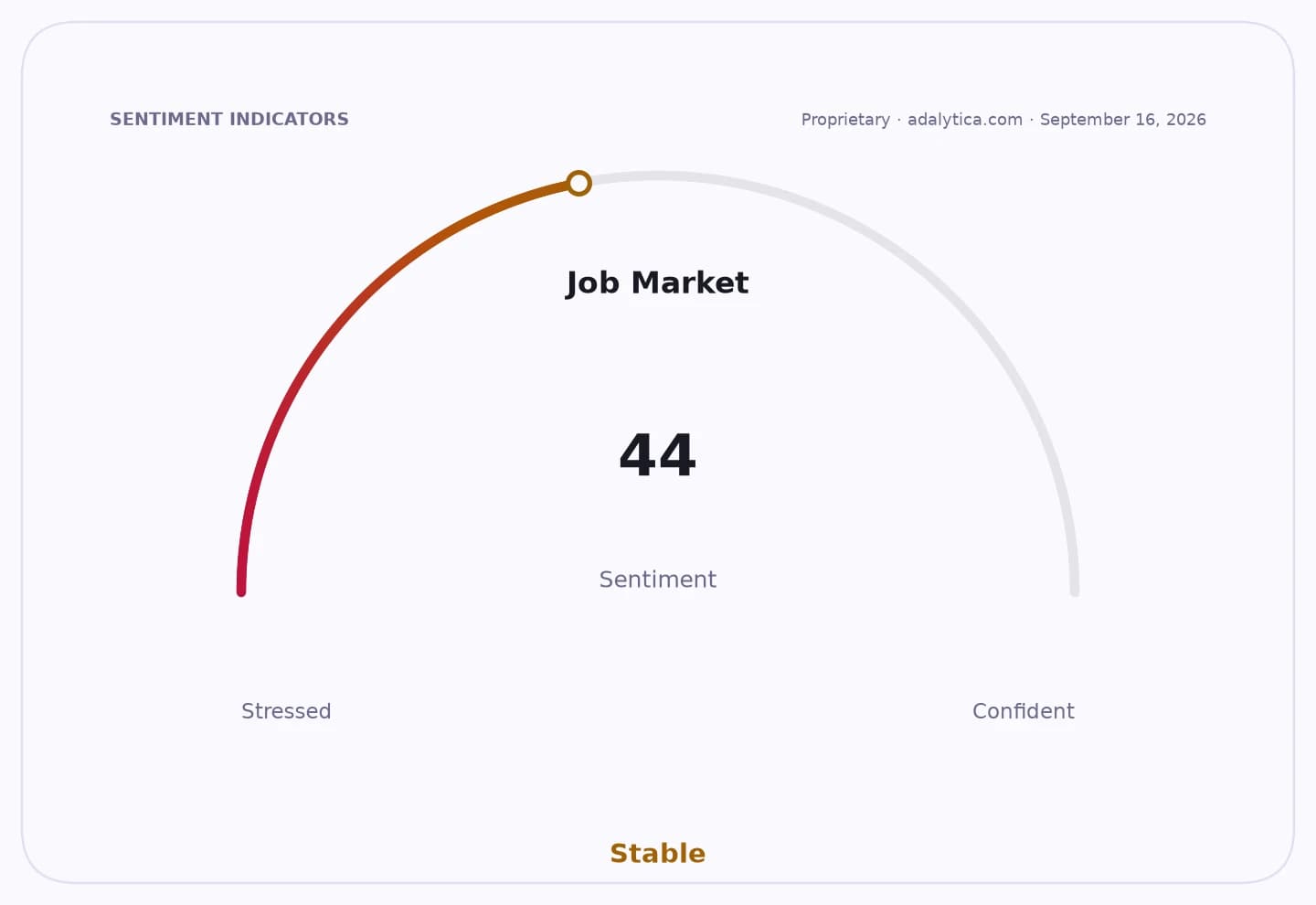
Sentiment IndicatorsⓘProprietary · adalytica.com · September 16, 2026
This is a snapshot — live sentiment, awareness and momentum for 130+ markets update continuously in the dashboard.Open AlphaPulse
That is why the blocage matters well beyond an administrative snag. The Romanian employers’ group said the platform’s disabled flows have left thousands of businesses unable to continue recruitment of foreign workers, and warned of material losses, contractual penalties and stalled investments. In sectors such as construction and HORECA, where labor is operationally decisive, even short delays can mean missed delivery dates, lower output and higher costs.
The shutdown also highlights a broader policy risk: labor regulation is tightening just as businesses are being pushed to fill gaps from abroad. The dispute stems from the suspension of a labor ministry order that had introduced more restrictive profession filters. Employers argue that should not justify halting the entire system. If they are right, the state has effectively turned a legal challenge into a de facto labor-market bottleneck.
For investors, the setup is a classic second-order trade. The losers are employers with labor-heavy models and Romania-exposed contractors. The winners are any domestic or regional firms that can absorb shifting demand, along with digital or staffing platforms that become alternatives if the system remains impaired. More broadly, this is another reminder that labor supply is a growth constraint, not a background issue.
The market is underestimating how often bureaucratic failure becomes an earnings problem. If the platform stays down, expect pressure on project timelines, margins and guidance across Romanian employers that rely on migrant labor. That makes labor-tech infrastructure, staffing intermediaries and businesses with scarce dependency on imported workers the more resilient way to play this disruption.
| Entity | Gains | Losses |
|---|---|---|
| Romanian employers | ▲None | ▼Hiring pipeline blocked |
| Foreign workers | ▲None | ▼Visa processing delayed |
| Construction, agriculture, HORECA | ▲Labor scarcity eases? | ▼Project delays |
| Staffing and labor-tech alternatives | ▲Potential demand boost | ▼None |