The Indian rupee’s latest setback matters less for the move itself than for what it says about the limits of domestic rate hikes in supporting the currency.
Rupee Weakens as Crédit Agricole Sees 96 by 2026

USD/INR rose 0.41% to 94.6994 on Thursday as the rupee’s recent recovery stalled, but Crédit Agricole still sees the pair weakening further to 96 by December 2026 before turning back to 92 by September 2027. That implies a roughly 2.9% rupee gain from Thursday’s level by the time the bank’s recovery view fully plays out.
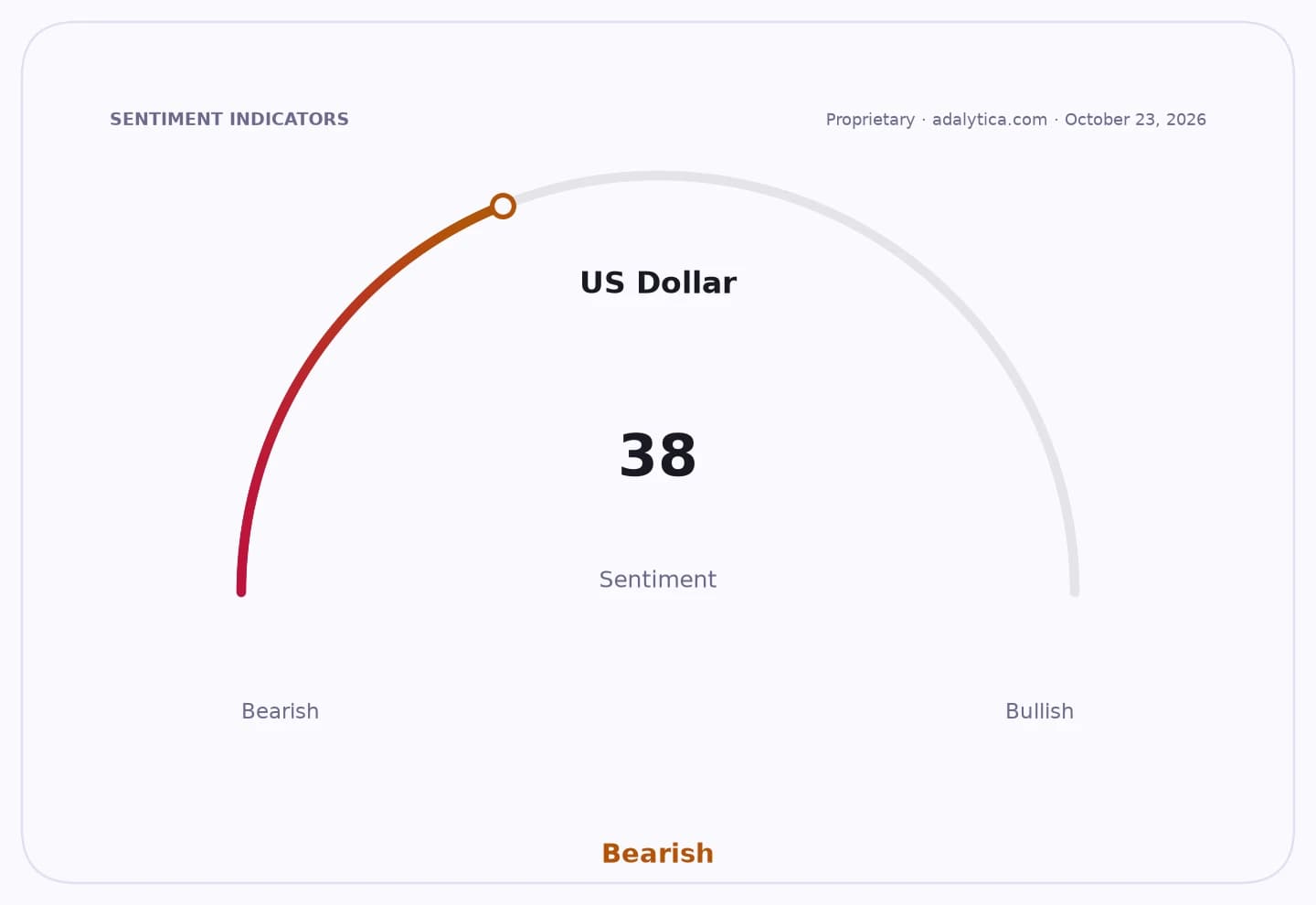
Sentiment Indicators
US Dollar
The call captures the central tension in India’s FX outlook: local policy can help manage near-term pressure, but it may not be enough to offset dollar strength, oil prices and foreign portfolio flows. Crédit Agricole expects the Reserve Bank of India’s repo rate to rise to 5.75% by end-2026 and 6% by March 2027, a further 50 basis points from the current 5.50%. But the bank has argued that even a modestly restrictive stance would do little to move the rupee unless global yields and energy costs also improve.
That is why the forecast is economically important. India’s currency remains vulnerable to the external financing channel that has driven much of the weakness this year: higher US rates raise the return on dollar assets, while a heavier oil import bill increases demand for dollars at home. Crédit Agricole said the rupee’s problems are “primarily structural rather than speculative,” citing rising oil prices, Fed tightening and a sell-off in US Treasuries that erodes Indian bonds’ relative appeal.
US Dollar
The latest RBI minutes underline the uncertainty around how far policymakers are willing to go. Governor Sanjay Malhotra tied future action to growth and inflation, while external member Ram Singh warned against shifting the stance from neutral to tightening too quickly, saying it could signal an extended rate-hike cycle. That split matters because markets are trying to price whether the RBI is close to the end of its tightening path or merely pausing before another round of increases.
Inflation gives policymakers room, but not much comfort. India’s September consumer price inflation quickened to 5.54% from 4.83% in August, keeping pressure on the central bank to stay alert even as growth remains solid. A stronger domestic rate backdrop can support the rupee by improving carry, but if the Federal Reserve stays hawkish, that advantage narrows quickly. Crédit Agricole said it still leans toward a Fed pause in October followed by a hike in December, though hotter-than-expected US inflation makes that call less certain.
For investors, the near-term message is that the rupee’s path will still be set by the balance between RBI restraint and external headwinds, not by India alone. A move toward 96 would keep importers and dollar buyers on the defensive, while any slide in Brent crude or easing in US yields could accelerate the case for recovery. The bank’s longer-dated 92 forecast suggests it sees the current weakness as cyclical rather than permanent — but only if the global backdrop turns more favorable.
| Entity | Gains | Losses |
|---|---|---|
| US Dollar holders | ▲More rupees per dollar now | ▼Less upside if INR recovers |
| Indian importers | ▲Cheaper if rupee strengthens in 2027 | ▼Higher costs while USD/INR stays elevated |
| RBI | ▲Flexibility to tighten against inflation | ▼Pressure to defend currency without overdoing hikes |
| Indian exporters | ▲More rupee value on dollar receipts | ▼Less benefit if rupee rallies back toward 92 |