The rupiah is poised to stay under pressure and could slide toward Rp17,940 per dollar, with the latest market signals pointing to a currency that is still vulnerable despite recent pockets of relief.
Rupiah Weakness Pressure Builds Toward Rp17,940
That matters because a weaker rupiah raises the local-currency cost of imports, fuels inflation risks and complicates Bank Indonesia’s balancing act between defending the currency and supporting growth. For investors, the real issue is not just the day-to-day move in USD/IDR, but the potential second-order hit to Indonesian importers, dollar borrowers and consumer-linked sectors if the currency keeps drifting lower.
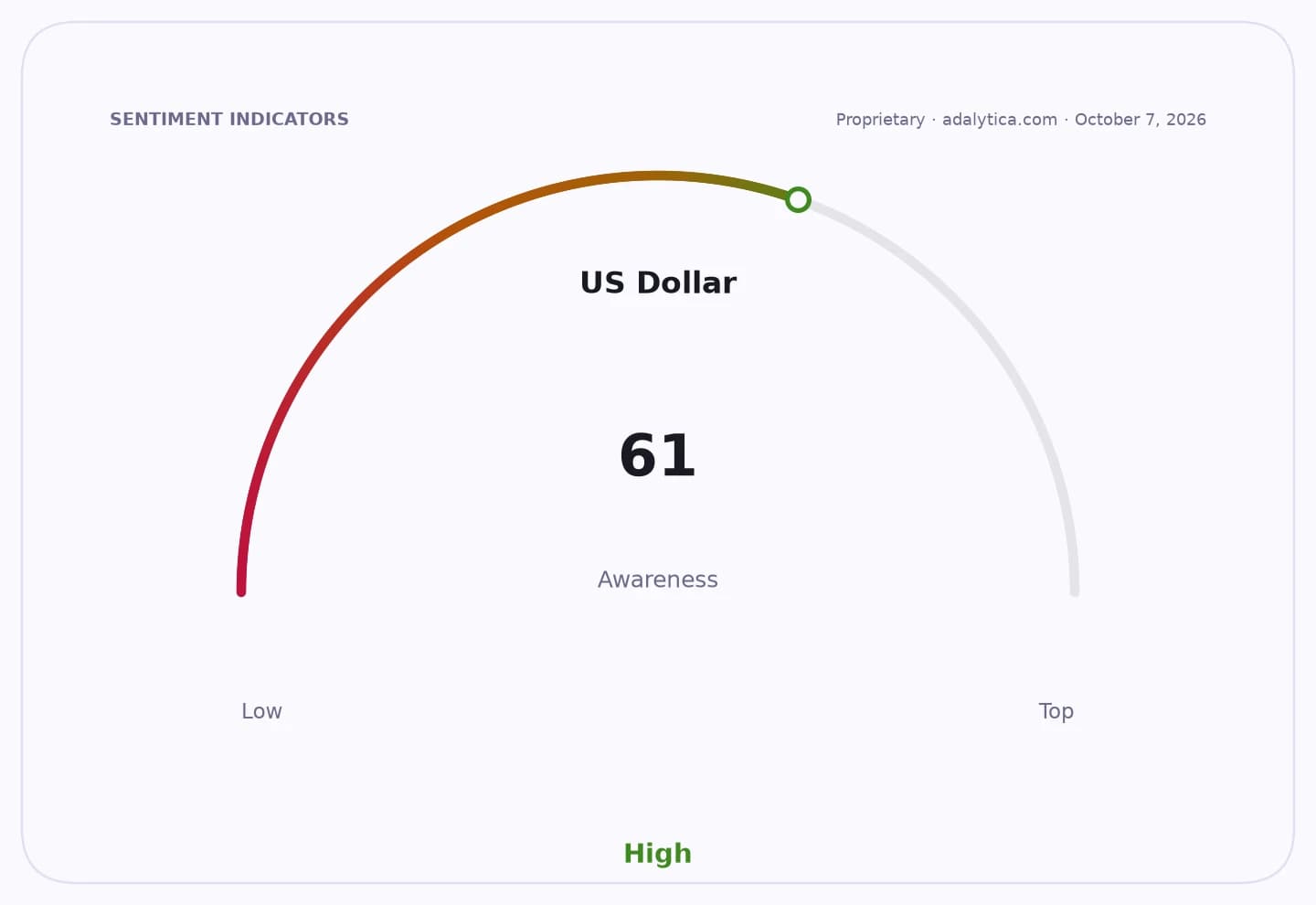
Sentiment IndicatorsⓘProprietary · adalytica.com · October 7, 2026
This is a snapshot — live sentiment, awareness and momentum for 130+ markets update continuously in the dashboard.Open AlphaPulse
The setup looks fragile. In the broader dollar market, Adalytica’s US Dollar Trade Signals show sentiment at 58 and awareness at 61, both neutral but firmer than a month ago, while the 30-day change is still negative at minus 16. That suggests the greenback has not returned to outright euphoria, but it is regaining enough traction to pressure Asian currencies. At the same time, Adalytica’s FX volatility gauge shows extreme fear on awareness at just 4, indicating a market that is still bracing for swings rather than a clean directional trend.
The technical picture for the dollar is consistent with a strengthening bias. The USDE proxy has climbed sharply from 2.46 in early August to 13.82 on Oct. 7, even after a pullback from a recent peak near 17.25. Its relative strength index was still elevated at 67.5, while the MACD remained above the signal line, a sign that momentum remains constructive even as the move cools. That is the kind of backdrop that typically keeps emerging-market currencies defensive, especially when local catalysts are limited.
For Indonesia, the market is now focused on whether the rupiah can absorb that external pressure without forcing a sharper policy response. If the currency weakens into the Rp17,890-Rp17,940 range, importers, airlines, fuel users and companies with unhedged dollar liabilities are the immediate losers. Exporters and firms with foreign-currency revenues are the relative winners, while banks with FX mismatches and consumers facing higher imported prices sit in the middle.
The opportunity for investors is to treat this not as a short-term noise trade but as a macro regime where currency weakness can create mispriced winners and losers. In that kind of market, the best positioning is usually in exporters, dollar earners and companies with pricing power, while caution is warranted on sectors most exposed to imported costs and funding stress.
If the dollar’s momentum holds and risk appetite remains uneven, the rupiah’s weakness may prove sticky rather than temporary. That makes this a trade to watch closely now, before the market fully prices in the damage to margins, inflation and local asset valuations.
| Entity | Gains | Losses |
|---|---|---|
| Dollar exporters | ▲Better rupiah earnings | ▼— |
| Indonesian importers | ▲— | ▼Higher input costs |
| Fuel and airline users | ▲— | ▼More expensive dollar-denominated purchases |
| Consumers and rate-sensitive stocks | ▲— | ▼Inflation and margin pressure |