Vladivostok’s plan to introduce artificial intelligence and drone design into schools from Sept. 11 is more than an education tweak: it shows how Russia is institutionalizing dual-use technologies at the local level, aiming to build a pipeline of technically trained students for a war economy that increasingly depends on cheap drones, software and automation.
Russia Adds AI and Drone Design to Schools
The move matters economically because it signals a deeper shift in labor allocation and industrial policy. Russia is not just trying to produce more graduates; it is trying to produce a workforce adapted to a sanctions-hit economy where domestic capabilities in electronics, coding, unmanned systems and machine learning are becoming strategic assets. That kind of state-directed training can support defense production, logistics and industrial substitution, while also reinforcing demand for local education, hardware and software providers tied to government procurement.
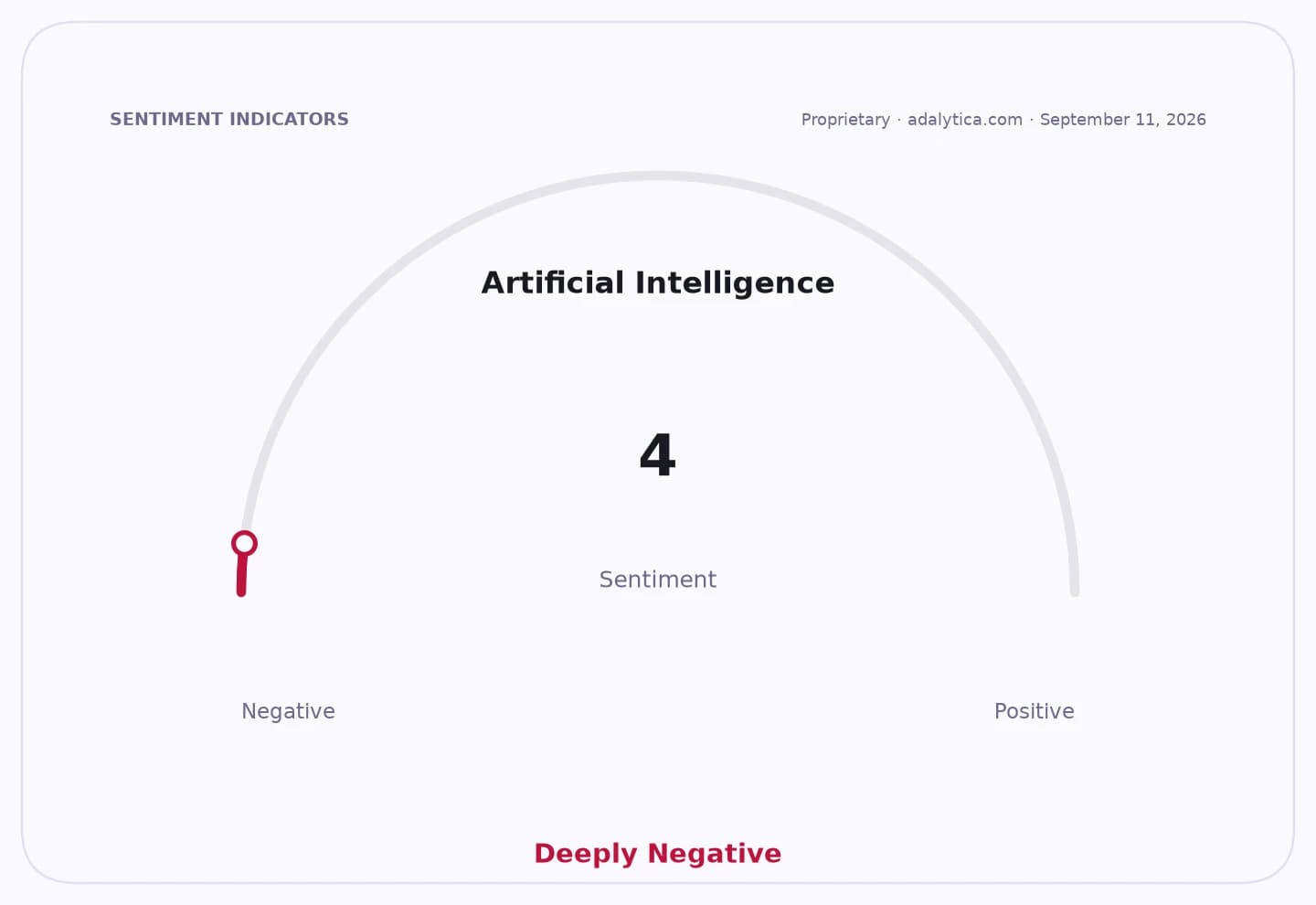
Sentiment IndicatorsⓘProprietary · adalytica.com · September 13, 2026
This is a snapshot — live sentiment, awareness and momentum for 130+ markets update continuously in the dashboard.Open AlphaPulse
For investors, the message is that geopolitics is still reshaping capital flows into AI infrastructure, defense and automation. The latest market tape shows how strongly that theme continues to dominate: Microsoft shares closed at $495.63 on Sept. 11, well above their 200-day moving average of $429.65, while Nvidia finished at $218.29, also above its 200-day average of $197.11. Apple, meanwhile, ended at $332.27, hovering near its recent highs. In other words, the market continues to reward the companies that supply the compute, chips and software stack behind AI adoption, even as sentiment whips around.
That is where the real investment story sits. School-level drone and AI training in Russia is a reminder that demand for autonomous systems is not a passing narrative but a multi-year industrial buildout. Every country that treats drones as core infrastructure — not just battlefield hardware — ends up spending on sensors, semiconductors, communications equipment, simulation software and cloud-style compute. That is why the best way to play this trend is still through the picks-and-shovels names: the chipmakers, server builders, networking suppliers and defense contractors that benefit whether the end customer is a school, a factory or a military unit.
The market, in my view, underestimates how durable this capex cycle remains. Adalytica’s proprietary AI sentiment gauge is at extreme fear even as awareness remains elevated, a classic setup where attention is high but conviction is weak. That disconnect matters because it often marks the kind of pause that lets long-term winners keep compounding while short-term traders get shaken out.
This is not a story about one school in Vladivostok. It is a signal that AI and drones are becoming embedded in state policy, education and industrial planning across geopolitically sensitive economies. The investable implication is straightforward: stay positioned in the infrastructure layer — Nvidia, Microsoft, and the broader AI and defense supply chain — because the next wave of demand will be built from classrooms, factories and military procurement, not just consumer apps. The asymmetric opportunity remains on the suppliers to the future, and that window is still open.
| Entity | Gains | Losses |
|---|---|---|
| AI and drone suppliers | ▲Long-term demand | ▼Narrowed policy focus |
| Defense contractors | ▲More trained talent | ▼Slower civilian spending |
| Nvidia, Microsoft | ▲AI infrastructure spending | ▼Sentiment volatility |
| U.S. tech skeptics | ▲— | ▼Secular capex surge |