Apartment sellers in Russia can avoid personal income tax entirely if they meet holding-period or family-status rules, a reminder that real estate transactions can trigger large tax bills unless owners choose the right legal basis before filing.
Russia Apartment Sellers Can Avoid Income Tax
The key economic point is that the tax is not automatic on every sale and not necessarily applied to the full proceeds. According to tax specialist Valentina Verdt, owners can use either a full exemption, a deduction for documented purchase costs or a capped property deduction of up to 1 million rubles, but they must choose one route before submitting a return.
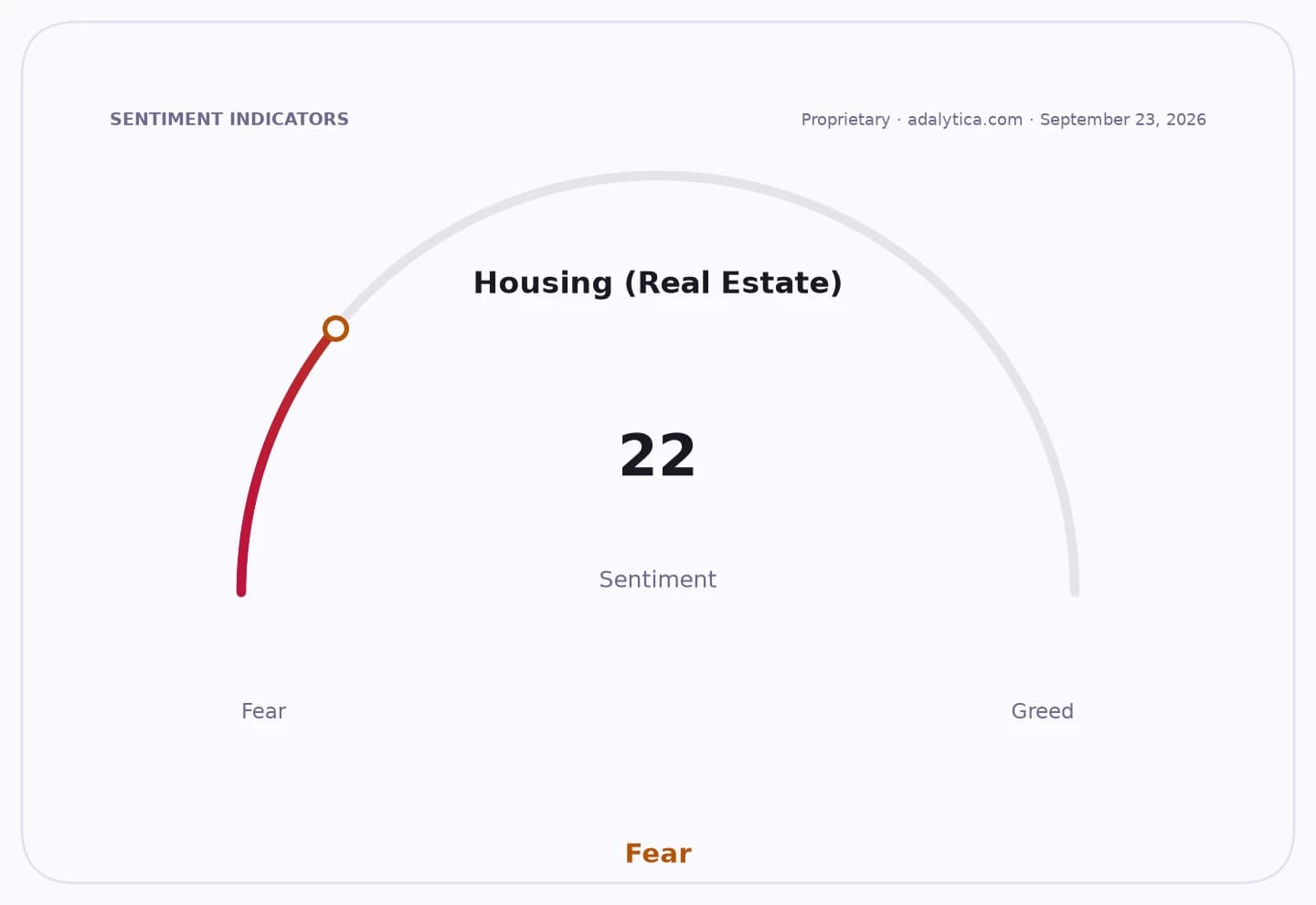
Sentiment IndicatorsⓘProprietary · adalytica.com · October 2, 2026
This is a snapshot — live sentiment, awareness and momentum for 130+ markets update continuously in the dashboard.Open AlphaPulse
That matters because Russia’s 2026 personal income tax system is now two-tiered, with a 13% rate on income up to 2.4 million rubles and 15% above that threshold. For higher-value apartment sales, the marginal tax cost can quickly become significant, while late filing can also bring penalties and interest, increasing the final burden for households and investors alike.
The main way to eliminate the tax is to wait out the minimum ownership period. Federal law sets that at five years in general, but it can fall to three years for inherited homes, gifts from close relatives, privatized apartments, life-annuity transfers and some primary residences, and regional rules can shorten it further.
Timing is crucial. Verdt said the clock does not always start on the contract date: for ordinary purchases it begins with title registration, for inheritances on the date of the owner’s death, and for housing bought under a shared-construction contract on the date of full payment. That makes record-keeping central to any tax calculation.
If the minimum holding period has not passed, sellers can reduce the taxable base by documenting acquisition costs, including mortgage interest actually paid. In one example, a flat bought for 10 million rubles and sold for 12 million would generate tax on just the 2 million ruble gain. Buyers with two or more children may also qualify for a broader exemption if they buy a larger or more expensive replacement home within the required deadline and the old property does not exceed the cadastral value cap.
For investors and households, the practical message is that tax outcomes hinge on paperwork, cadastral values and ownership dates, not just the headline sale price. The Federal Tax Service can recalculate deals using cadastral benchmarks if prices are artificially understated, so compliance is as important as timing.
The next catalyst is further scrutiny from tax authorities as real estate owners file returns and as Moscow continues tightening oversight of property transactions and rental income.
| Entity | Gains | Losses |
|---|---|---|
| Apartment sellers | ▲Tax exemption or lower bill | ▼Penalties if rules ignored |
| Families with 2+ children | ▲Wider exemption access | ▼Must meet replacement-home tests |
| Russian tax authorities | ▲Better compliance and enforcement | ▼Fewer easy loopholes |
| Property investors | ▲Clearer tax planning rules | ▼Higher costs on short-term flips |