Russian consumers cut spending on new passenger cars by 20% in October even as the market posted its biggest monthly outlay of the year, underscoring a demand shift that is reshaping the auto sector and narrowing the winners to domestic brands and a few importers.
Russia car spending falls 20% as domestic brands gain
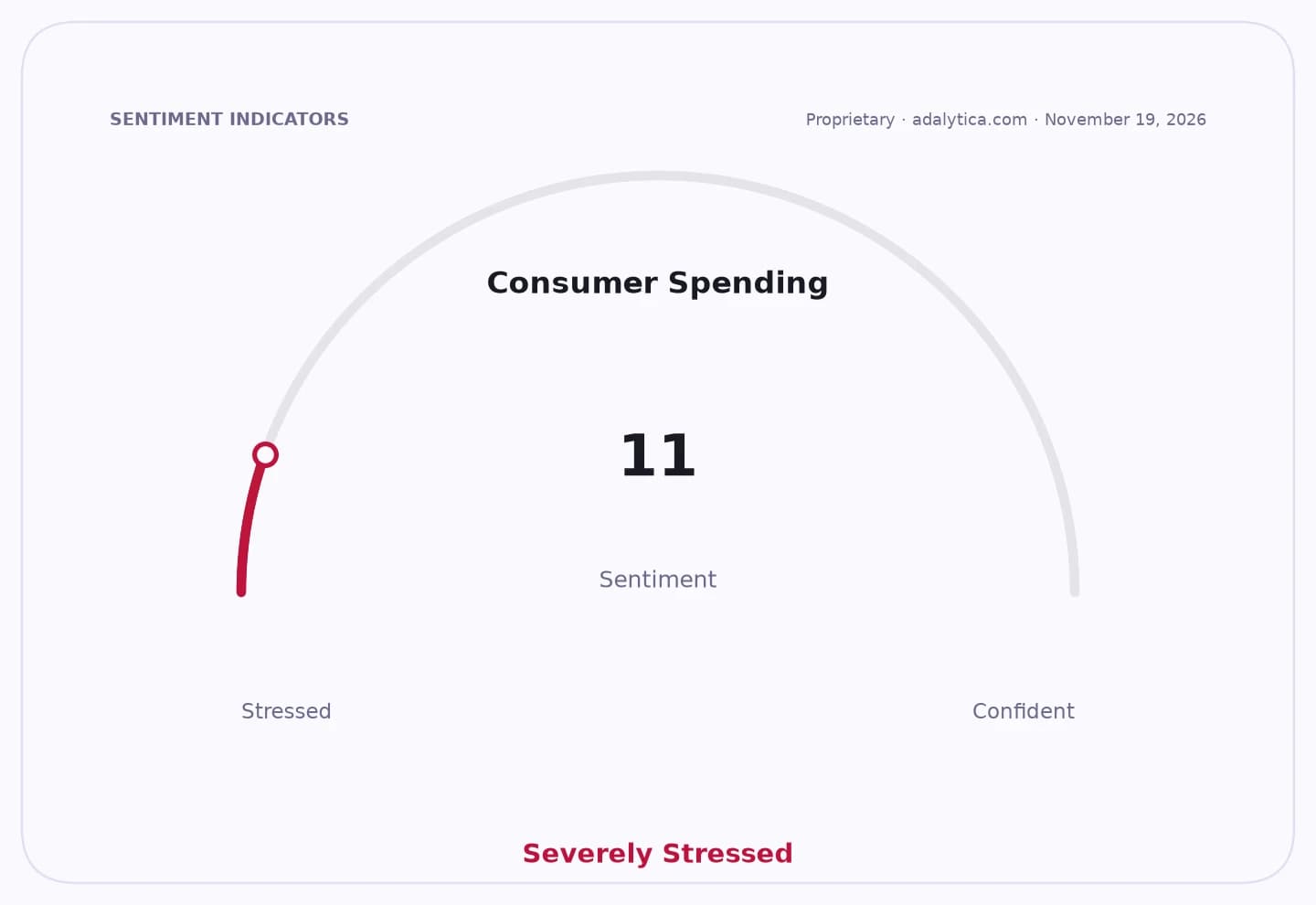
The drop matters because car purchases are a high-ticket proxy for household confidence, credit availability and disposable income in Russia. When spending retreats even after a seasonal pickup, it usually means buyers are trading down, delaying purchases or increasingly favoring cheaper models. That weakens the case for a broad recovery in imported autos and reinforces the advantages of local producers, which are less exposed to foreign financing, logistics and currency pressures.
Sentiment Indicators
Total spending in October reached 417.5 billion rubles, up 9% from September and the highest this year, but the composition changed sharply. Outlays on Russian brands jumped 38% to 135.3 billion rubles, while spending on Chinese cars fell 33.8% to 192.6 billion rubles. European car spending dropped 34.1% to 53.2 billion rubles, Korean brands plunged 64.3% to 7.2 billion rubles and American marques fell 38.6% to 3.4 billion rubles.
That mix is the real story for investors: Russia’s auto market is not disappearing, but it is being re-priced. Chinese brands still hold the largest share of spending at 42.3%, yet Russian marques have lifted their share to 29.7%, helped by volume leadership. Domestic manufacturers sold 58,000 cars in October, ahead of Chinese brands at 51,400, with all other badges collectively making up less than 20% of the market.
For global automakers and suppliers, the message is clear. Russia is increasingly a market where sanctions risk, payment hurdles and consumer budget pressure are forcing a smaller, more localised sales mix. For domestic producers and their supply chains, the shift offers relative resilience even in a softer demand environment. If the current pattern persists, the next phase of the Russian auto market will favor local assembly, lower-priced models and brands able to compete on cost rather than prestige.
| Entity | Gains | Losses |
|---|---|---|
| Russian carmakers | ▲Higher spending share | ▼Less room for foreign rivals |
| Chinese brands | ▲Largest market presence | ▼Sharp October spending drop |
| European, Korean, US brands | ▲Limited niche demand | ▼Steep sales and spending declines |
| Russian consumers | ▲More local options | ▼Fewer imported choices, weaker purchasing power |