Russia’s central bank has frozen its benchmark rate at 14% after acknowledging that Ukrainian drone strikes on refineries, data centers and other industrial sites are feeding inflation for far longer than it expected, pushing any room for easing out to at least 2027.
Russia central bank keeps 14% rate after drone strikes
The shift matters because it shows war damage is now doing what sanctions alone could not: constraining the Kremlin’s monetary policy and keeping borrowing costs elevated across the economy. Central bank chief Elvira Nabiullina said the effects of lost production capacity are proving “more prolonged,” forcing regulators to treat the inflation hit as a structural problem rather than a temporary supply disruption.
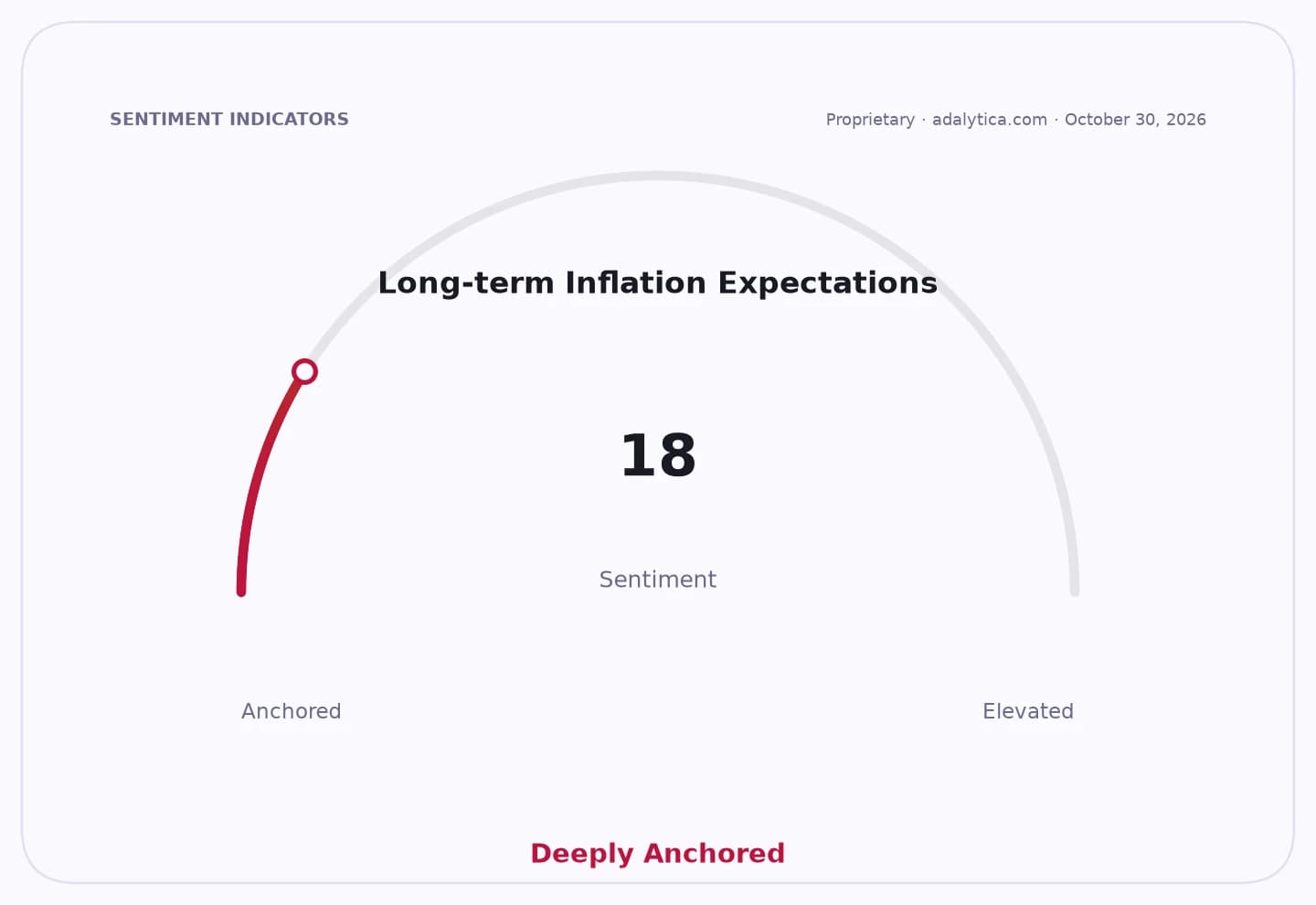
Sentiment Indicators
Inflation pressures in Russia have already intensified. The central bank said current inflation accelerated to 8% in the third quarter, with core inflation at 6.2%, and it cut its year-end forecast to 7.1%-7.6%. Private economists cited by Russian media now see easing no earlier than the first quarter of 2027, with some saying the first cautious cut could come only in April 2027 if no new infrastructure shocks hit.
The problem is not just refinery downtime. Reuters’ context and Russian reports point to broader second-round effects: higher prices for a wide range of goods, rising inflation expectations among households, fuel shortages and delays to digital services after attacks on data-processing centers. Those disruptions are forcing companies to source equipment through slower, costlier channels under sanctions, making repairs harder and prolonging the supply shock.
That keeps pressure on consumer demand, margins and fiscal policy. Higher rates and sticky inflation raise financing costs for businesses, while the government’s hopes that a new three-year budget would steady the outlook are being offset by damage to industrial output and logistics. The hit is especially acute in fuel and agrilogistics, where a worsening security situation in the Azov-Black Sea basin threatens grain exports and raises concerns about the 2027 harvest.
Markets are likely to read the central bank’s message as a warning that Russia’s disinflation path has lengthened, not shortened. Nabiullina lifted the central bank’s average rate forecast for 2027 to 12.5%-13.5%, underscoring that even as the economy absorbs war-related damage, policy will stay tight long enough to squeeze credit growth and investment.
For investors, the narrative is straightforward: drone warfare is now an inflation engine. Unless attacks ease and damaged capacity comes back faster than expected, Russia’s rates will stay higher for longer, consumer prices will remain sticky and the Kremlin will have less room to stimulate growth into 2027.
| Entity | Gains | Losses |
|---|---|---|
| Russian central bank | ▲Inflation credibility | ▼Rate-cut room |
| Ukrainian drone campaign | ▲Economic leverage | ▼None clearly |
| Russian consumers | ▲None | ▼Higher prices |
| Russian firms | ▲None | ▼Higher borrowing costs |