Russia’s outage of more than half its diesel refining capacity is tightening an already fragile global middle-distillate market and helping keep U.S. diesel prices at record levels, even as crude oil has eased from recent highs.
Russia diesel outage keeps U.S. diesel prices high
The development matters because diesel sits at the center of freight, agriculture, construction and industrial supply chains. When diesel tightens, transport costs rise quickly, and those costs ripple through consumer goods, manufacturing inputs and inflation expectations. With U.S. retail diesel averaging about $5.85 a gallon in the supplied context, the market is already pricing in a prolonged shortage rather than a short-lived oil shock.
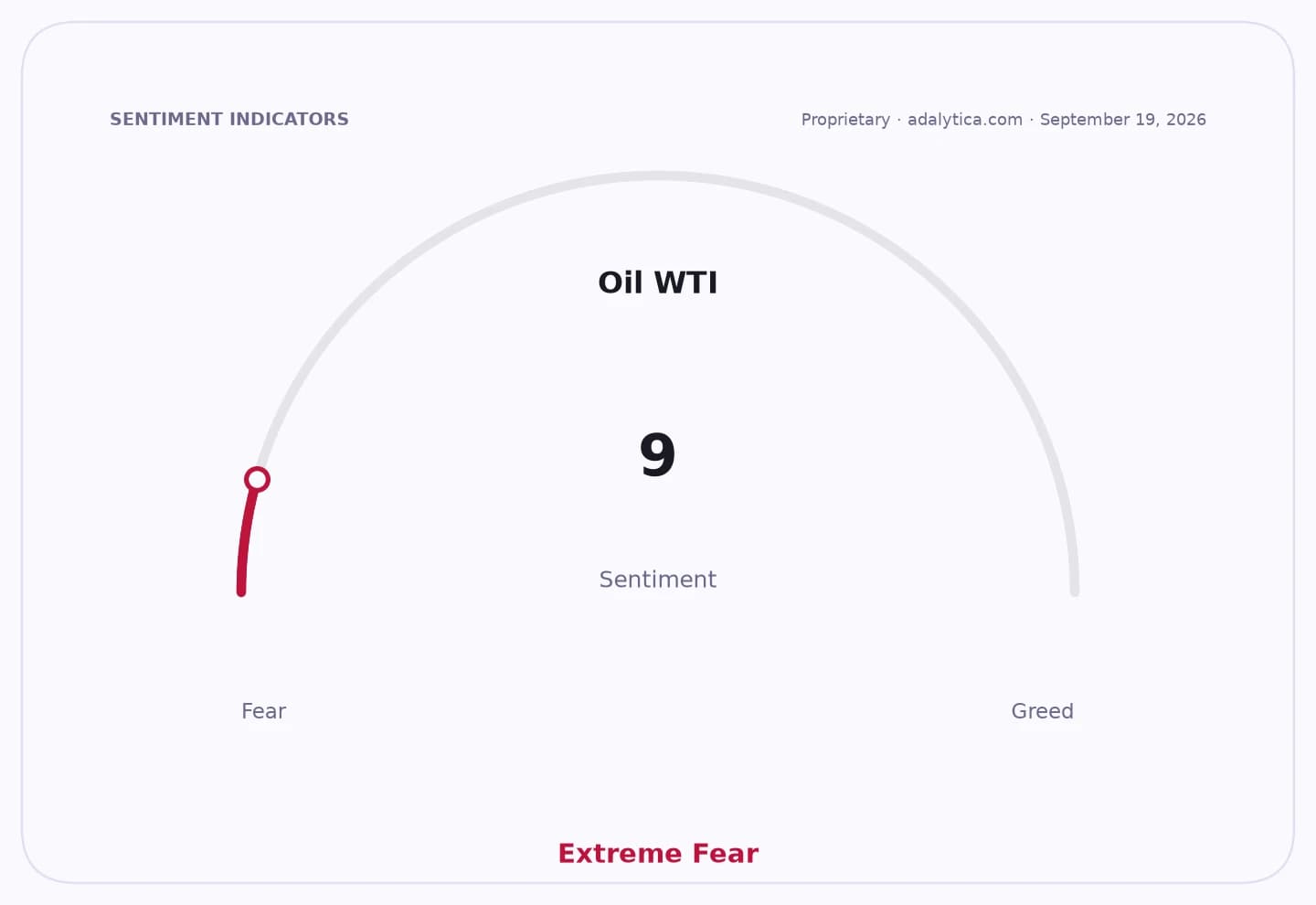
Sentiment IndicatorsⓘProprietary · adalytica.com · September 17, 2026
This is a snapshot — live sentiment, awareness and momentum for 130+ markets update continuously in the dashboard.Open AlphaPulse
The Russia disruption is especially important because diesel markets have less slack than crude. Refineries are constrained by maintenance cycles, sanctions-related logistics and geopolitical risk across shipping routes, leaving the system more exposed to any large outage. That helps explain why diesel prices can stay elevated even when benchmark oil retreats; the bottleneck is not just feedstock but the availability of finished fuel.
For investors, the spread between crude and refined products is the key trade. Refiners such as Marathon Petroleum, Valero and Phillips 66 stand to benefit if product margins stay wide, and their shares have already moved sharply higher, reflecting expectations that tighter diesel supply will support earnings. Marathon closed at $413.92 on Sept. 16, well above its 50-day moving average of $340.89, while Valero ended at $403.28 and Phillips 66 at $264.63. The strength suggests investors are still buying into the margin story, even as some technical indicators, including high RSI readings, point to stretched short-term positioning.
The risk case is that the rally is being driven as much by geopolitics as fundamentals, making it vulnerable to a reversal if supply normalizes or demand weakens. U.S. Treasury yields near 5% also complicate the picture by keeping financial conditions tight and increasing the pressure on fuel-sensitive sectors. But for now, the dominant narrative is that global diesel supply remains the market’s weak link, and Russia’s shutdown is amplifying an inflationary shock that could linger into year-end.
| Entity | Gains | Losses |
|---|---|---|
| Refiners (MPC, VLO, PSX) | ▲Wider crack spreads | ▼Higher volatility |
| Freight and logistics firms | ▲— | ▼Higher fuel costs |
| Consumers and manufacturers | ▲— | ▼Persistent inflation pressure |
| Diesel shorts | ▲Lower supply risk premium fades | ▼Mark-to-market losses |