Russia’s family mortgage program has been rewritten in a way that makes housing less affordable for many smaller households while handing the best terms to larger families, a change that could cool demand for apartments and reshape the country’s housing market over the next several years.
Russia family mortgage rules raise rates for smaller households
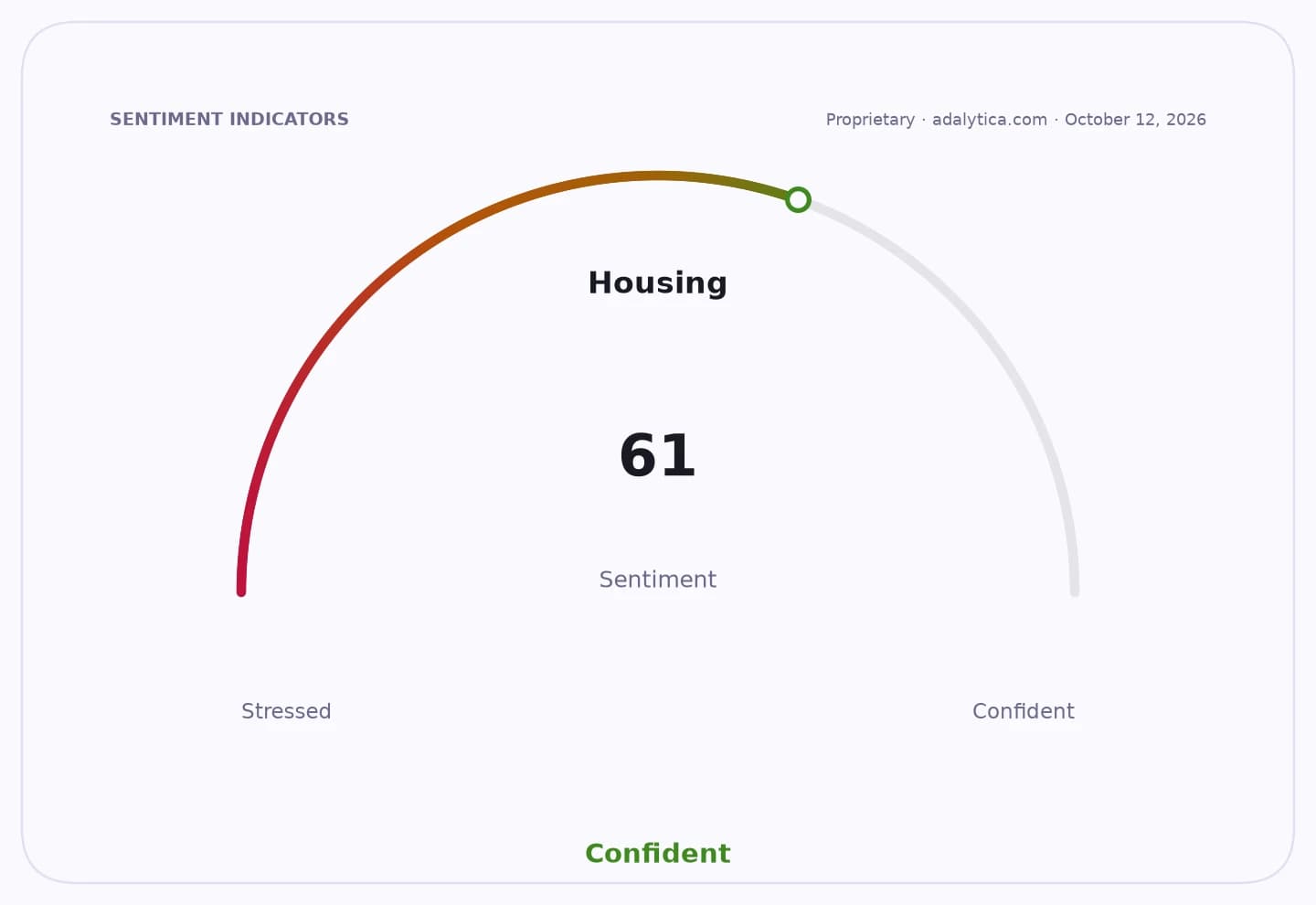
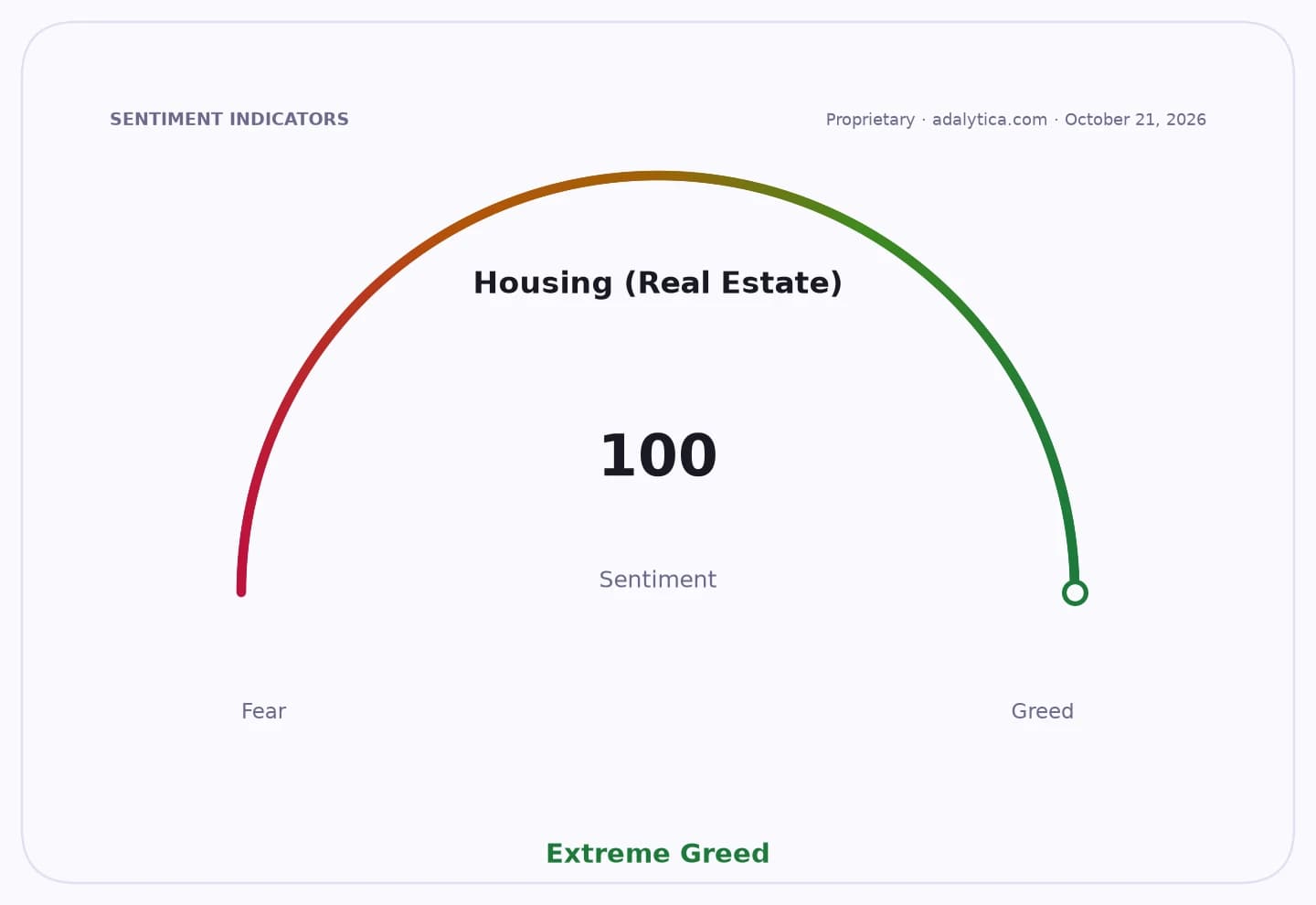
Housing
The shift matters because family mortgages have become one of the main pillars of Russian home buying. In August, subsidized programs accounted for 56% of all mortgage issuance by value, and family mortgages alone made up almost 88% of all preferential home loans in the first nine months of 2026. When a program that important gets tighter, the effect is not just on borrowers — it ripples through banks, developers and local housing prices.
Sentiment Indicators
Under the new rules that took effect Oct. 1, families with one child under seven in most regions can now borrow at up to 10%, up from the previous 6% headline rate. In Moscow, St. Petersburg and surrounding regions, the ceiling for one-child families is 12%. Families with two children also face higher rates in many cases, while three-child households keep roughly the old terms and larger families get the deepest discounts, down to 4% or even 2% in some cases.
That is a clear policy choice. Russia is steering its housing support toward larger families, while making the program less generous for households with one or two children. Economically, that should reduce the subsidy burden on the state and narrow the number of eligible buyers who can comfortably qualify at current housing prices. It also raises the monthly payment sharply for some borrowers. On a 6 million-ruble mortgage over 30 years, a 6% rate implies a monthly payment of about 36,000 rubles, while 10% lifts that to roughly 52,700 rubles.
The affordability question is not just about rates. The government also raised loan limits, to 6 million rubles for one-child families outside the major hubs and as much as 18 million rubles for larger families in Moscow, St. Petersburg and nearby regions. But higher caps do not automatically make homes more affordable if prices keep rising faster than incomes. Russia’s average new-build price was 222,000 rubles per square meter in the second quarter, which means even a modest 50-square-meter apartment can quickly exceed the subsidized ceiling in many regions.
There is another important change hiding in the fine print: the state will now subsidize new family mortgages for no more than 15 years, even though the loan itself can still run for 20 or 30 years. That means borrowers may face a higher rate later in the life of the loan if the subsidy ends. The Bank of Russia said the rate after the 15-year support period could rise by as much as four percentage points, a detail that matters for households planning around decades-long debt.
For investors, the real story is demand. September borrowing likely got a temporary boost as families rushed to lock in old terms before the October reset, with banks issuing about 65,000 family mortgages worth 403 billion rubles, according to DOM.RF. That front-loading can flatter short-term loan volumes, but it can also leave a softer patch later as the pipeline normalizes. If fewer households can qualify under the new terms, sales at new-home developers may slow, particularly in markets where prices are already stretched.
Banks and builders will not feel this evenly. Large-family borrowers still have access to the most attractive rates, which should support demand in that niche. But the broader pool of one- and two-child families now faces higher monthly payments, tighter affordability tests and, in some cases, a need for larger down payments or combined loans. That tends to favor cheaper properties and regional markets, while putting pressure on higher-priced urban housing.
The long-term investing takeaway is straightforward: Russia is not ending housing support, but it is becoming more selective. That may help the state manage fiscal costs and direct aid toward bigger families, yet it also makes the market more dependent on incomes, price discipline and developer pricing power. For homebuilders, the next few months will show whether demand simply shifts or meaningfully weakens. For borrowers, the lesson is more personal: the subsidy still helps, but it no longer guarantees affordability.
| Entity | Gains | Losses |
|---|---|---|
| Large families | ▲Lower mortgage rates | ▼Smaller subsidies for others |
| One- and two-child households | ▲Higher loan limits | ▼Higher monthly payments |
| Russian banks | ▲Continued lending volumes | ▼More credit risk if affordability weakens |
| Developers | ▲Support from subsidized demand | ▼Slower sales if demand cools |