A Russian lender is turning family growth into a mortgage discount, and that matters because it ties housing affordability directly to demographics, a policy mix that can shift both borrowing demand and the economics of new lending.
Bank Saint Petersburg cuts family mortgage rates
Bank Saint Petersburg said borrowers on its revamped family mortgage program will be able to lower their rate after the birth of another child simply by filing an application, without a new affordability test or fresh property revaluation. In Moscow and St. Petersburg, the bank says the rate would fall from 12% for a family with one child to 10% with two, 8% with three, 6% with four and 4% for families with five or more children.
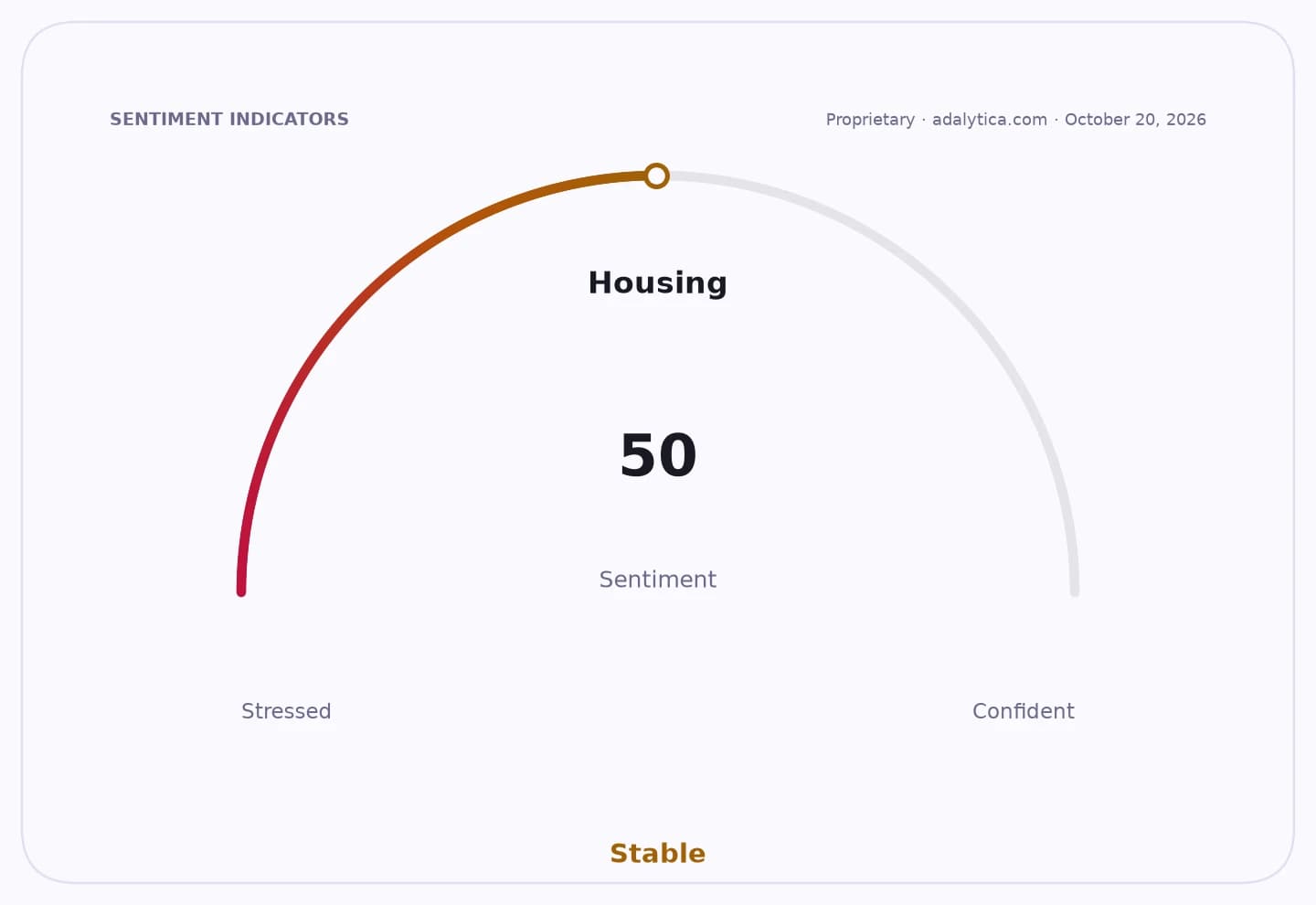
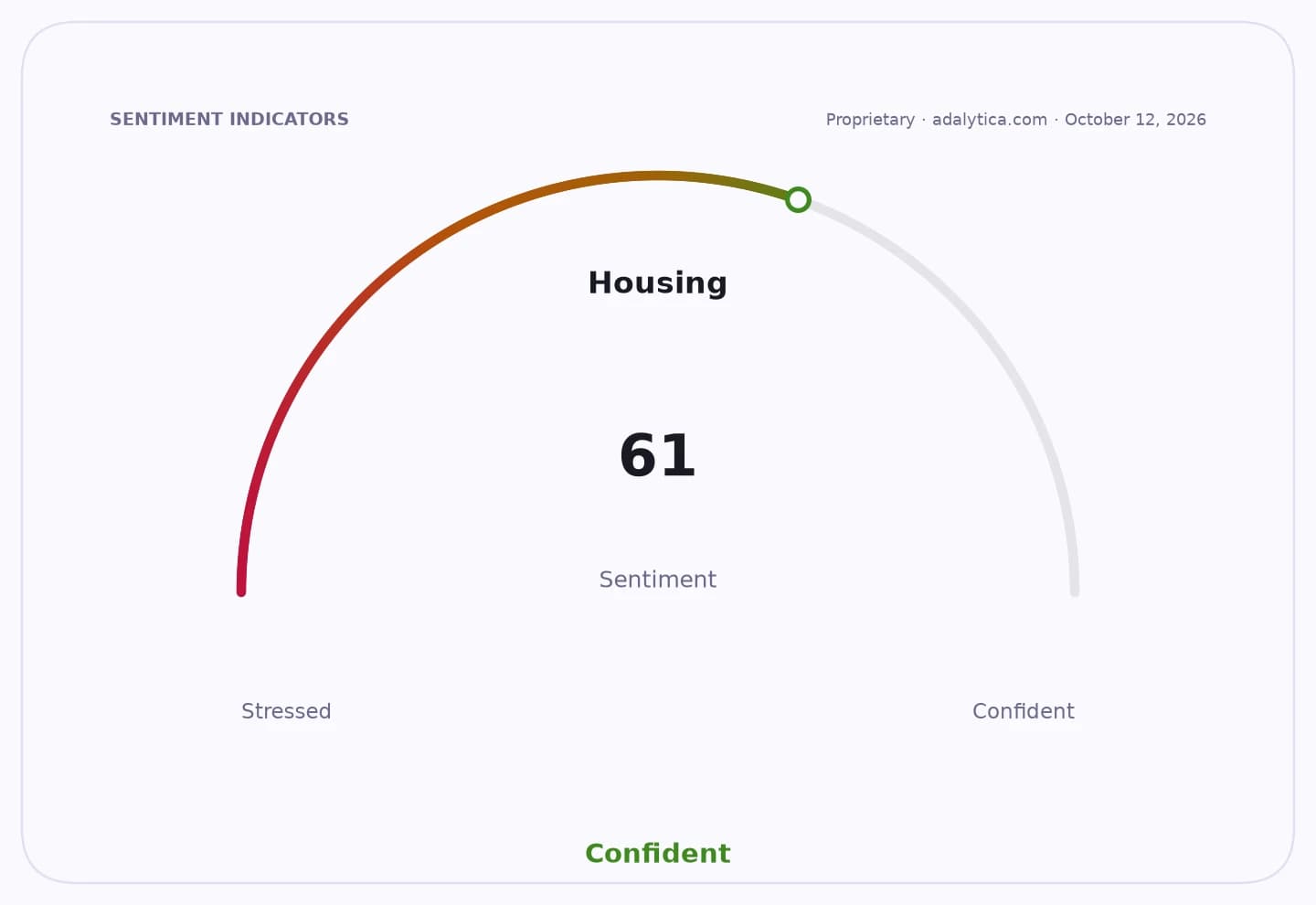
Sentiment IndicatorsⓘProprietary · adalytica.com · October 12, 2026
This is a snapshot — live sentiment, awareness and momentum for 130+ markets update continuously in the dashboard.Open AlphaPulse
That structure is more than a customer perk. It is a way of pushing subsidy economics deeper into the mortgage market at a time when housing costs remain a political and financial pressure point. The bank is effectively pricing fertility incentives into long-duration lending, which could help shore up demand for family housing while lowering monthly payments for larger households that are most sensitive to rate changes.
The savings are material. On a 6 million-ruble loan over 15 years, a 12% rate implies a monthly payment of about 72,000 rubles, according to lawmaker Alexander Aksenenko. Cutting that to 6% would reduce the bill to roughly 50,600 rubles, or more than 21,000 rubles a month, about 250,000 rubles a year. In a market where mortgage affordability remains constrained, that kind of relief can change buying decisions, especially for families deciding whether to move up to a larger apartment.
For investors, the key question is who absorbs the cost of that discount. If the lower rate is subsidized or offset through policy support, banks can keep volumes flowing while deepening ties to a strategically important retail segment. If not, lenders may face margin pressure, even as they gain longer customer relationships and potentially lower churn. Either way, the program underscores how housing finance is being used as a tool of social policy rather than just credit allocation.
The broader backdrop is a housing market still under strain from elevated borrowing costs and tight affordability. In Russia, as in other economies where family policy and housing policy are converging, the winners are lenders with distribution power and exposure to state-backed mortgage flows. The losers are households without access to preferential terms and banks stuck competing on price in an already compressed market.
The investment implication is straightforward: watch which lenders can scale family-linked mortgage products without sacrificing returns. Programs that simplify rate cuts after childbirth could become a competitive wedge in mortgage origination, deposit gathering and cross-selling, even as they reinforce the state’s push to support births and housing demand. If this model spreads, it could reshape pricing power across the retail banking sector and create a new battleground in the fight for prime family borrowers.
| Entity | Gains | Losses |
|---|---|---|
| Bank Saint Petersburg | ▲Higher family-loan demand | ▼Lower margin per loan |
| Large families | ▲Lower mortgage payments | ▼Less access if criteria tighten |
| Smaller rival lenders | ▲Less competitive pressure | ▼Share loss in family mortgages |
| Housing market | ▲Support for demand | ▼Continued subsidy dependence |