Mortgage borrowing costs are climbing again, with offers on the Czech market moving close to 6% and some banks already above that level as higher funding costs, inflation risks and geopolitics feed through to households and housing demand.
Czech mortgage rates rise toward 6%
The move matters because mortgage pricing is a transmission channel for the broader economy. When lenders raise rates, monthly payments rise, borrowing capacity falls and demand for property weakens. That can cool a market that remains undersupplied, but it also squeezes affordability at a time when household budgets are already under pressure from sticky prices and a still-uncertain macro backdrop.
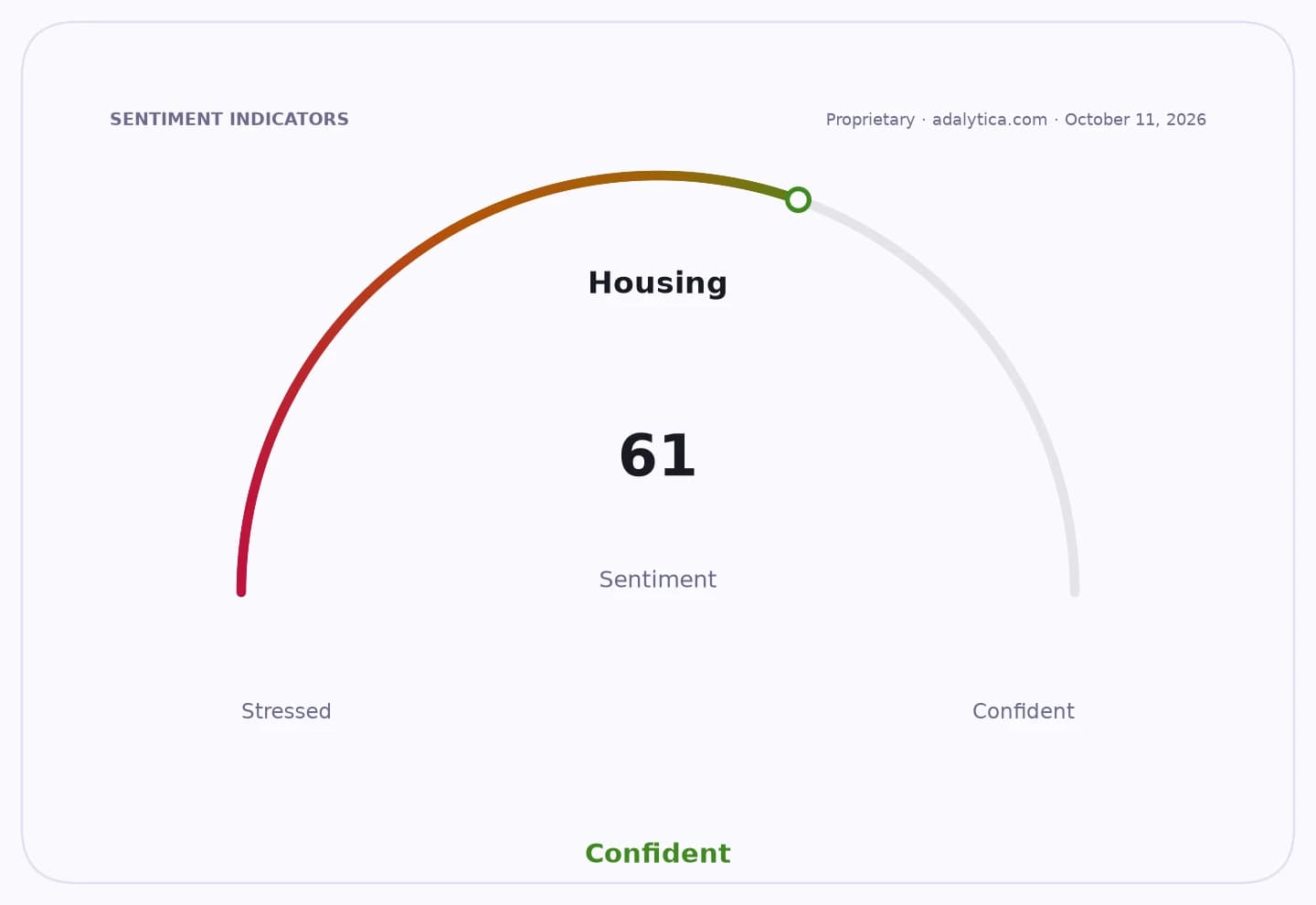
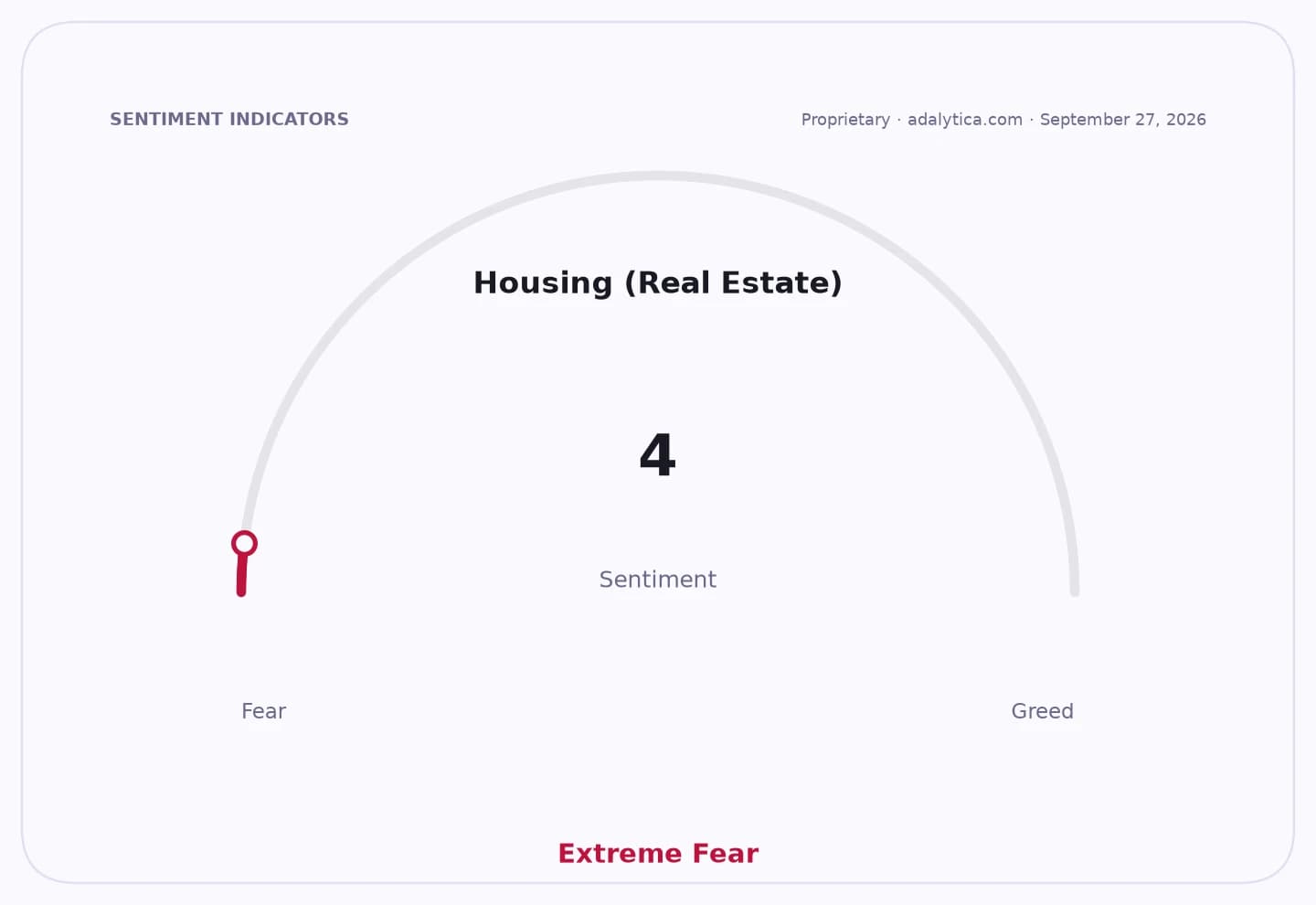
Sentiment IndicatorsⓘProprietary · adalytica.com · October 13, 2026
This is a snapshot — live sentiment, awareness and momentum for 130+ markets update continuously in the dashboard.Open AlphaPulse
The latest round of repricing appears to have been triggered by a jump in interest rate swaps after the Middle East conflict escalated in early March, according to the source article. Three-year swaps, which banks use to price mortgages, rose by about 0.8 to 0.9 percentage point in the first two weeks of the month. Banks initially passed that through slowly, lifting rates by only a tenth or two of a percentage point at a time. That restraint is now fading.
In recent weeks, lenders have stopped absorbing the rise in funding costs through their margins and have instead lifted mortgage offers by as much as 0.5 percentage point, the article said. That takes the market close to 6%, with some banks already materially above it. For borrowers, the impact is immediate: higher rates not only increase the monthly instalment but also reduce the maximum loan amount a household can qualify for.
The economics are straightforward. A two-earner household with monthly net income of 80,000 koruna that could have qualified for roughly 8 million koruna when rates were around 4.39% would see that borrowing capacity fall to about 6.8 million koruna at 5.79%, according to the example cited. On a 4 million koruna mortgage, the monthly payment would rise from about 20,000 koruna to roughly 23,500 koruna. That kind of shift is enough to force some buyers out of the market or into smaller homes, lower-priced districts or delayed purchases.
For the housing market, weaker demand could ease the pressure created by limited supply. But that is only a partial offset. With inventories still tight, affordability is deteriorating faster than prices are correcting, suggesting transaction volumes may bear the brunt before prices fully adjust. Developers, brokers and lenders tied to origination volumes are likely to feel the slowdown first.
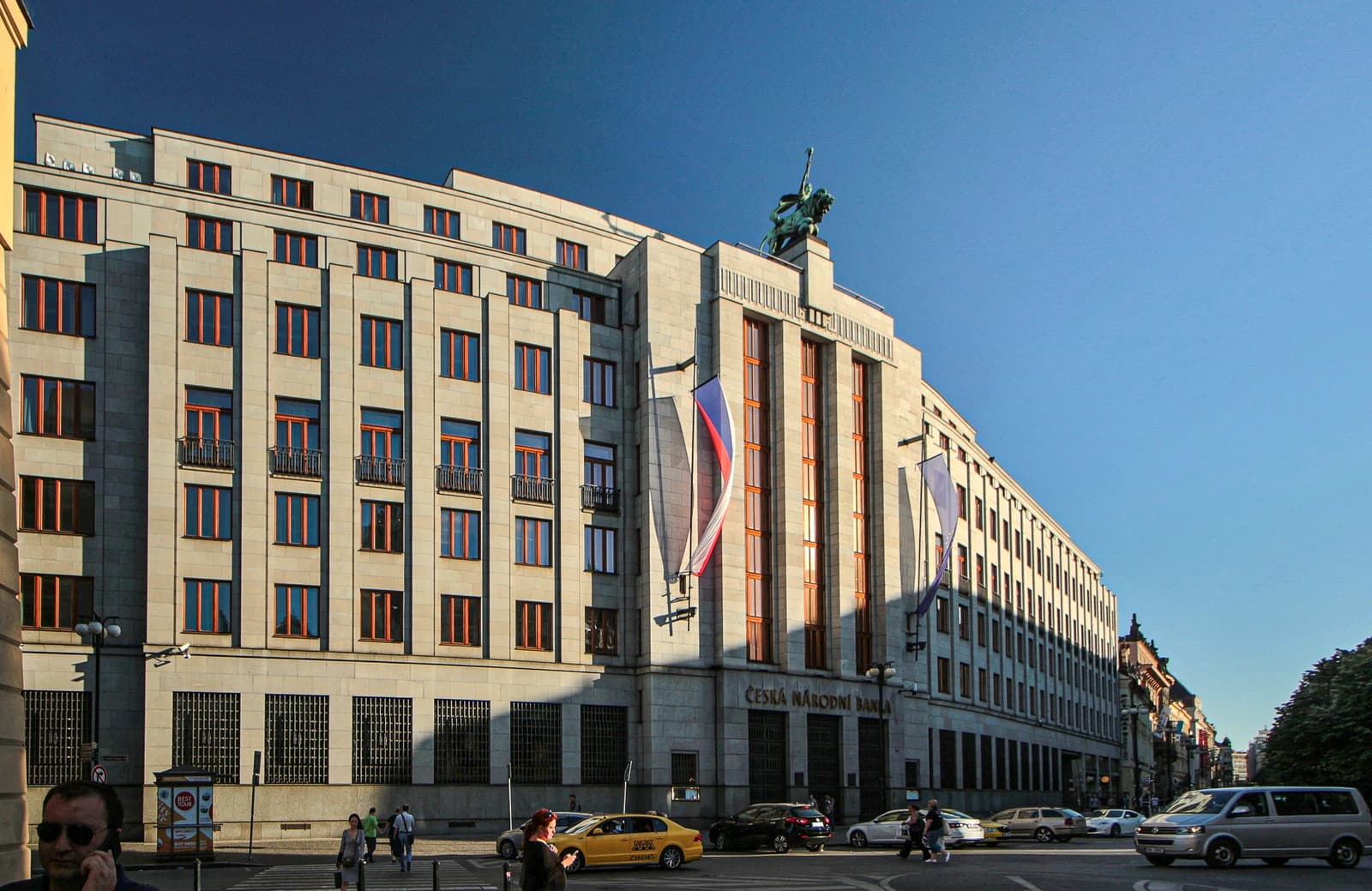
The shift also reflects a broader macro picture that has become less friendly to cheap credit. The article points to inflation risks, the prospect of further policy tightening by the Czech National Bank, deteriorating public finances and higher sovereign borrowing needs as factors pushing up the price of money. In other words, this is not just a local banking decision but part of a wider repricing of duration and credit across markets.
That is why the comparison with 2022 matters. Mortgage pricing is painful now, but it is still below the peaks seen when swap rates surged to around 7% two years ago. Markets have already absorbed a large part of the shock, which helps explain why lenders can say the worst of the repricing is largely in the market. Still, that is cold comfort for new borrowers: the current level of rates remains restrictive, especially when combined with rising property prices.
The near-term outlook suggests stabilization rather than relief. Unless new shocks hit inflation, fiscal credibility or geopolitics, further sharp increases look less likely, but banks are also unlikely to cut quickly. That leaves mortgage rates high enough to restrain demand, while the housing market waits for a clearer turn in funding costs and central-bank policy.
| Entity | Gains | Losses |
|---|---|---|
| Banks | ▲Wider lending spreads | ▼Borrower demand |
| Homebuyers | ▲Less competition in thin markets | ▼Higher monthly payments |
| Property sellers | ▲Slower price discovery | ▼Fewer qualified buyers |
| Czech households | ▲Time to delay purchases | ▼Lower mortgage affordability |