In Tatarstan, family mortgages now account for 72.4% of all home-loan originations, but the bigger market story is that buyers are starting to move away from new builds and toward the secondary market as the latest subsidy rules lift monthly payments and narrow the gap between under-construction and ready housing.
Tatarstan Family Mortgages Shift to Resale Housing
The shift matters because the September rush for Russia’s subsidized “family mortgage” program looks less like sustainable demand and more like front-loading ahead of tighter terms. Nationwide, family-mortgage lending hit a record 303 billion rubles in September, more than double August’s level and 63.7% above a year earlier, as borrowers tried to lock in loans before the Oct. 1 rule change.
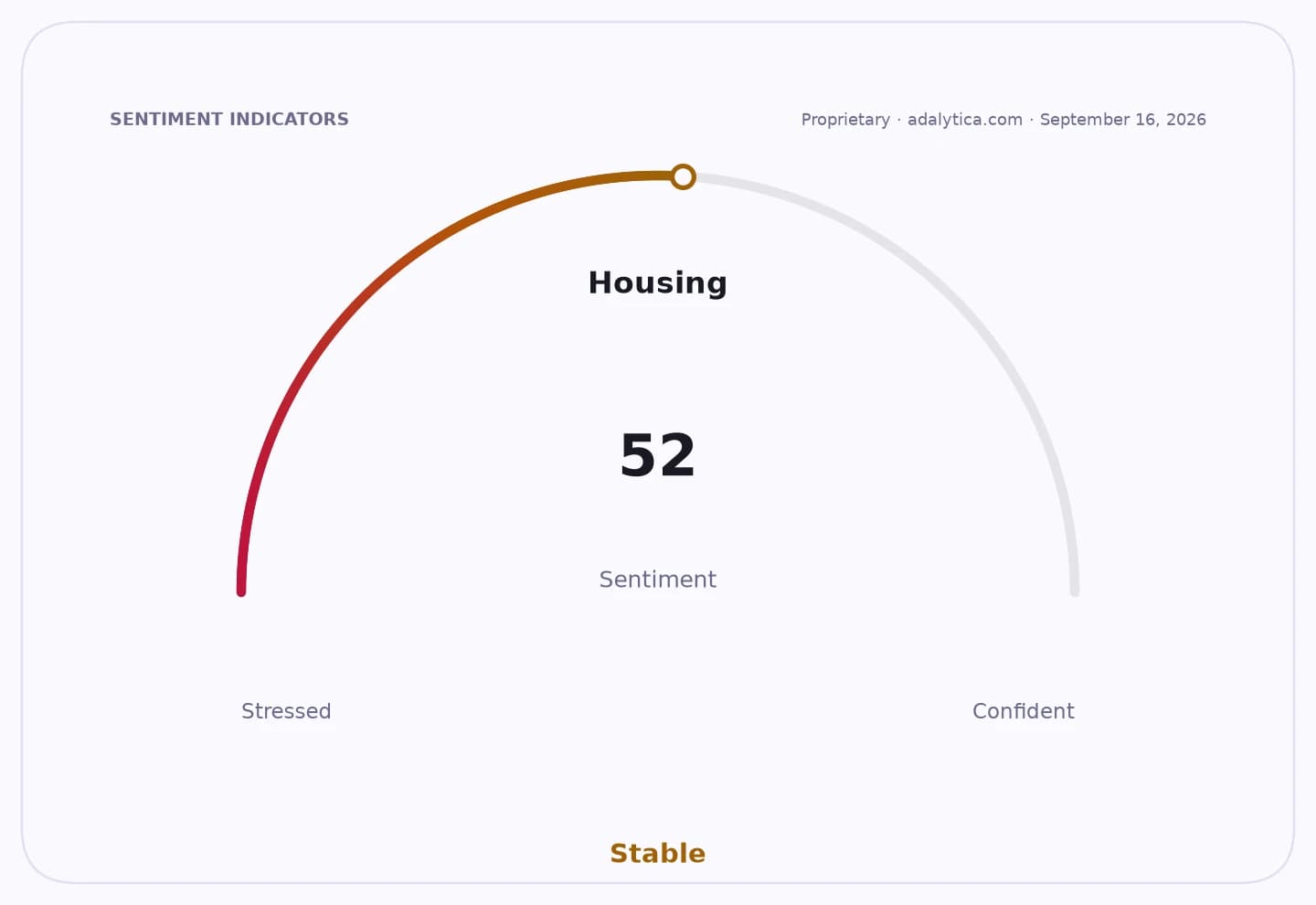
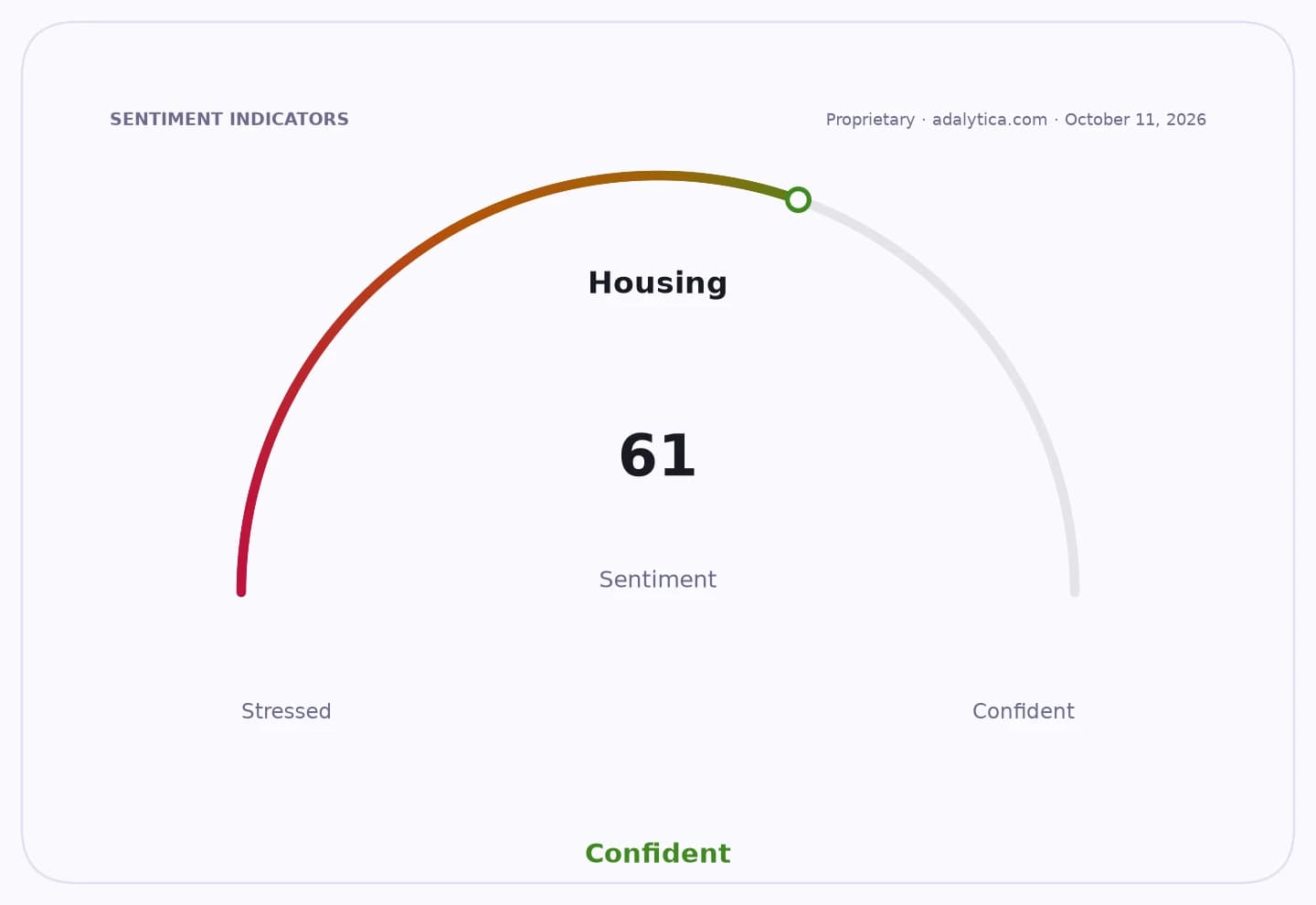
Sentiment IndicatorsⓘProprietary · adalytica.com · October 11, 2026
This is a snapshot — live sentiment, awareness and momentum for 130+ markets update continuously in the dashboard.Open AlphaPulse
The new conditions are expected to cool demand sharply. Industry figures in Tatarstan say the program’s maximum loan term has effectively been cut in half, pushing monthly payments from roughly 35,000-38,000 rubles to at least 60,000-65,000 rubles and raising household debt burdens by 40%-50%. A new five-year registration requirement in the purchased apartment also makes the subsidy less attractive for investors and more cumbersome for families that would have to change schools, clinics and other routines.
That is why the next leg of demand is likely to favor resale housing. Local brokers say buyers can now pay around 80,000 rubles a month for a finished apartment, sometimes with repairs included, versus about 65,000 rubles for a unit still under construction. For many households, the premium for move-in-ready housing is becoming easier to justify than tying up money in a build that comes with longer waits and policy risk.
For developers, the immediate risk is a loss of momentum after the September spike. Builders have already been offering discounts to family buyers ahead of the rule change, but those incentives may not be enough to sustain the same pace of sales if the subsidy loses some of its reach. That matters for cash flow, inventories and pricing power across Russia’s residential market.
The broader policy backdrop also argues for caution. Across Russia, 74% of September mortgage lending came through subsidized programs, underlining how dependent housing demand remains on state support. In Tatarstan, where family mortgages dominate the market, the balance is now shifting from primary to secondary housing, a sign that tighter subsidy rules may redistribute demand more than expand it.
Investors will be watching the next two to three months of mortgage data for confirmation that the September surge was a one-off rush. If so, the winners are likely to be resale-market sellers and buyers seeking immediate occupancy, while new-home developers and mortgage lenders tied to subsidized originations could face a softer autumn.
| Entity | Gains | Losses |
|---|---|---|
| Secondary-market sellers | ▲More buyer interest | ▼ |
| New-home developers | ▲ | ▼Slower demand after subsidy change |
| Family-home buyers seeking occupancy | ▲Ready apartments, lower execution risk | ▼Higher monthly payments |
| Mortgage lenders tied to subsidies | ▲ | ▼Less front-loaded demand after Sept. rush |