A Russian investor who took out more than 100 mortgages to buy apartments for rent has exposed how housing finance can morph into a highly leveraged business when banks are willing to underwrite expected rental income instead of wages.
Russia investor took out 100+ mortgages for rentals

The case, described by Etazhi deputy mortgage chief Tatyana Reshetnikova, matters because it shows the outer edge of what Russia’s mortgage market can still permit: large cash down payments, underwriting flexibility and no legal cap on standard market-rate mortgages. It also underscores a broader policy line now being drawn between private lending and subsidized housing support, after authorities tightened rules on repeated use of state-backed loans.
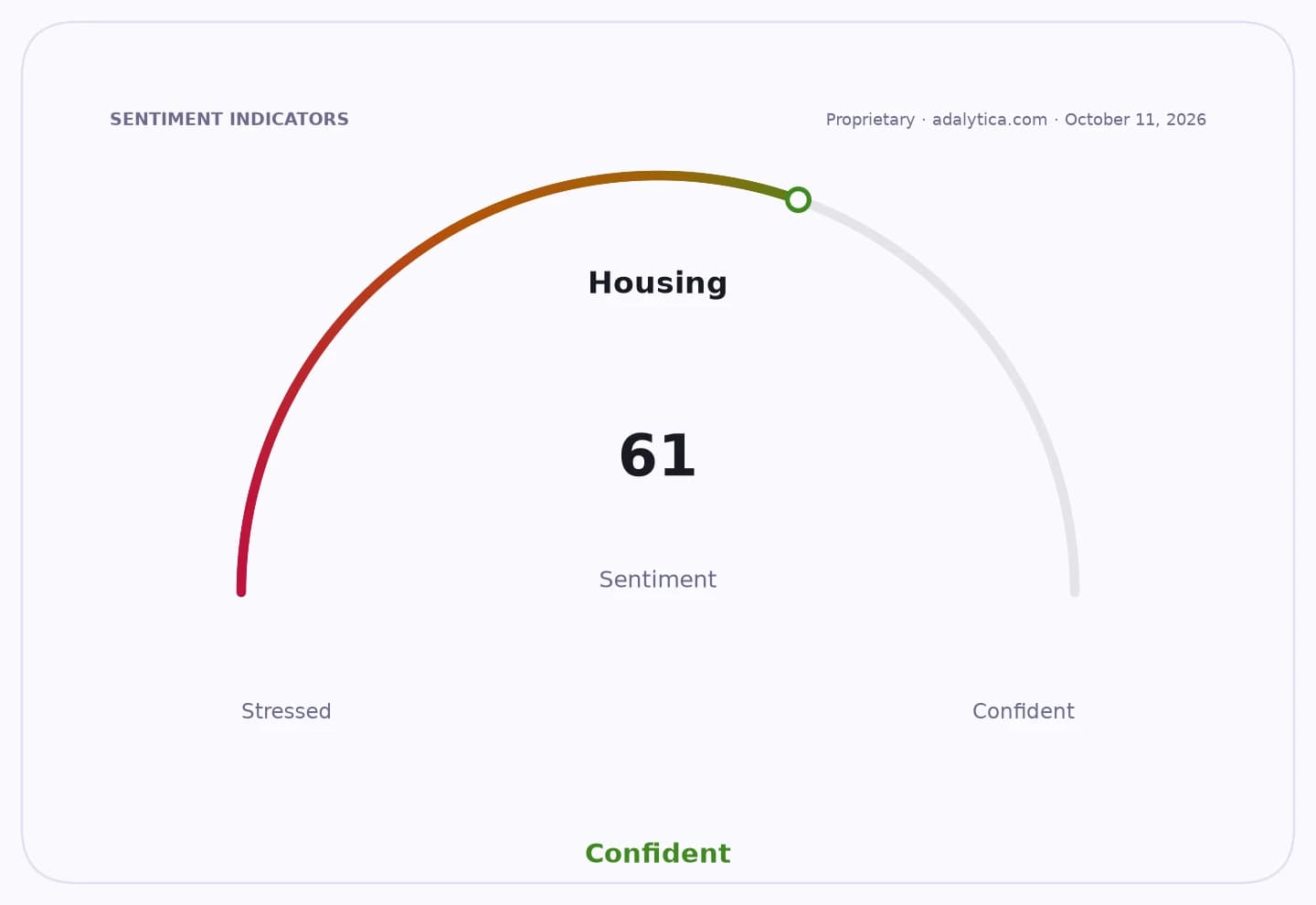
Sentiment IndicatorsⓘProprietary · adalytica.com · October 11, 2026
This is a snapshot — live sentiment, awareness and momentum for 130+ markets update continuously in the dashboard.Open AlphaPulse
Unlike preferential mortgages, which Moscow has moved to fence off with a “one subsidized mortgage per person” rule and a planned restriction for family mortgages from February 2026, ordinary market loans remain largely a matter of lender risk appetite. That leaves room for highly geared investors to assemble rental portfolios at scale if they can convince banks that the incoming rent stream will cover the debt.
Economically, the story is less about one unusually prolific borrower than about the incentives created by elevated borrowing costs and housing scarcity. When mortgage rates are high, the arithmetic for owner-occupiers worsens, but so does the economics for leveraged buy-to-let. Rent often falls short of monthly payments once maintenance, taxes, repairs and vacancy risk are included. In that environment, property investing stops looking like passive income and starts looking like a balance-sheet business dependent on liquidity, rising asset values and disciplined refinancing.
That tension helps explain why Russia has begun to clamp down on the abuse of subsidized credit. The Audit Chamber said more than 115,000 people had taken two or more subsidized mortgages before the rules were tightened, with one borrower holding 26 such loans. Officials clearly judged that public housing support was being turned into an investment channel rather than a tool for improving living conditions.
For investors, the lesson is that leverage is doing the heavy lifting in property markets, not rental yield. That is true in Russia and, in a different form, in other housing markets under strain from higher rates. In Australia, regulators are being urged to tighten mortgage standards as households struggle with repayments, while public support measures and banks’ lending decisions continue to shape who can borrow and on what terms. The common thread is that housing finance is increasingly a policy and credit-risk issue, not just a real-estate story.
Market participants should also note the contrast between private-market discipline and subsidized distortions. Where banks are free to price risk, loans can be structured around cash flow and collateral. Where government support lowers the cost of debt, the result can be excess demand, multiple borrowing and political pressure to restrict access. That makes the Russian case relevant not because it is typical, but because it reveals how quickly housing can become a financing platform when credit is abundant enough.
The next question is whether tighter rules on subsidized mortgages push more activity into the commercial end of the market, or whether persistently high rates make large-scale leveraged property ownership unattractive even for well-capitalized borrowers. Either way, the investor who amassed more than 100 mortgages is a reminder that in housing, the real business is not the number of apartments owned but the spread between rental income and the true cost of funding them.
| Entity | Gains | Losses |
|---|---|---|
| Well-capitalized property investors | ▲Scale through leverage | ▼Cash-poor buyers |
| Russian banks | ▲Loan volume, fee income | ▼Credit risk if rents weaken |
| Subsidized mortgage borrowers | ▲Targeted access to cheap debt | ▼Multiple-loan loophole users |
| Regulators | ▲Tighter control of housing subsidies | ▼Flexibility in housing support |