Russia’s economy has been operating at full employment for three years, making productivity gains the main constraint on future growth and leaving policymakers with fewer tools to expand output without adding inflationary pressure.
Russia labor market tight as growth slows
Deputy Central Bank Governor Alexei Zabotkin’s comments matter because they frame the Russian economy as one where labor is no longer the growth engine. When unemployment is hovering near record lows — President Vladimir Putin said in May it remained at 2.2% — businesses cannot rely on hiring more workers to increase production. Instead, economic expansion has to come from higher efficiency, investment and technology, which usually takes longer to materialize and is harder to deliver in an economy already dealing with sanctions, elevated state spending and labor shortages.
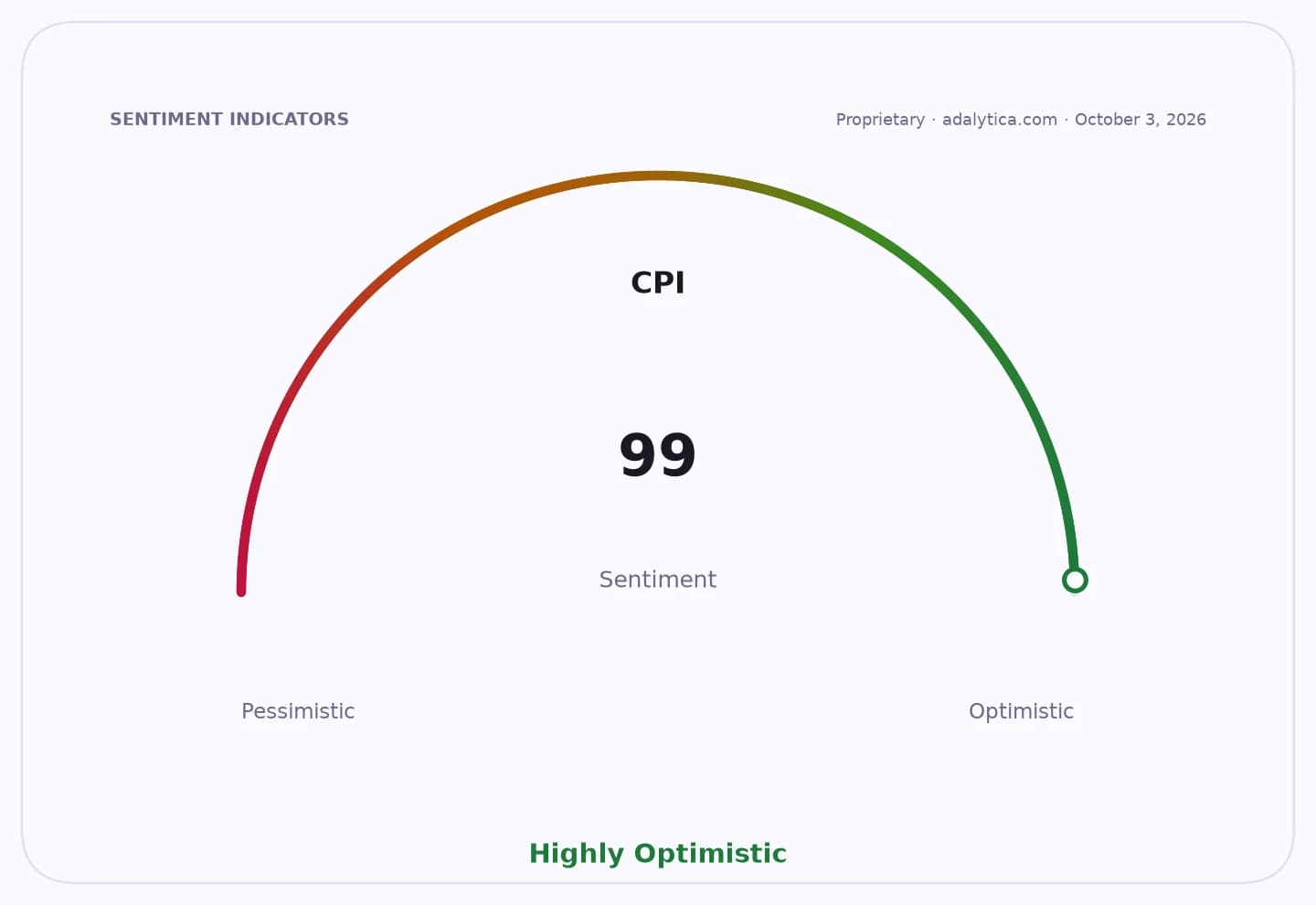
Sentiment IndicatorsⓘProprietary · adalytica.com · October 5, 2026
This is a snapshot — live sentiment, awareness and momentum for 130+ markets update continuously in the dashboard.Open AlphaPulse
That makes the labor market central to Russia’s policy debate. Economy Minister Maxim Reshetnikov said in late June the labor market was gradually “cooling,” a signal that officials are aware of the risk of overheating even as hiring conditions remain tight. In a full-employment environment, wage growth tends to outpace productivity if firms compete for scarce workers, reinforcing inflationary pressures and complicating the central bank’s job. It also helps explain why the Bank of Russia has kept a close watch on domestic demand and pay growth even as headline unemployment stays exceptionally low by international standards.
The macro backdrop is already showing the strain. Russia’s currency has been volatile in recent months, with USDRUB trading around 85.29 on Oct. 5, above its 200-day moving average and after a sharp move lower and then higher through the summer. A weaker ruble can feed imported inflation, while tight labor conditions can keep service-sector prices sticky. In that setting, the central bank’s assessment that growth is now productivity-bound implies that any durable expansion will likely require capital deepening, better logistics and higher labor efficiency rather than a simple increase in headcount.
For investors, the message is two-sided. On the bullish side, a tight labor market supports household incomes and consumption, which can cushion domestic demand and limit downside in sectors exposed to Russian consumers. On the bearish side, persistent full employment raises the risk that wage growth outstrips output gains, squeezing corporate margins and keeping monetary policy restrictive for longer. That is particularly relevant for banks, retailers, consumer businesses and industrial companies that depend on stable input costs and predictable demand.
The broader conclusion is that Russia’s growth model is running into a capacity ceiling. Unless productivity rises materially, the economy may keep expanding only slowly, with inflation, wages and the exchange rate doing much of the work of transmitting stress through the system. The next clues will come from whether the labor market really cools, whether wage growth eases and whether policymakers choose to tolerate weaker activity in exchange for price stability.
| Entity | Gains | Losses |
|---|---|---|
| Workers | ▲Higher wages | ▼Slower hiring growth |
| Employers | ▲Strong demand support | ▼Margin pressure from labor costs |
| Central Bank of Russia | ▲Lower unemployment credibility | ▼Harder inflation control |
| Consumers | ▲Income gains | ▼Higher prices if wages fuel inflation |