Russia is preparing to channel trillions of rubles into pensions, child benefits and compulsory medical insurance over the next three years, a fiscal signal that the state intends to keep shielding households even as it relies heavily on budget transfers and payroll contributions to do so.
Russia Plans Trillion-Ruble Pension and Health Funding
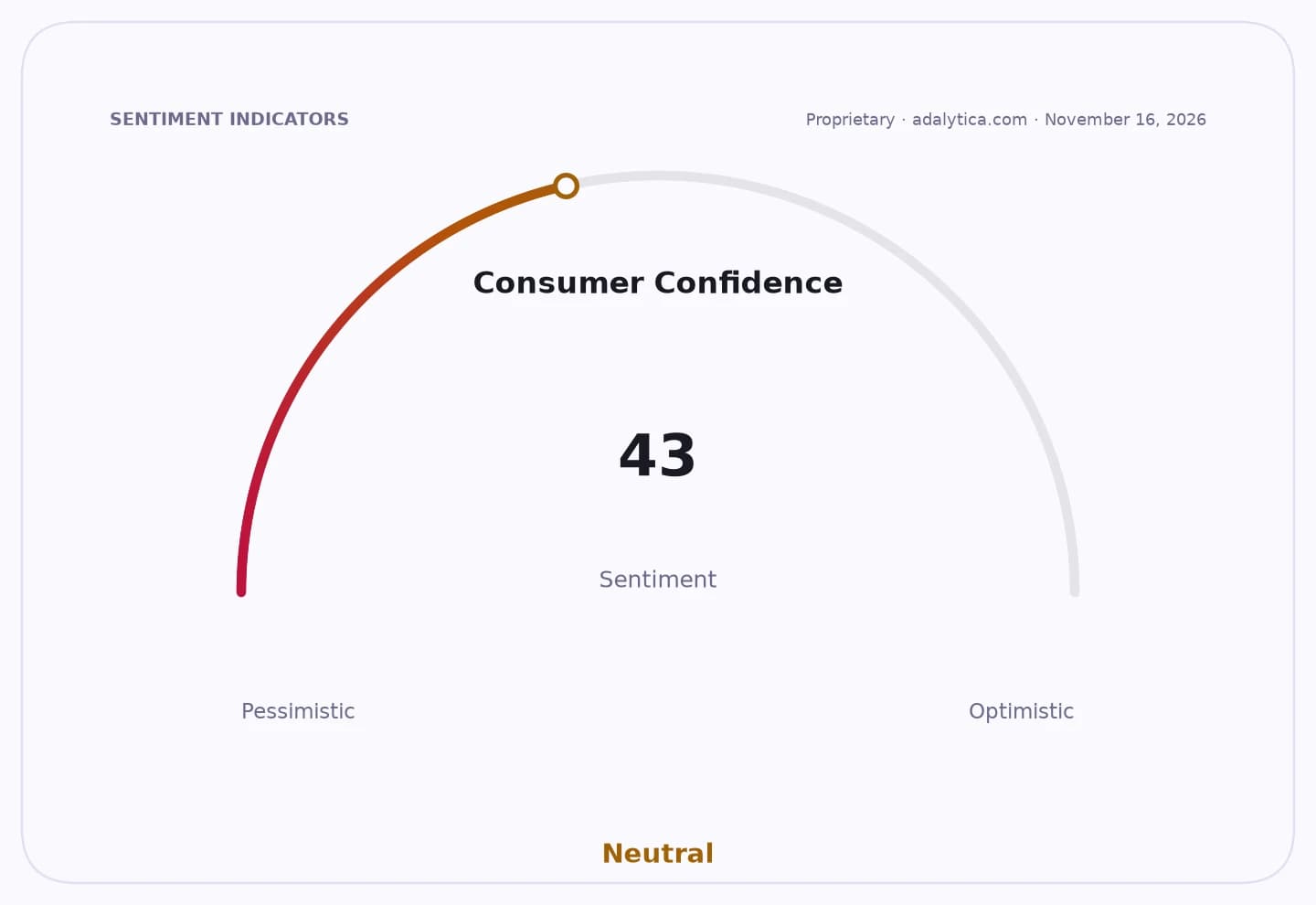
Consumer Confidence
The plans, backed by the State Duma budget committee, show how Moscow is using the Social Fund and the federal compulsory medical insurance fund to underwrite social stability at a time when consumer sentiment is deteriorating and the cost of living remains elevated. The funding also underscores the government’s dependence on the federal budget to keep the system balanced, leaving social protection tied closely to broader fiscal capacity and labor-market performance.
Sentiment Indicators
The Social Fund, which pays pensions and a range of family benefits, is expected to see income rise from about 19.9 trillion rubles in 2027 to more than 22.5 trillion rubles by 2029. Annual federal transfers will still cover a large share of the bill, at roughly 3.97 trillion to 4.4 trillion rubles a year. By the end of 2027, the average insurance pension is projected at 28,849 rubles a month, while the average old-age pension should approach 29,903 rubles. Social pensions are penciled in at 17,585 rubles.
The biggest economic significance is the sheer scale of automatic spending. Outlays on insurance pensions alone are set to climb steadily and reach almost 14.7 trillion rubles by 2029. That locks in a large recurrent obligation for the state and limits room for discretionary spending elsewhere, especially if growth slows or tax receipts underperform. For households, it means higher nominal support, but not necessarily a sharp improvement in purchasing power if inflation remains sticky.
The plan also raises maternity and child benefits. The maximum maternity payment for 140 days of leave is set to exceed 1.1 million rubles in 2027 and rise to 1.31 million rubles by 2029. A one-time birth benefit will increase to 30,385 rubles from February 2027 and to 32,864 rubles by 2029. Sick-pay benefits are also due to rise, reinforcing the government’s bid to cushion families and maintain consumption.
The compulsory medical insurance fund is set to collect between 5.1 trillion and 5.7 trillion rubles over the period, with insurance contributions making up almost 91% of revenue in 2027. Contributions from employers for working people are scheduled to rise 11.4%, while those tied to the non-working population, including children and pensioners, will rise 5%. To preserve the system’s balance and keep healthcare free at the point of use, federal transfers are slated to increase from 372 billion rubles in 2027 to 417 billion rubles in 2029.
That matters for investors because it shows where the state is prioritizing resources: social spending is being protected, but it is being financed through a system that leans on wage-linked contributions and central budget support rather than broad-based productivity gains. The structure is supportive for domestic consumption and for sectors tied to household transfers, but it also signals persistent pressure on public finances and on employers’ payroll burden.
A key metric, the per-capita OМС funding norm, is set to rise from 25,334 rubles in 2027 to 28,515 rubles in 2029. In practical terms, that is the benchmark for how much the state allocates to treat each citizen under the basic medical program. Higher norms should help hospitals and providers absorb rising costs, but they also point to a system where spending is increasing to keep pace with inflation and medical demand rather than to dramatically expand capacity.
The budget committee’s approval came alongside a broader package of amendments, including relief for regions on budget-credit interest costs and tax-related measures aimed at the business sector. That combination suggests policymakers are trying to protect social spending while easing some fiscal and corporate strain around the edges. For markets, the message is that Russia’s social model remains intact for now, but its durability still depends on continued budget transfers, a stable labor base and the government’s ability to keep inflation and financing costs under control.
| Entity | Gains | Losses |
|---|---|---|
| Pensioners and families | ▲Higher cash benefits | ▼Inflation still erodes purchasing power |
| Hospitals and insurers | ▲Rising OМС funding norms | ▼Greater reliance on budget transfers |
| Federal budget | ▲Social stability | ▼Larger recurrent fiscal burden |
| Employers | ▲More predictable social system | ▼Higher payroll contribution load |