Russia’s preferential mortgage market shrank sharply in October after new family-loan rules took effect, pushing the subsidized share of home lending below its pre-pandemic level and to the weakest point since before the state turned housing finance into a mass support program.
Russia preferential mortgages fall after rule change
That matters because preferential lending has been one of the main props for Russian housing demand, especially in Moscow and St. Petersburg, where it now accounts for just 11% to 14% of issuance by number. A steeper drop in subsidized credit means less transaction activity, weaker support for developers and a higher reliance on more expensive market-rate borrowing just as the central bank has been trying to rein in inflation and credit growth.
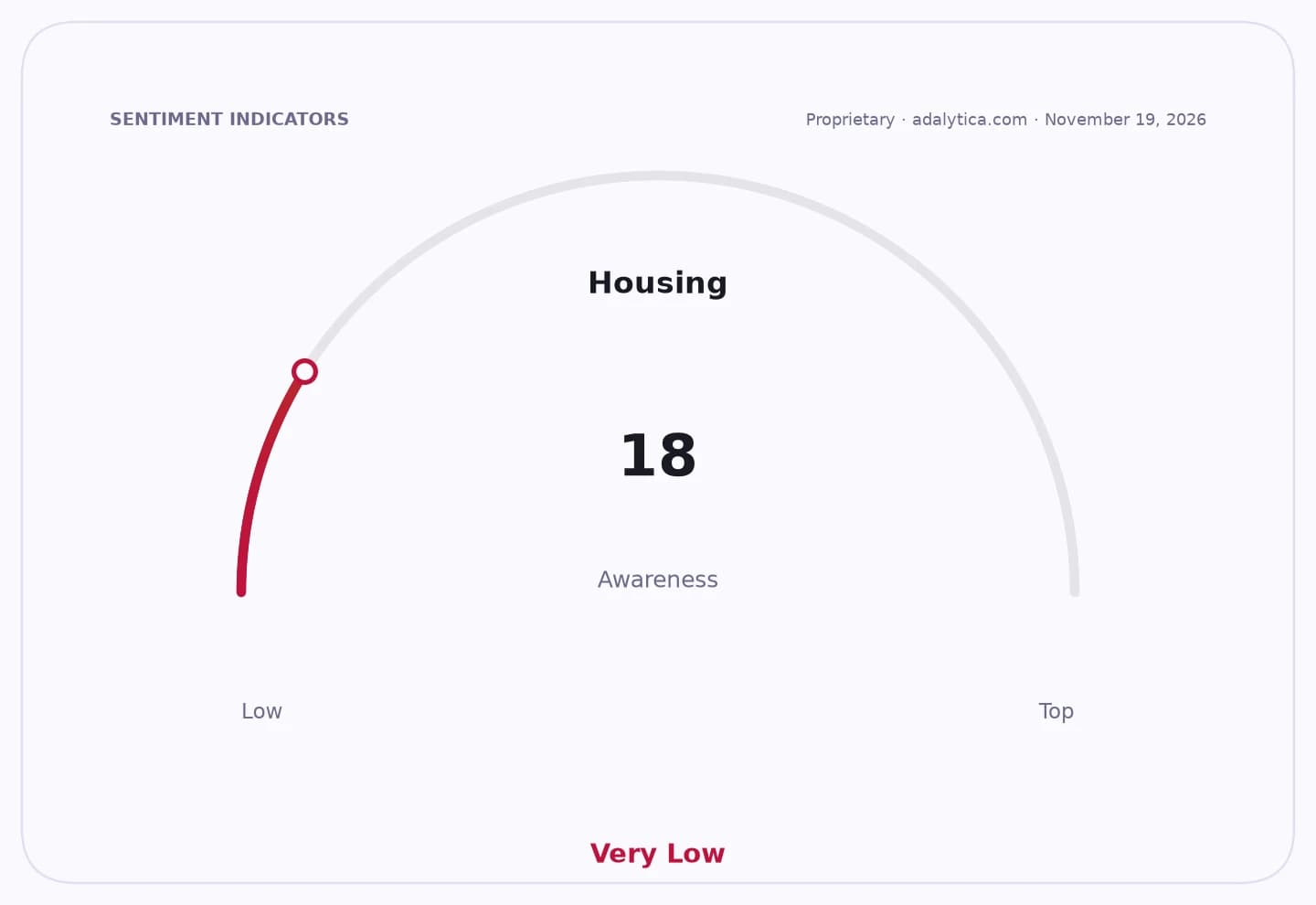
Sentiment Indicators
According to the United Credit Bureau, preferential mortgages made up 20% of October originations by volume, down from 69% in the previous month, and 32% by number, from 54%. The share is now even lower than before April 2020, when the government launched a broad-based subsidized mortgage program to cushion the economy during the pandemic.
The scale of the reversal was stark. Banks issued 15.85 billion rubles of preferential mortgages in October, a 79% drop from September and roughly 74% to 75% below a year earlier, the bureau said. In Moscow, issuance fell 7.3 times by number; in the Moscow region, 6.8 times; and in St. Petersburg, 10.4 times. Only the Far Eastern mortgage program at 2% held up in parts of the Russian Far East.
The change also altered loan economics. The average term on preferential mortgages fell by more than six years in a month to 21 years and one month, the shortest in four years, after the maximum term on family mortgages was cut in half from 30 years to 15. Shorter maturities reduce the subsidy burden on the state but also raise monthly payments, narrowing the pool of eligible borrowers and cooling demand.
For policymakers, the data show the government is finally tightening a program that had become so broad it distorted the market. Central Bank Governor Elvira Nabiullina has argued that preferential mortgages should remain limited, warning that even an addressed scheme covering up to 90% of mortgages would make market-rate housing finance nearly inaccessible.
For investors, the message is two-sided. Banks and mortgage originators face lower volumes and thinner fee income from subsidized lending, while developers in the largest cities may see demand soften further if households cannot bridge the gap to market rates. On the other hand, the pullback may help reduce inflationary pressure in housing and support a more sustainable mortgage market over time, especially if subsidy programs stop crowding out private credit.
The next test is whether October was a one-off adjustment to the new rules or the start of a more durable reset in Russian housing finance. If the decline persists, it would mark a clear shift away from the state-backed mortgage boom that helped drive the market for four years.
| Entity | Gains | Losses |
|---|---|---|
| Russian government | ▲Lower subsidy burden | ▼Less housing demand support |
| Central Bank of Russia | ▲Easier credit restraint | ▼Slower mortgage activity |
| Developers in major cities | ▲— | ▼Weaker home sales |
| Borrowers eligible for subsidies | ▲Smaller loan sizes, tighter terms | ▼Higher monthly payments |