Russia’s family-mortgage subsidy is still offering loans from 5.99% through Sberbank, but the programme’s practical reach remains constrained by a 10 million-ruble borrowing cap that leaves many households facing sizable down payments and monthly costs.
Sberbank Russia family mortgage subsidy stays capped
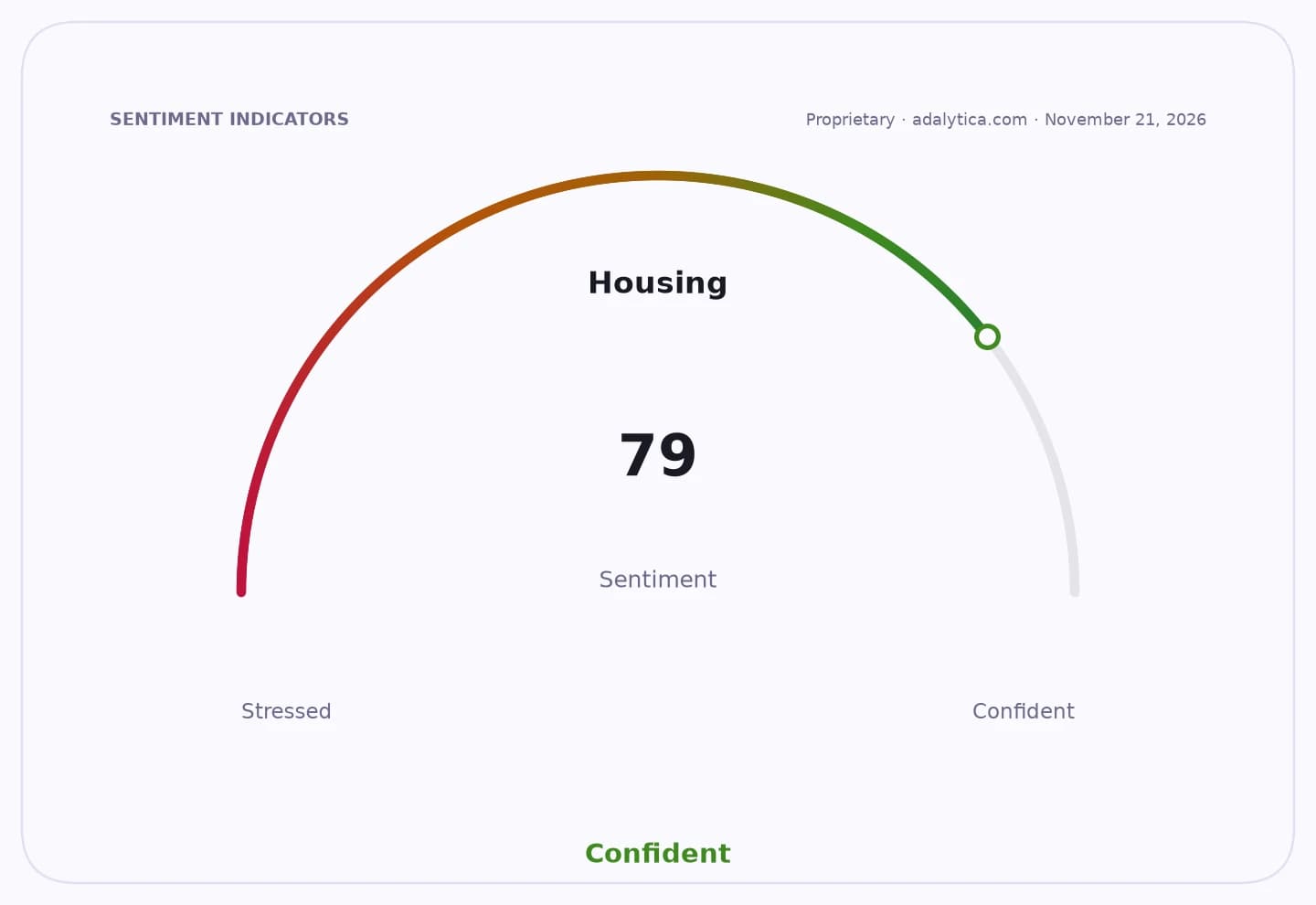
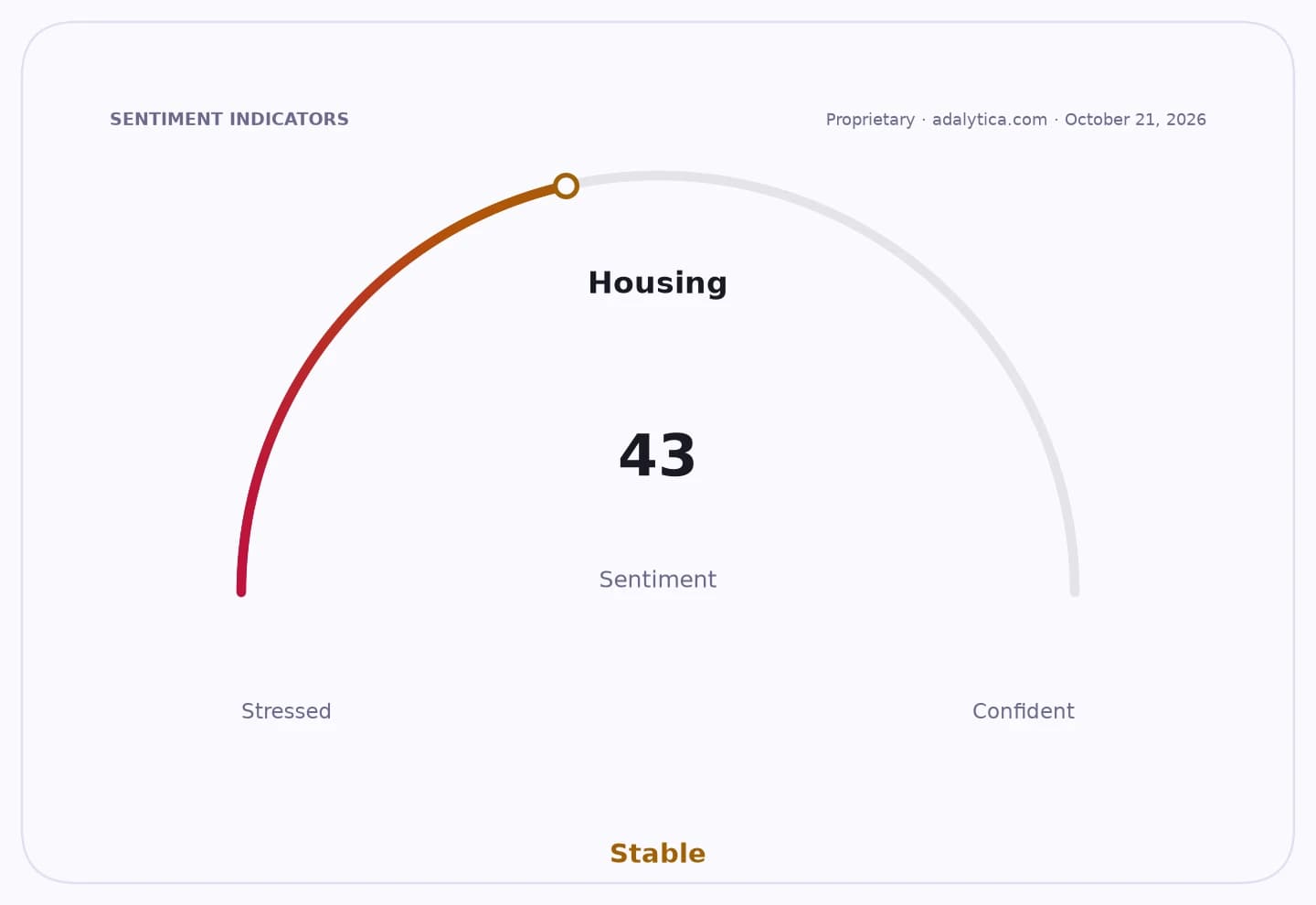
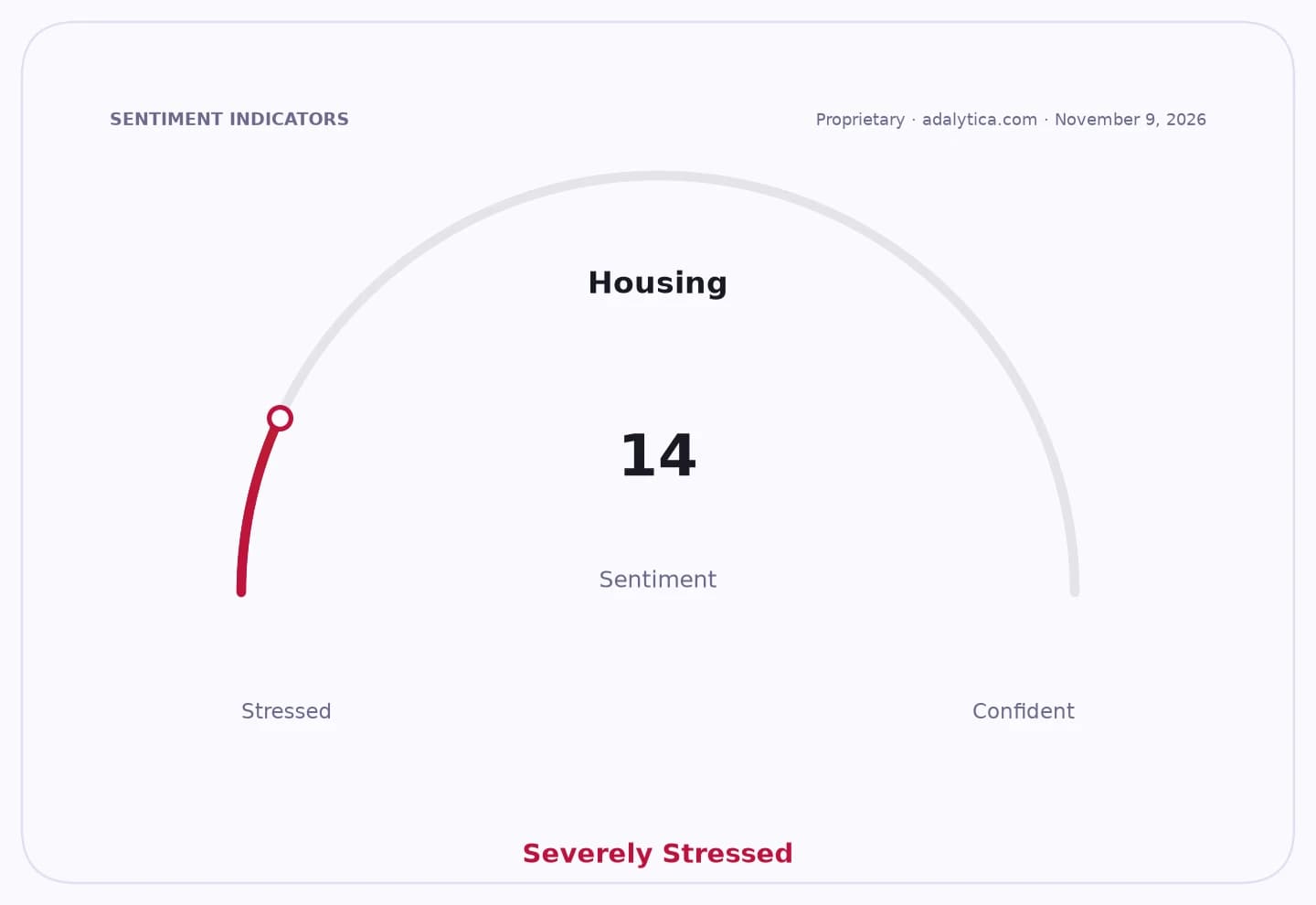
Housing
That matters because the subsidy is one of the few policy tools still supporting housing demand in a market where affordability is being squeezed by borrowing costs and tighter credit conditions. In the Sberbank offer, a home priced at 9.97 million rubles requires an initial contribution of at least 2.0 million rubles, with a monthly payment of 47,721 rubles on a 30-year term. A second base option, for a 10.23 million-ruble property, pushes the payment to 68,962 rubles on a 15-year schedule. For families with children aged six or younger, the programme remains a critical bridge to ownership, but it is no longer a broad-based stimulus to the housing market.
Sentiment Indicators
The economics are straightforward: subsidised mortgage rates can offset some of the damage from high market borrowing costs, but only up to a point. The offer is tied to one of the largest state-linked lenders and underscores how Russian housing policy is leaning on targeted credit support rather than a wider easing in financing conditions. That tends to protect demand at the lower end of the market, but it also concentrates activity among buyers who can already assemble significant equity.
For lenders and developers, the programme is supportive but not a cure-all. A capped subsidy helps convert eligible families into borrowers, yet it does little for households outside the rules or for transactions above the limit. That means demand can remain segmented, with a healthy flow in qualifying projects and weaker pricing power elsewhere. If the state keeps limits unchanged, the benefit accrues mainly to developers positioned in the sub-cap bracket and to banks with strong origination platforms.
Investors should read this as a sign that housing demand is being preserved administratively rather than organically. In markets where mortgage rates stay elevated, that usually prolongs volume stability for selected lenders and builders while leaving broader affordability pressures unresolved. The key question now is whether policymakers eventually raise loan limits again or keep relying on narrowly targeted support to prevent a sharper slowdown in the residential market.
| Entity | Gains | Losses |
|---|---|---|
| Sberbank | ▲Subsidised loan flow | ▼Broader margin upside |
| Eligible families | ▲Lower mortgage rate | ▼Large cash down payment |
| Developers in cap range | ▲Supported sales volumes | ▼Demand above cap |
| Non-eligible buyers | ▲— | ▼Access to subsidy |