Russia and Slovenia have resumed official messaging for the first time in four years, a small but telling diplomatic thaw that underscores how Europe’s security order remains fractured even as market attention stays fixed on the war in Ukraine, sanctions enforcement and the stability of the euro.
Russia, Slovenia Resume Official Messaging After Four Years
The exchange matters less for its immediate substance than for what it says about Europe’s shifting diplomatic fault lines. Slovenia is a member of the European Union and NATO, so any reopening of communication with Moscow is politically sensitive. It comes as the bloc is still wrestling with the costs of detaching from Russian energy, tightening sanctions, and managing the spillover from the war, including pressure on border security and migration. For investors, the key issue is whether even limited contact signals any change in the hard line around trade, energy and financial restrictions — or whether it simply reflects routine consular and diplomatic housekeeping with no policy dividend.
Markets have not moved on the message exchange itself, but the broader backdrop remains relevant for the euro and for Russia-linked assets. The euro was last seen around $1.16, with technical readings showing the currency hovering near its 50-day and 200-day moving averages and RSI readings in moderately positive territory, suggesting the single currency is steady but not yet in a decisive trend. The rouble, meanwhile, has been volatile over the past year, reflecting sanctions pressure, energy revenues and capital controls more than any diplomatic overture.
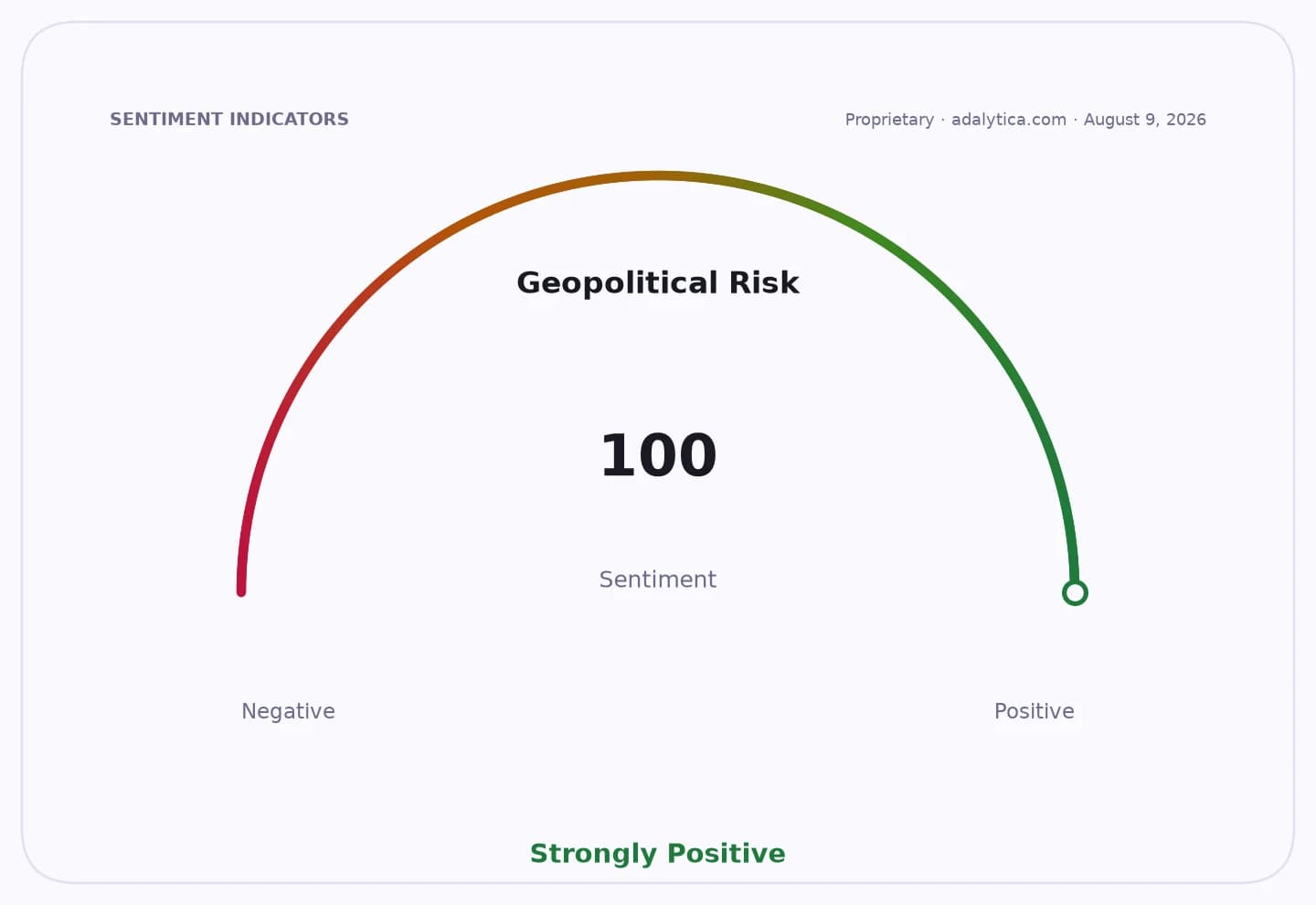
The geopolitical tone is also fragile. Adalytica’s Global Stability Sentiment gauge is at “Extreme Greed,” a reading that suggests markets are broadly complacent about geopolitical risk even as Europe faces multiple pressure points, from the war in Ukraine to Russian influence operations and internal EU disputes over energy dependence. That kind of complacency can leave assets vulnerable if diplomacy deteriorates or if Moscow uses any contact with EU states to test divisions inside the bloc.
For Russia, a resumption of dialogue with an EU and NATO member could help chip away at diplomatic isolation at the margin, but it does not change the economic reality that sanctions remain the dominant constraint on trade, finance and technology access. For Slovenia and its EU partners, the risk is reputational and strategic: any reopening in communication must be carefully managed so it does not weaken sanctions unity or undermine support for Ukraine.
The bigger market question is whether this is a one-off signal of contact resuming or the first step toward a broader normalization process. At this stage, investors should treat it as the former. Unless it is followed by concrete changes in energy flows, sanctions policy or cross-border trade, the economic impact is likely to remain limited — but in Europe’s current environment, even limited diplomatic movement can become a marker for future policy shifts.
| Entity | Gains | Losses |
|---|---|---|
| Russia | ▲Partial diplomatic access | ▼Continued isolation |
| Slovenia | ▲Channel to Moscow | ▼Political scrutiny |
| EU hawks | ▲Sanctions unity reinforced | ▼Little room for easing |
| Euro assets | ▲Near-term stability | ▼Geopolitical premium risk |