Russia said it struck military and strategic targets across Ukraine, including logistics hubs, a warplane and port-linked infrastructure, a reminder that the conflict’s economic shock is still flowing through energy, defense and global risk assets.
Russia Strikes Ukraine Targets; Defense And Energy Bid
The most important market takeaway is not the battlefield claim itself, but what it says about the persistence of war-related demand. Every fresh escalation keeps a floor under defense spending expectations, sustains the bid for energy security assets and preserves the premium investors assign to companies tied to rearmament, logistics, surveillance and fuel supply.

That matters because the war is no longer just a regional headline; it remains a capital-allocation theme. Russian officials said military-industrial facilities and seaports in Mykolaiv, Kyiv and Odesa were hit, including logistics centers used to store and distribute military materiel, an airfield near Kyiv and port equipment in Odesa. Attacks on ports and fuel depots reinforce the risk that Black Sea shipping, fuel flows and industrial output stay vulnerable, even as markets try to discount the conflict as a background risk.
For investors, the clearest trade is in the second-order winners. Defense contractors, missile and drone suppliers, battlefield software firms and aerospace names remain the obvious beneficiaries whenever the war intensifies. So do oil and energy infrastructure stocks, because persistent conflict keeps geopolitics embedded in crude pricing and fuels the case for supply redundancy. The U.S. defense ETF ITA and the aerospace-and-defense ETF XAR both capture that theme, while energy ETF XLE benefits whenever traders price in renewed geopolitical risk around supply chains and transit corridors.
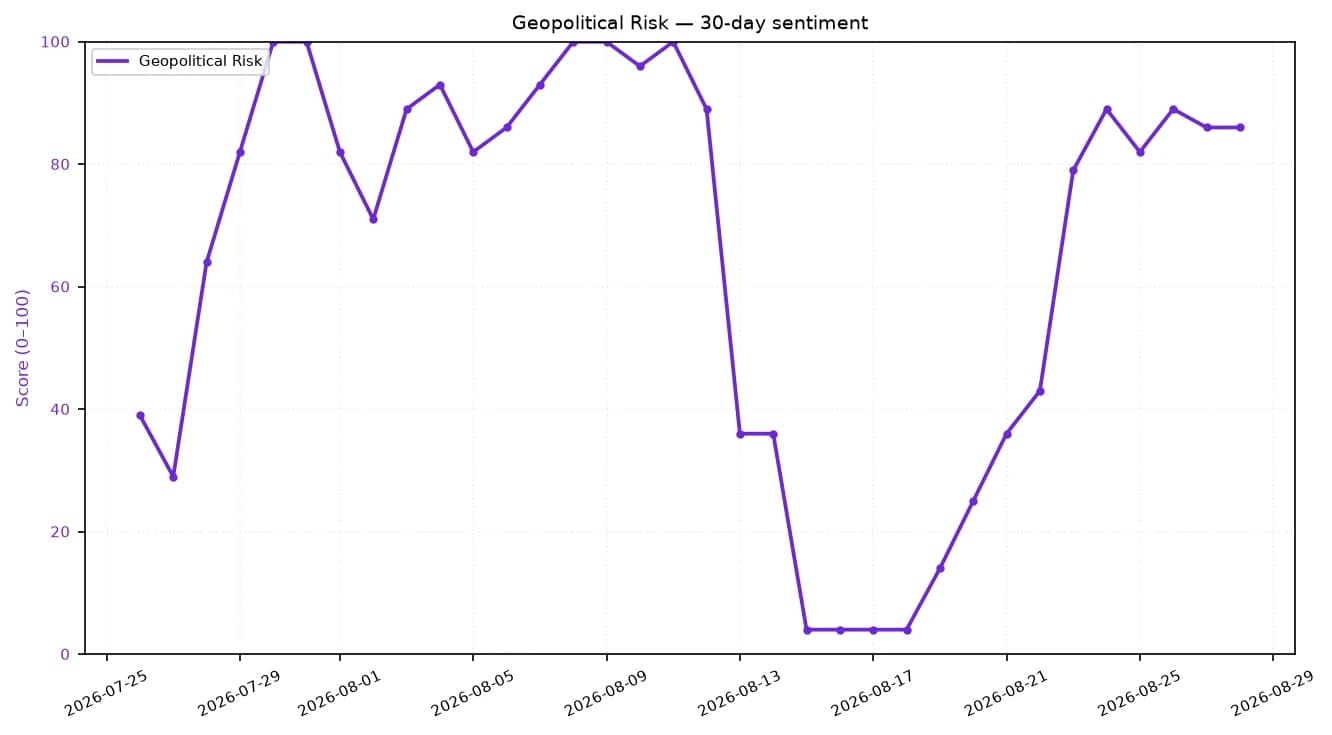
Geopolitical Risk — 30-day sentimentadalytica.com
Explore this data interactively — full history, time series and cross-market comparisons.Open AlphaPulse
The technical picture is consistent with that thesis. XLE has pushed sharply higher and is trading near its recent highs, with momentum readings still elevated even after a strong run. ITA remains well above its 200-day moving average, though it has backed off from its peak, while XAR has been hit harder in the short term and now sits well below its 50-day average, a sign that the market is rotating within defense rather than abandoning the theme.
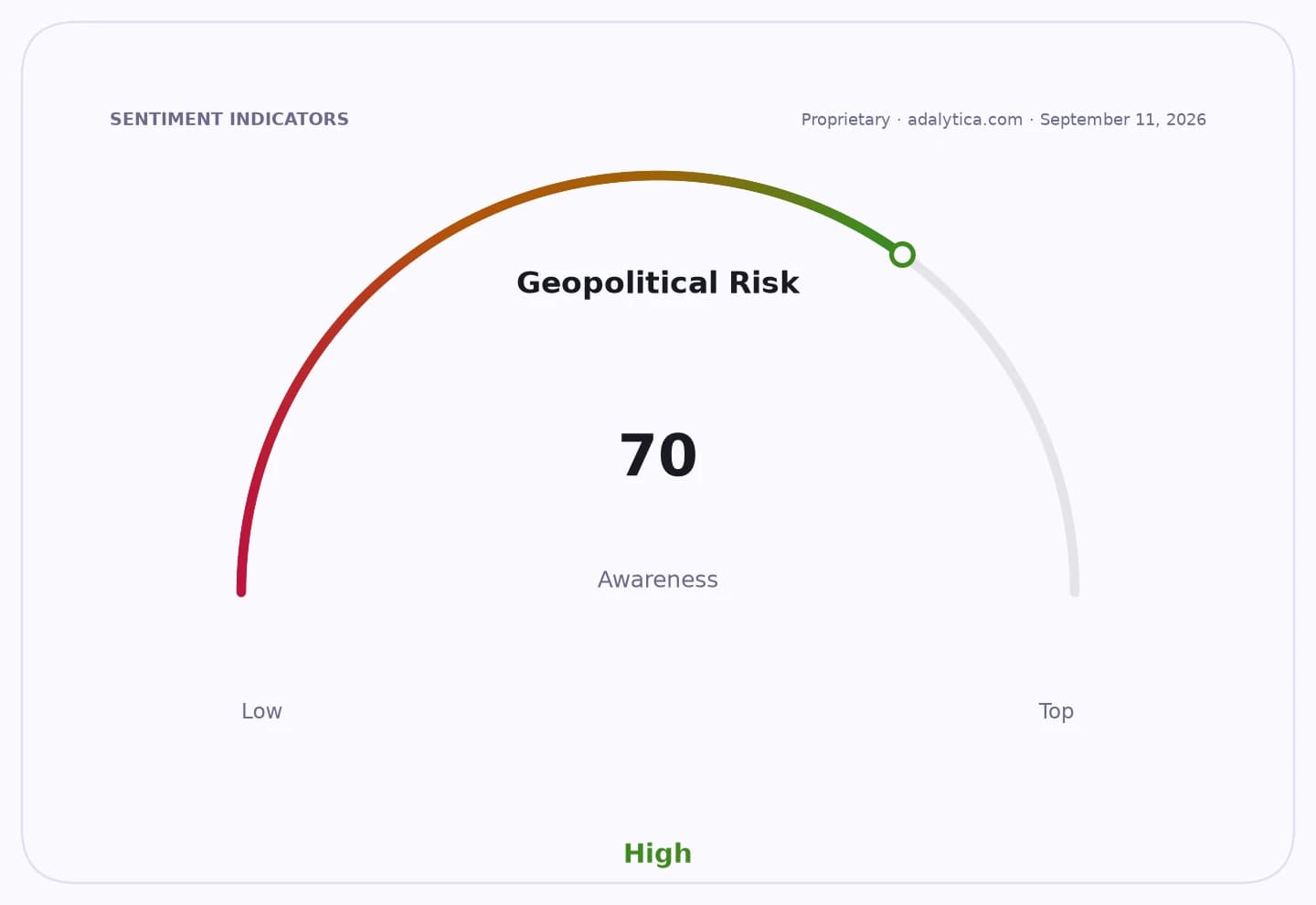
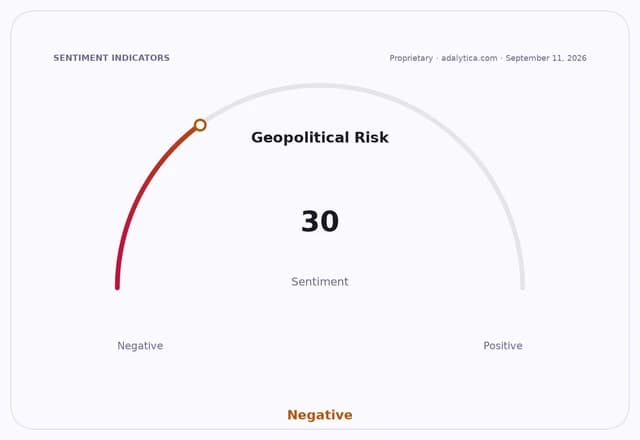
Adalytica’s Global Stability Sentiment gauge sits in fear territory, while its WTI oil trade signals show extreme fear despite extreme awareness, a combination that often appears when investors know the risk is real but are not fully positioned for a supply shock. That gap is where opportunity lives. The market underestimates how quickly a localized strike on ports, depots or aviation assets can ripple into shipping rates, insurance costs, energy pricing and defense procurement.
My view is simple: this is still a buy-the-picks-and-shovels war trade, not a headline trade. If the conflict escalates further, capital will continue to flow toward the companies that move fuel, protect supply chains and build the systems modern militaries need. Investors should stay positioned in defense and energy exposure, and use pullbacks in XAR, ITA and XLE as opportunities rather than reasons to step aside.
| Entity | Gains | Losses |
|---|---|---|
| Defense contractors | ▲Higher procurement demand | ▼Slower spending if diplomacy advances |
| Energy stocks | ▲Geopolitical risk premium | ▼Easing oil volatility |
| Ukraine logistics and ports | ▲— | ▼Infrastructure damage |
| Broad market risk sentiment | ▲— | ▼Higher war premium |