Real wages in Russia are still rising on paper in 2026, but for many workers the bigger story is that inflation, weaker hiring and automation are eroding purchasing power and, in some cases, cutting advertised pay outright.
Russia wages rise as hiring weakens in 2026

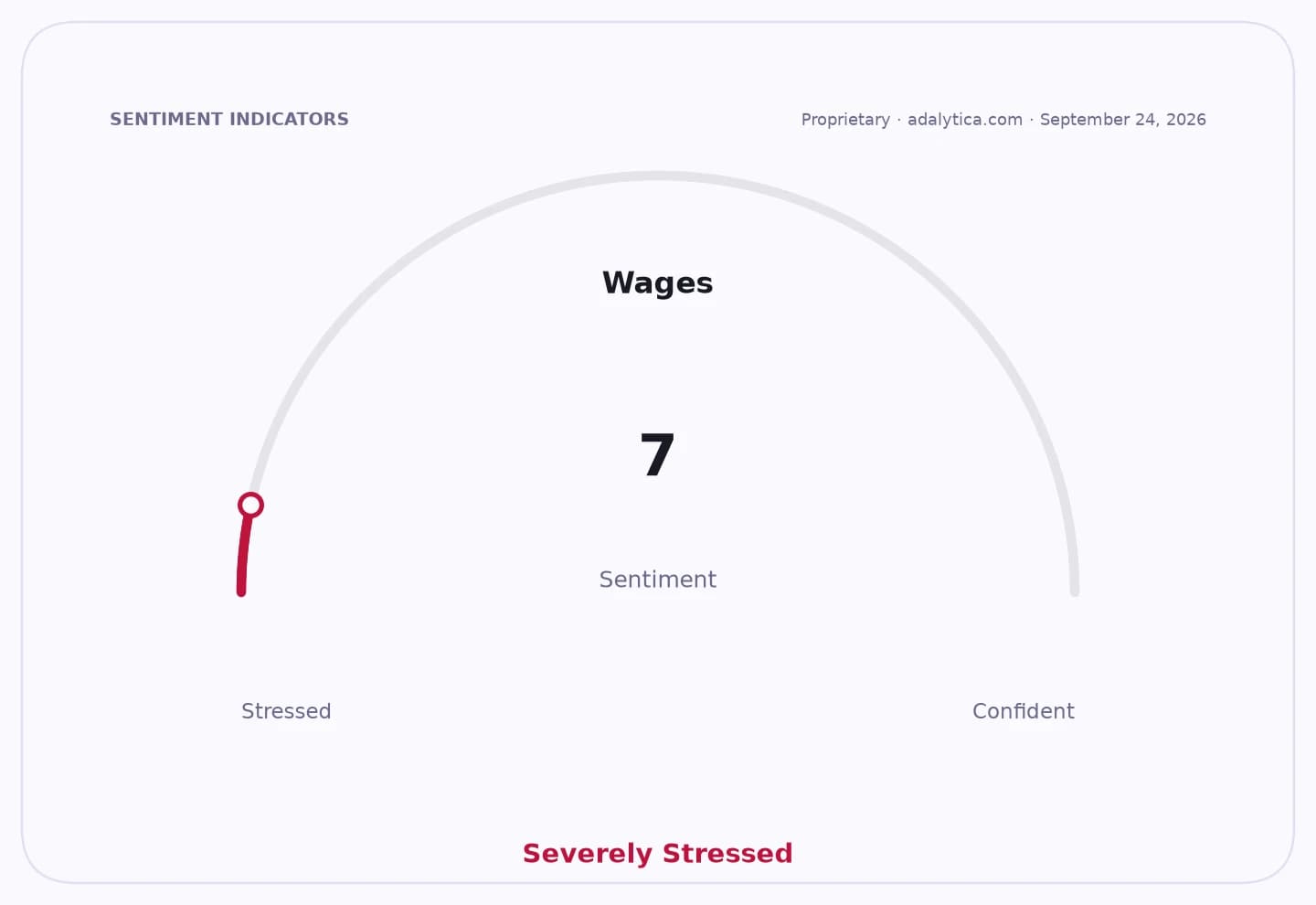
That matters because wage growth has been one of the Kremlin’s main economic talking points, used to support consumption and offset the drag from high interest rates and slowing investment. The latest labor-market data suggest that narrative is becoming much less uniform: the average nominal salary reached 114,700 rubles in June, yet real disposable incomes rose only 1.5% in the first half, down sharply from 8.7% a year earlier, according to Rosstat. In other words, many households are getting raises that do not keep up with the cost of living.
Sentiment IndicatorsⓘProprietary · adalytica.com · September 19, 2026
This is a snapshot — live sentiment, awareness and momentum for 130+ markets update continuously in the dashboard.Open AlphaPulse
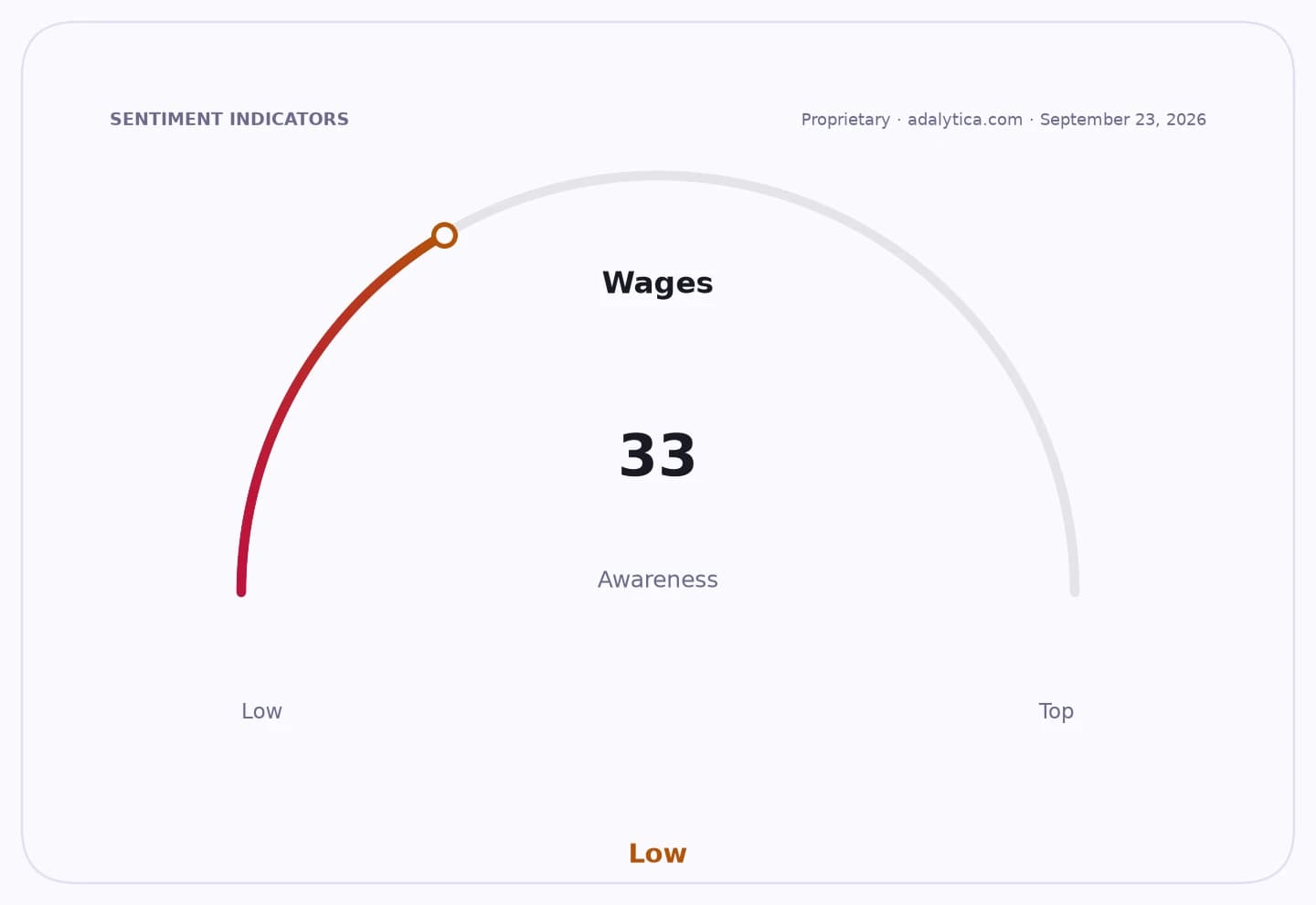
The squeeze is showing up in labor-market conditions as well. SuperJob says vacancies fell 19% year on year in the first half of 2026 while resumes rose 33%, with hh.ru’s index at 8.7 in August, meaning nearly nine applicants for every opening. That is a decisive shift from the labor shortages that gave workers leverage in 2023-24 and helps explain why employers are no longer bidding aggressively for staff.
The weakest pay dynamics are concentrated in sectors that once led wage growth. In IT, median pay in the first half of 2026 was 191,000 rubles, but the increase of 4% was still below inflation. SuperJob and Habr Career data point to a 56% drop in IT vacancies on Habr Career and a 21% decline in SuperJob’s count, while resumes rose. That means the market is no longer rewarding most roles equally: experienced developers, cybersecurity specialists and AI engineers still command premiums, but DevOps, SRE, Go developers, project managers, testers and designers are facing far tougher conditions, especially at junior levels.
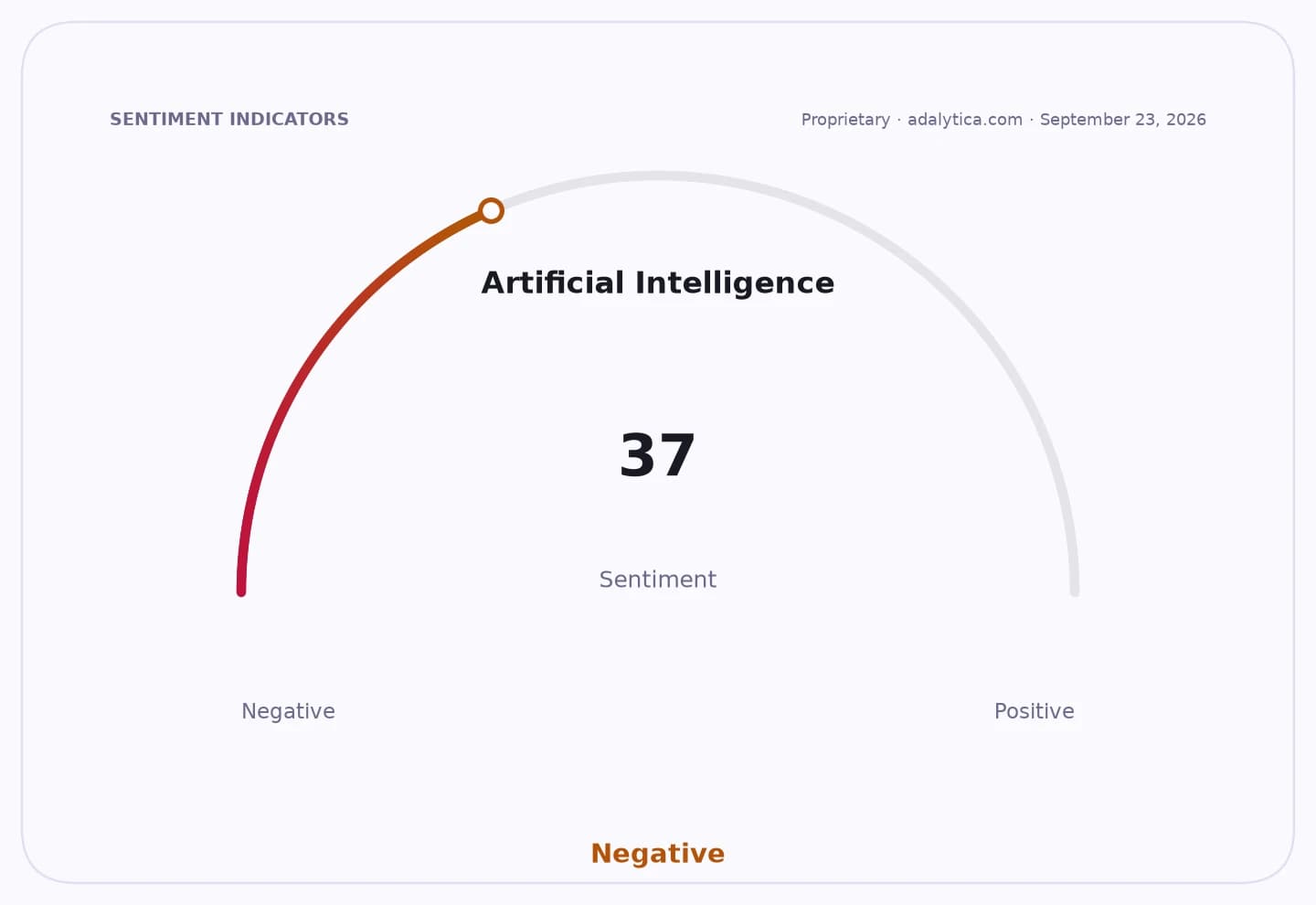
Administrative jobs are under similar pressure. Kaus Group said Moscow administrative staff pay fell 1.9% in the last quarter and 8.6% over the year, a sign that routine white-collar work is among the easiest targets for budget cuts and AI substitution. The use of AI agents is reducing demand for clerical and analytical support staff, while companies under cost pressure are choosing to freeze hiring rather than raise pay.
Construction is the clearest case of outright decline. Research from Rabota.ru and SberPodbor showed the sector was the only one in Russia to post lower salary offers in the first half, down 0.8%. NOSTROY said some regions saw actual wage cuts for line workers, averaging 3.5% from autumn 2025 to spring 2026, with a 16% drop in Chukotka. High mortgage rates, the fading of subsidized housing programs and weaker demand are feeding through into pay.
For investors, the implication is not just lower household purchasing power, but a broader rebalancing of the Russian economy. Consumer demand may remain supported for now by nominal wage growth and government spending, but the pace is clearly slowing. That should weigh on retail, housing-related industries and labor-intensive services, while companies with exposure to automation, AI and high-skill engineering may keep gaining share of wage budgets.
The other important takeaway is that Russia’s wage story is becoming more unequal. The official narrative of rising incomes still holds at the aggregate level, but the marginal worker is now seeing weaker real gains, fewer vacancies and less bargaining power. If the labor market continues to cool and the central bank keeps policy tight, real wage growth is likely to remain uneven into 2027, with the biggest losers concentrated in routine office work, lower-end IT and construction.
| Entity | Gains | Losses |
|---|---|---|
| Employers | ▲Lower wage pressure | ▼Worker bargaining power |
| AI-using firms | ▲Higher productivity | ▼Routine headcount |
| High-skill tech workers | ▲Premium demand | ▼Junior IT roles |
| Households | ▲Nominal pay gains | ▼Real purchasing power |