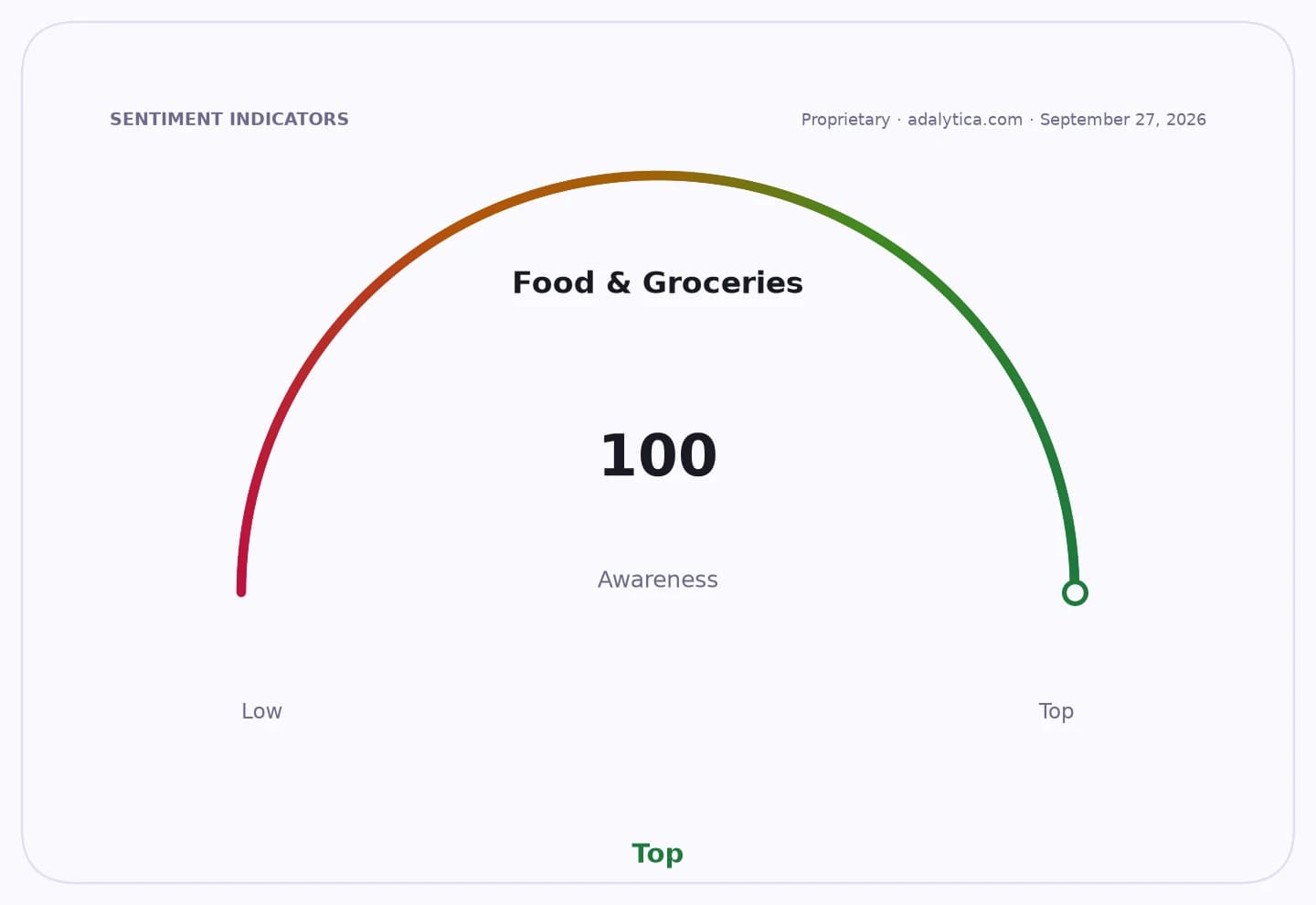
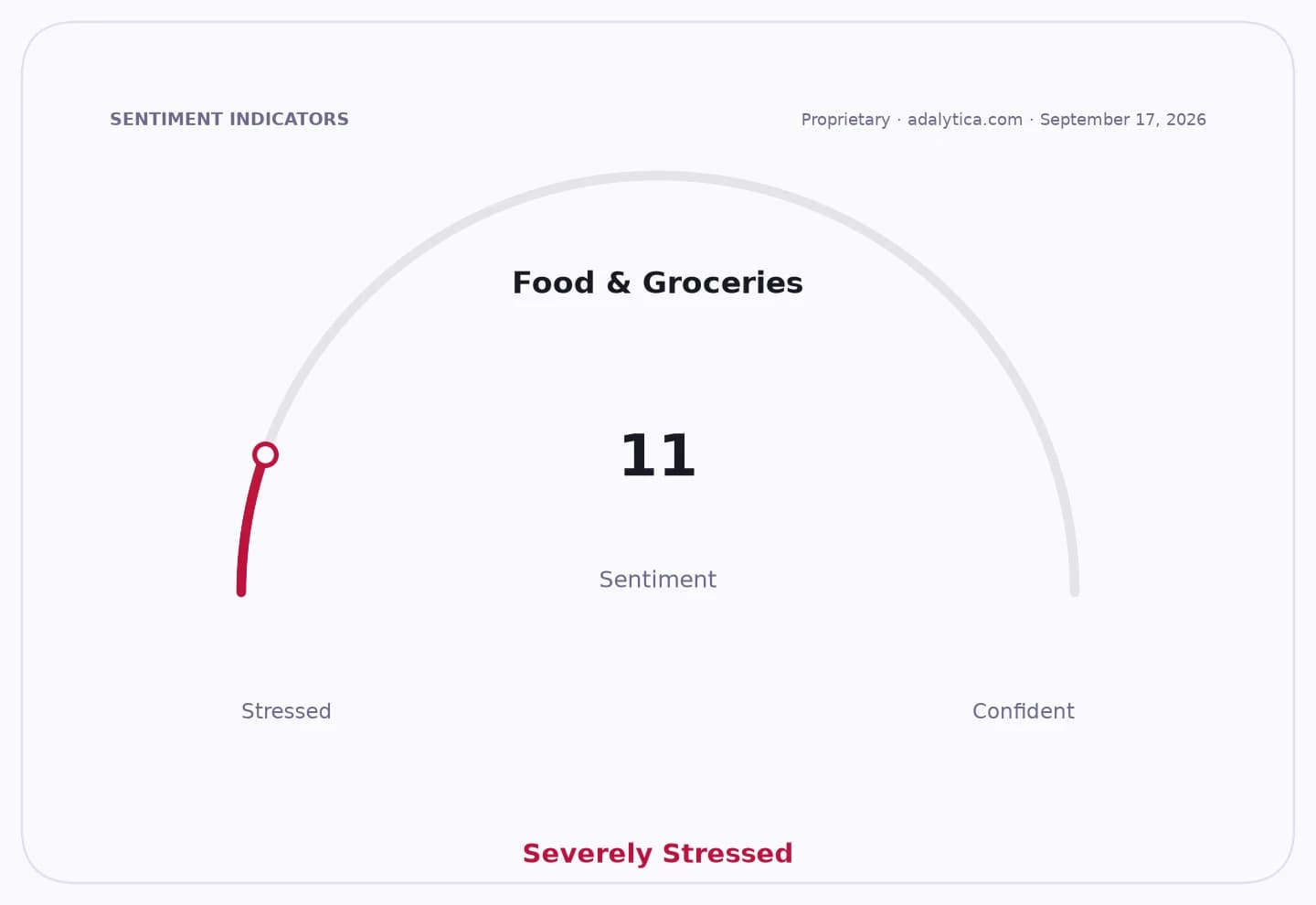
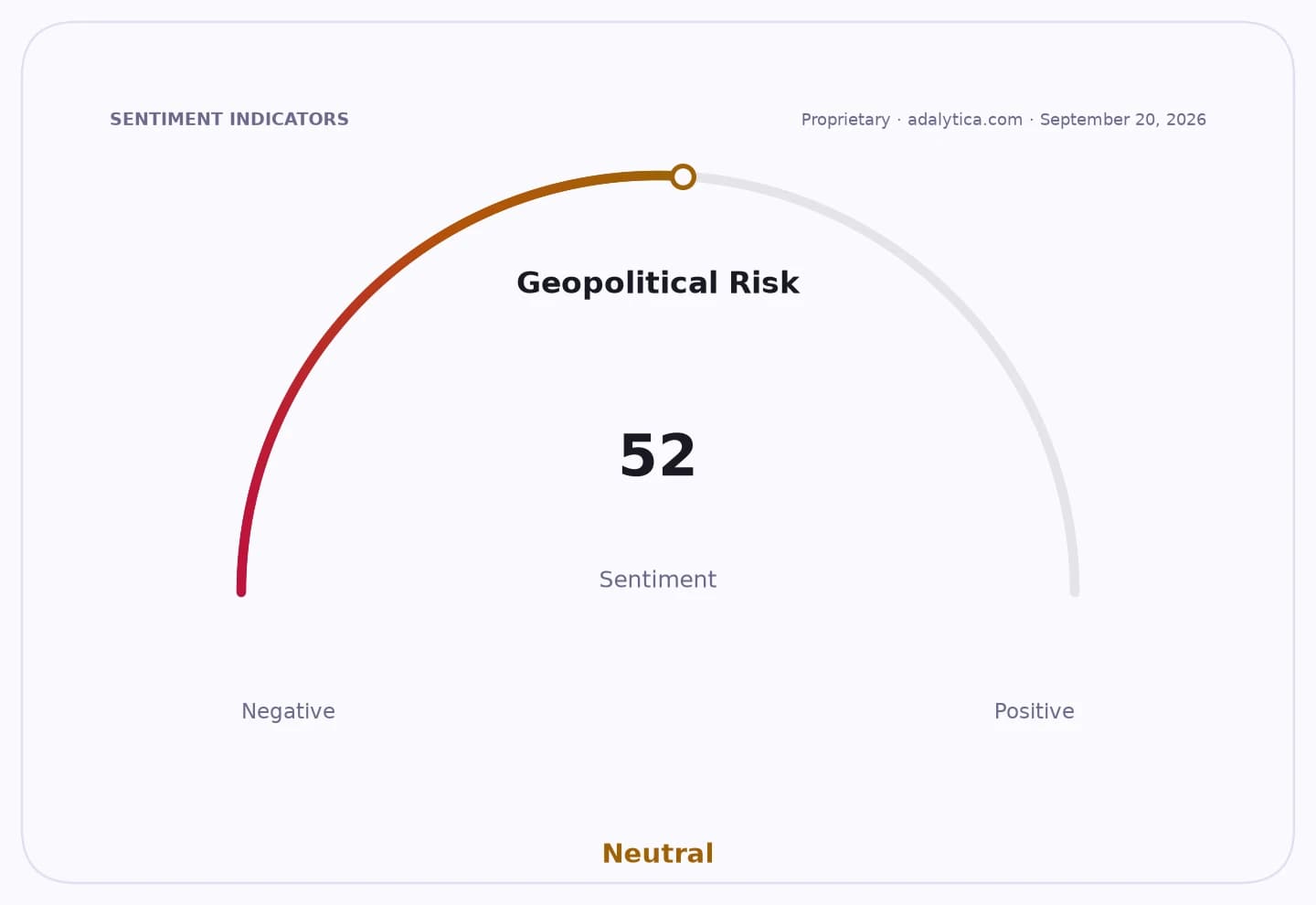
Russia’s wheat export flow has been sharply disrupted by attacks on Black Sea grain terminals, reducing shipments in the second half of September to 347,000 tons from 1.3 million tons a year earlier and tightening one of the world’s most important grain supply routes.
Russia Wheat Exports Drop After Black Sea Attacks

The collapse in loadings matters well beyond Russia. The Black Sea is a key marginal source of wheat for importers in the Middle East, North Africa and Asia, so any sustained interruption quickly feeds into global food costs, freight demand and futures pricing. The latest figures also suggest buyers are accelerating a shift away from Russian and Ukrainian grain toward alternative suppliers in Europe and Australia, a change that could reshape trade flows even if some of the current disruption proves temporary.
Sentiment IndicatorsⓘProprietary · adalytica.com · September 27, 2026
This is a snapshot — live sentiment, awareness and momentum for 130+ markets update continuously in the dashboard.Open AlphaPulse
The Russian grain union said total exports of major grains fell to 381,000 tons from almost 1.6 million tons in the same period last year, with barley shipments down nearly tenfold and corn down more than threefold. Outbound volumes through Novorossiysk and Tuapse, two of Russia’s main Black Sea ports, were especially weak, underscoring how exposed the export system remains to maritime disruption.
The buyer base has also narrowed. Russia sold wheat to only eight countries, down from 29, while shipments to Egypt fell to 81,000 tons and Turkey bought just 6,100 tons versus more than 200,000 tons a year earlier. That reduction in customer concentration is important for investors because it points to a loss of market share, not just a temporary logistics problem. Once importers secure alternative supply chains, some of that demand may not return quickly.
Prices are already reflecting the strain. Russian producers were reportedly receiving $105.7 a ton for wheat, down from $129 in September last year and the weakest September level in eight years. That squeezes farm incomes, pressures exporters’ margins and may eventually weigh on planting decisions if the disruption persists. It also highlights the disconnect between lower domestic farmgate prices in Russia and the risk of firmer world prices if Black Sea supply stays constrained.
For grain traders, the immediate read-through is bullish for competing exporters and supportive for Chicago wheat, where recent moves have been driven by the market’s balancing act between hopes of resumed Black Sea flows and the reality of repeated disruptions. Corn and sugar-related agricultural proxies have also been volatile as investors reassess the durability of global supply chains and the extent to which buyers can pivot to other origins.
For Russia, the trade setback carries strategic as well as economic costs. Grain exports are a source of foreign currency and leverage in food-importing regions, and a prolonged fall in shipments would weaken that position. For global investors, the key question is whether the current drop is a short-lived interruption or the start of a more persistent rerouting of wheat trade away from the Black Sea. Until there is clearer evidence of stable port operations, volatility in wheat markets is likely to remain elevated.
| Entity | Gains | Losses |
|---|---|---|
| Competing exporters | ▲Higher demand, better pricing | ▼— |
| Russian grain producers | ▲— | ▼Lower farmgate prices |
| Wheat importers | ▲More supply options | ▼Higher procurement risk |
| Wheat bulls | ▲Supply disruption support | ▼Wheat bears |