Saffron’s premium is a supply story first and a luxury story second: producing just 1 kilogram of the spice can require roughly 1.5 lakh to 2 lakh flowers, which means the market is pricing not only rarity but also labor, timing and quality risk into every gram.
Saffron Prices Rise on Supply Constraints
That is why saffron can trade at levels normally associated with precious metals. Each crocus sativus flower yields only three fragile red stigmas, and those threads must be picked by hand before sunrise, separated carefully, dried and stored without contamination. The process is too delicate and too seasonal for mechanization to replace, so output remains constrained by acreage, climate and skilled labor rather than by demand alone.
Sentiment Indicators
The economic significance goes beyond the kitchen. Saffron is concentrated in a handful of regions that can reliably produce it, including Iran, the world’s largest grower, and Kashmir’s Pampore valley, whose Kashmiri saffron carries a geographic indication premium tied to aroma, color and crocin content. When cultivation is disrupted, the impact runs through rural incomes, export supply and the pricing power of merchants who handle a crop with almost no elasticity on the supply side.
Recent news makes that fragility more visible. In Greece’s Kozani region, output has reportedly slumped from 3.7 tons in 2017 to about 250 kilograms this year, while in Kashmir, environmental pressure near Pampore has drawn scrutiny from India’s National Green Tribunal. For investors and agricultural traders, the message is that saffron’s scarcity is structural, but supply shocks from weather, pollution and land-use stress can make an already expensive spice even more volatile.
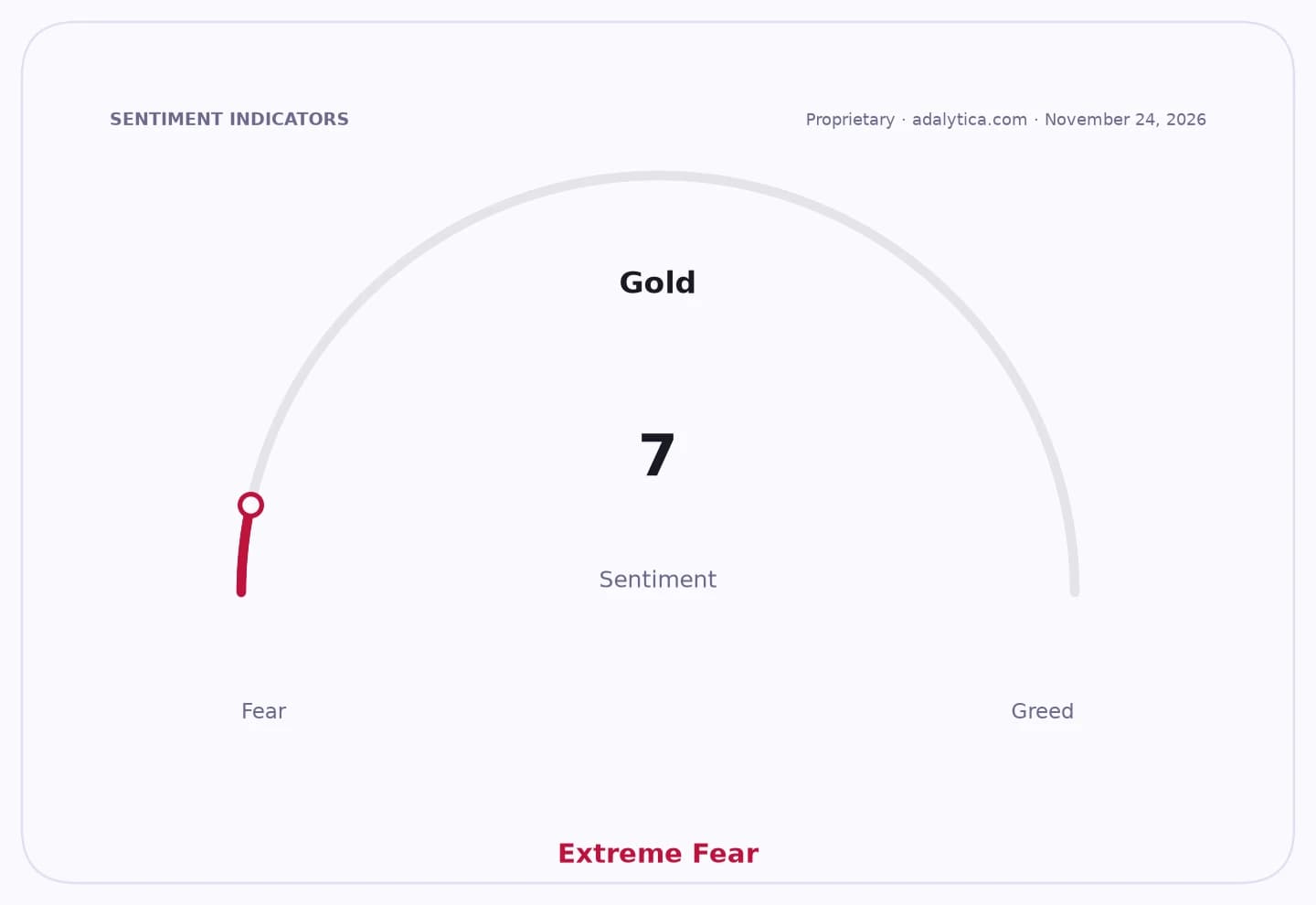
Macro conditions also reinforce the point. Broader food and commodity inflation has eased in some markets, but niche agricultural goods like saffron remain insulated from the usual scale economies. Gold-related positioning data underscore the broader appetite for hard assets: Adalytica’s Gold Fear & Greed Index shows extreme fear in sentiment even as awareness remains elevated, a backdrop that tends to support store-of-value narratives across scarce commodities. Saffron is not an investable bullion proxy, but its pricing logic rhymes with assets whose value rests on scarcity, trust and labor intensity.
For consumers, the likely result is continued sticker shock at retail. For producers with strong provenance and quality control, the economics remain attractive, though highly dependent on harvest discipline and preservation of growing conditions. The risk case is clear as well: any further deterioration in key producing regions would tighten supply further and could widen the premium between authentic saffron and lower-grade or adulterated substitutes.
| Entity | Gains | Losses |
|---|---|---|
| Saffron growers | ▲Higher price premium | ▼Vulnerable harvest volumes |
| Consumers | ▲Provenance and quality | ▼Costly retail prices |
| Iran/Kashmir producers | ▲Supply advantage | ▼Climate and pollution risk |
| Traders/substitutes | ▲Margin from scarcity | ▼Authentic supply tightness |