A small open-source project aiming to clone expensive software services with AI is tapping into a bigger threat for enterprise software vendors: users’ growing willingness to replace high-margin subscriptions with self-hosted, API-compatible alternatives.
Salesforce, Okta face open-source AI clone risk
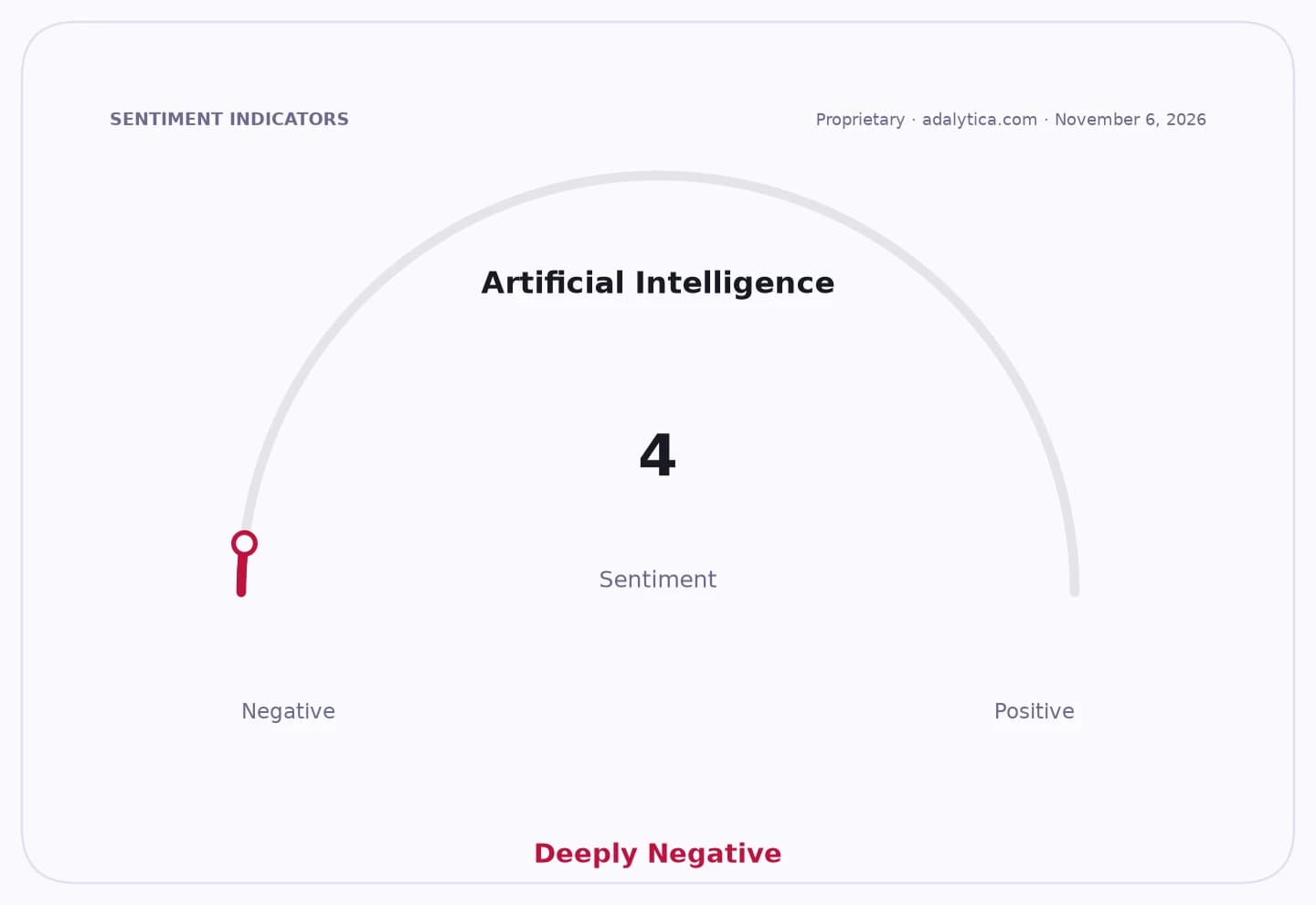
Artificial Intelligence
OccupySaaS, a user-led project framed as a “clean-room” revolt against software-as-a-service pricing, is building open-source reimplementations of common business tools including Auth0 and Salesforce, with proposed replacements for Confluence, Jira, LaunchDarkly, Datadog and Zendesk. The project’s pitch is not simply ideological. It is aimed at one of the most lucrative assumptions in software: that customers will keep paying recurring fees for access to tools they do not own and cannot easily modify.
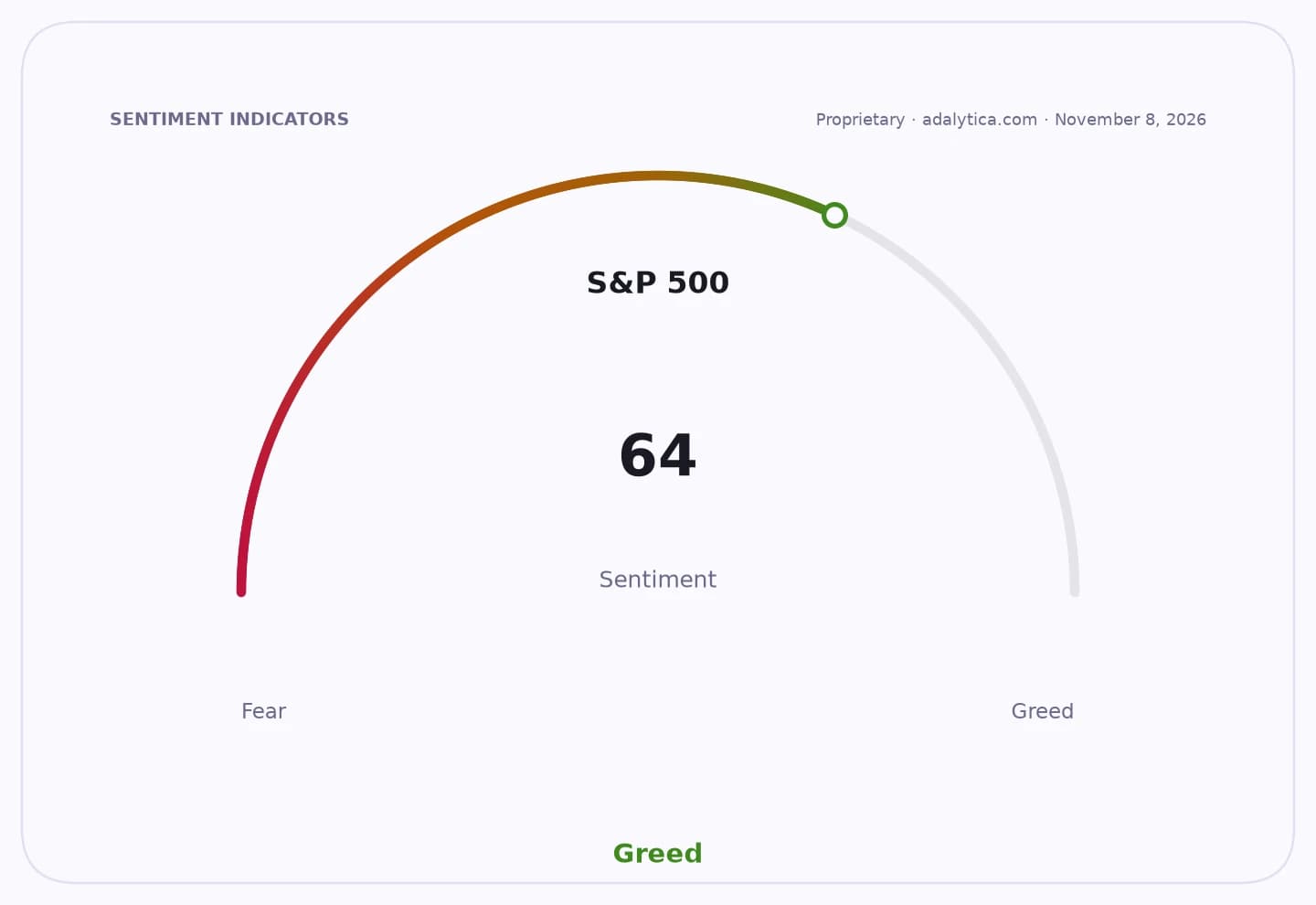
Sentiment Indicators
That matters economically because the SaaS model depends on pricing power, renewal rates and low churn. If AI materially lowers the cost of recreating enough functionality for a service to become “good enough,” then the moat around category leaders becomes less about code and more about trust, compliance, integrations and support. For vendors such as Salesforce, Okta and ServiceNow, that raises a structural question investors have largely treated as remote: whether AI-assisted cloning can erode the long tail of mid-market and small-business accounts that has historically funded high margins and durable expansion revenue.
The project is still early and its immediate commercial impact is negligible. But the logic behind it is what matters. OccupySaaS says it will use only documentation, APIs, development-kit behavior and open standards, with a strict clean-room rule forbidding decompiled code, confidential information or copied UI assets. It is choosing Go to make compact, portable binaries that can be dropped into Docker or self-hosted environments. In other words, the aim is not to build a flashy consumer app, but to create replacements that are easy to run, easy to distribute and hard for vendors to sue out of existence because they stay within open-source and interoperability norms.
The project’s target list is especially relevant to investors because it overlaps with some of software’s most resilient recurring-revenue franchises. Salesforce remains the archetype of enterprise subscription pricing; Okta sits at the center of identity and access management, a category whose value rests on breadth of integrations and security trust; ServiceNow sells workflow automation that embeds itself across IT and back-office functions. Their business models are built on annual contracts, seat expansion and the assumption that replacement costs remain high. Even a limited wave of open-source substitutes could pressure pricing at the margin, particularly in categories where users complain about rising fees and product sprawl.
That does not mean incumbents are suddenly vulnerable to a free-for-all. The bear case for OccupySaaS is straightforward: enterprise software is rarely won by feature parity alone. Compliance certifications, uptime guarantees, security hardening, support, integration depth and buyer risk aversion all favor established vendors. A clean-room clone may replicate basic workflows, but it still has to match the bug-for-bug quirks, admin tooling and ecosystem dependencies that make a system usable at scale. If the replacement is self-hosted, customers also inherit the burden they originally outsourced — maintenance, upgrades, incident response and security.
The bull case for the project, however, is that AI compresses the cost of reaching “good enough” much faster than previous generations of open-source software did. That matters most where buyers are already dissatisfied with subscription inflation or declining product quality. The recent buzz around Adobe-replacement projects showed how quickly sentiment can build around alternatives when users believe they are overpaying. If OccupySaaS or similar efforts gain traction, the first pressure point is likely not the largest Fortune 500 customers but smaller organizations that are more price-sensitive and less locked into proprietary workflows.
Markets are already signaling that software investors are sensitive to this shift. Salesforce shares have fallen to $213.65 from $263.97 in early September, and the stock is now below its 50-day moving average and its 200-day moving average, with RSI readings in oversold territory around 25 and the MACD below its signal line. Okta has dropped to $168.69 from $232.13 in October, also sitting well below its 50-day and 200-day moving averages, with RSI at about 41 and the MACD negative. ServiceNow has been hit even harder, sliding to $101.97 from $148.57 in mid-October and trading far beneath both moving averages, with RSI near 22 and a sharply negative MACD.
Those moves do not prove the market is pricing in open-source disruption, but they do show investors are demanding more evidence that subscription growth can withstand slower IT spending, tougher budget scrutiny and emerging AI-native competition. Adalytica’s AI sentiment gauge is also at “Extreme Fear,” underscoring how quickly enthusiasm around the technology has given way to anxiety about who captures the value from it.
| Entity | Gains | Losses |
|---|---|---|
| OccupySaaS / open-source contributors | ▲More adoption for alternatives | ▼Legal and execution risk |
| Customers / IT buyers | ▲Lower software costs | ▼More self-hosting burden |
| Salesforce, Okta, ServiceNow, peers | ▲Defend incumbency if clone quality stays weak | ▼Pricing power and renewal leverage |
| Cloud/SaaS investors | ▲Selectivity in winners with strong moats | ▼Valuation risk for exposed software names |