Enterprise AI is increasingly rewarding software that sits inside core business workflows, and that is the real reason Salesforce and ServiceNow remain among the clearest long-term beneficiaries even as their shares have been volatile.
Salesforce and ServiceNow AI Workflow Demand
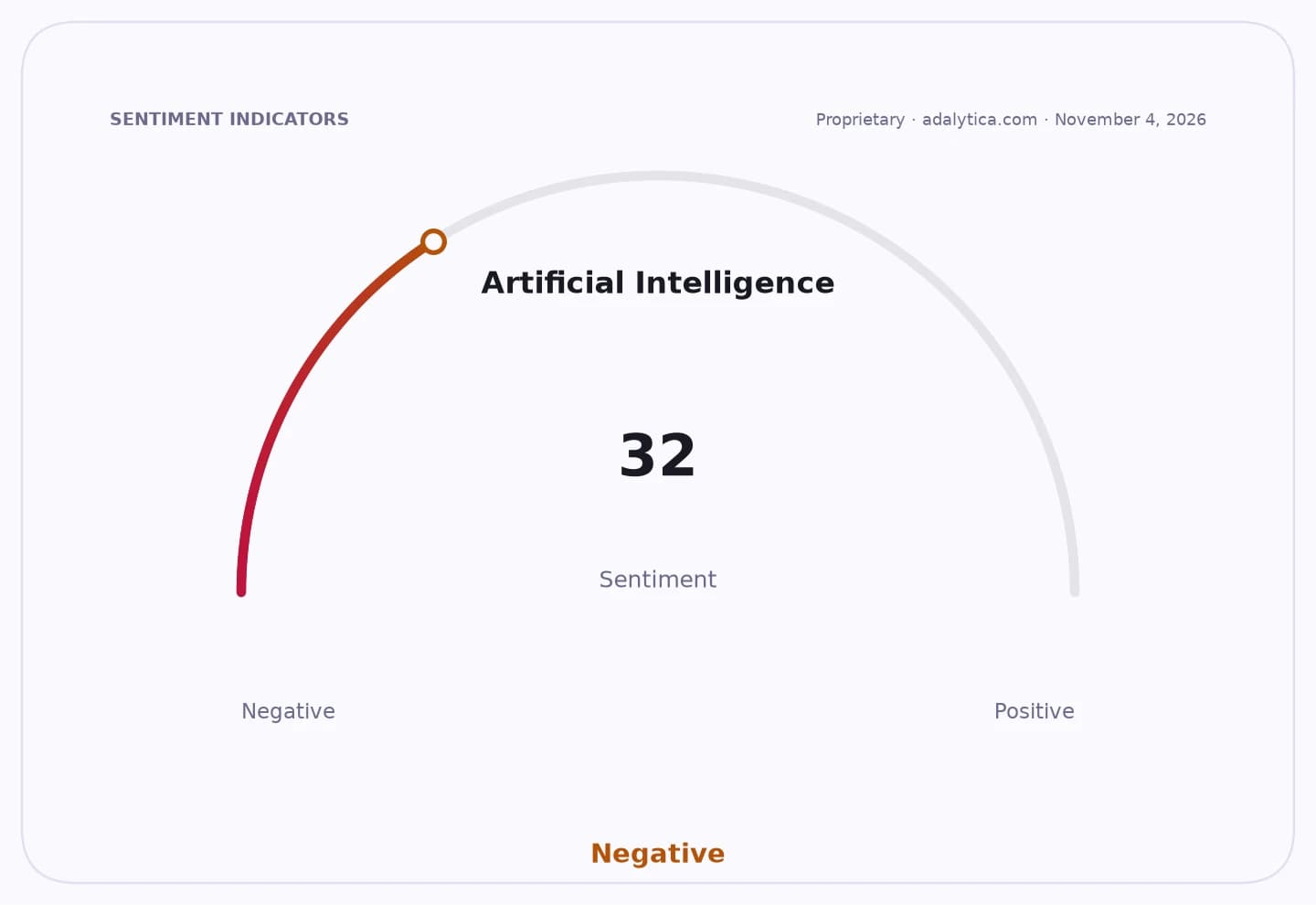
Artificial Intelligence
Together, the two companies occupy some of the most valuable real estate in corporate tech: customer relationships for Salesforce and internal workflow automation for ServiceNow. That matters because the next phase of AI adoption is less about experimental chatbots and more about embedding generative tools into sales, service, IT and employee processes where companies can measure productivity gains. A platform that improves response times, automates tasks or shortens sales cycles is easier to justify than standalone AI tools, which helps explain why enterprise buyers continue to favor incumbents with existing data, distribution and switching costs.
Sentiment Indicators
The market has not priced that path in a straight line. Salesforce closed at $222.41 on Nov. 5, down sharply from its $263.97 peak in early September, while ServiceNow finished at $102.36, far below its Aug. 31 high of $147.99. Both names have also lost technical momentum: Salesforce is trading below its 50-day moving average of $240.14, with a 14-day RSI of 32.1, while ServiceNow’s RSI sat at 25.7 and its shares were well under the 50-day average of $137.02. Those are classic signs of stretched selling, not broken fundamentals, but they show investors have become much more cautious about paying up for AI-linked software.
That caution is part valuation, part execution risk. The bull case is that both companies can turn AI into a margin lever. Salesforce has the installed base to monetize AI across sales and service clouds, while ServiceNow can use its platform position to automate repetitive tasks across enterprises, an area where its own filing describes the platform as a cloud-based system that drives digital transformation across departments. If AI lowers the cost of delivering more functionality, operating leverage could improve without forcing aggressive price cuts.
Artificial Intelligence vs CRMadalytica.com
Explore this data interactively — full history, time series and cross-market comparisons.
The bear case is that investors are still waiting for proof that AI revenue will scale faster than the spending required to build and support it. Enterprise customers want clear ROI, and pricing pressure is likely to intensify as AI tools proliferate and larger rivals push their own suites. The broader industry backdrop is supportive, but it is also competitive: new inference-efficiency gains, including Together AI’s reported 2.6 times boost in throughput, should lower the cost of deploying AI at scale, which helps adoption but may also compress pricing for software vendors over time.
That is why the investment case for Salesforce and ServiceNow is less about a near-term AI pop and more about durable positioning in the next generation of enterprise software. If companies keep shifting budgets from isolated AI experiments to workflow automation, the winners should be the platforms already embedded in daily operations. The risk is that monetization arrives slower than the market expects, leaving these stocks vulnerable whenever enthusiasm outruns evidence.
| Entity | Gains | Losses |
|---|---|---|
| Salesforce | ▲More AI attach revenue | ▼Slower AI monetization |
| ServiceNow | ▲Workflow automation demand | ▼Higher execution bar |
| Enterprise buyers | ▲Productivity gains | ▼Upfront AI spending |
| Standalone AI vendors | ▲Lower inference costs | ▼Pricing pressure |