A 26-year-old Korean job seeker who knows no code turned a 30-minute AI-assisted experiment into a viral app that drew 1 million users in a week, underscoring how fast AI is collapsing the cost of software creation and widening the field of who can launch a product.
AI App Boom Lifts Cloud and Chip Demand
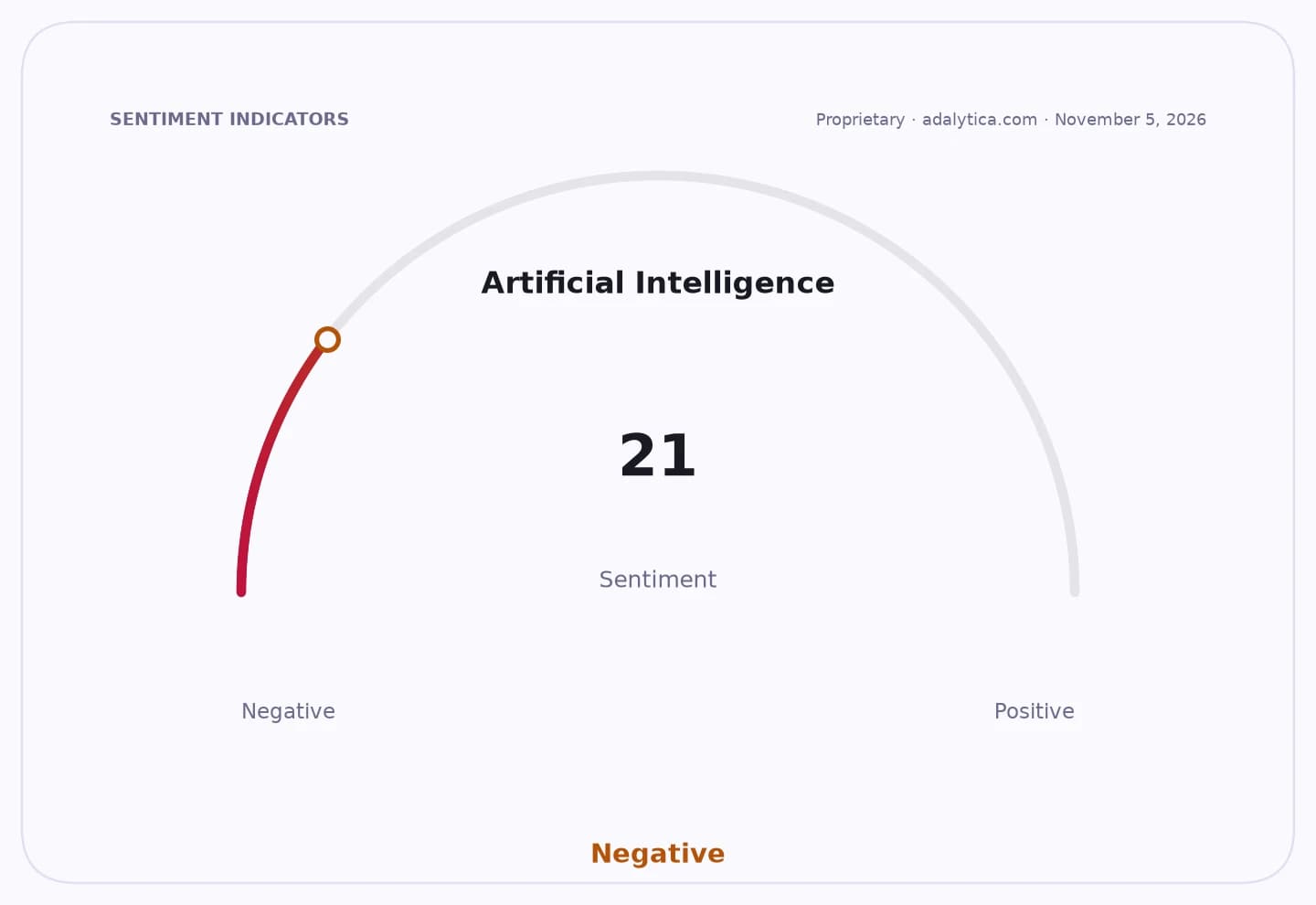
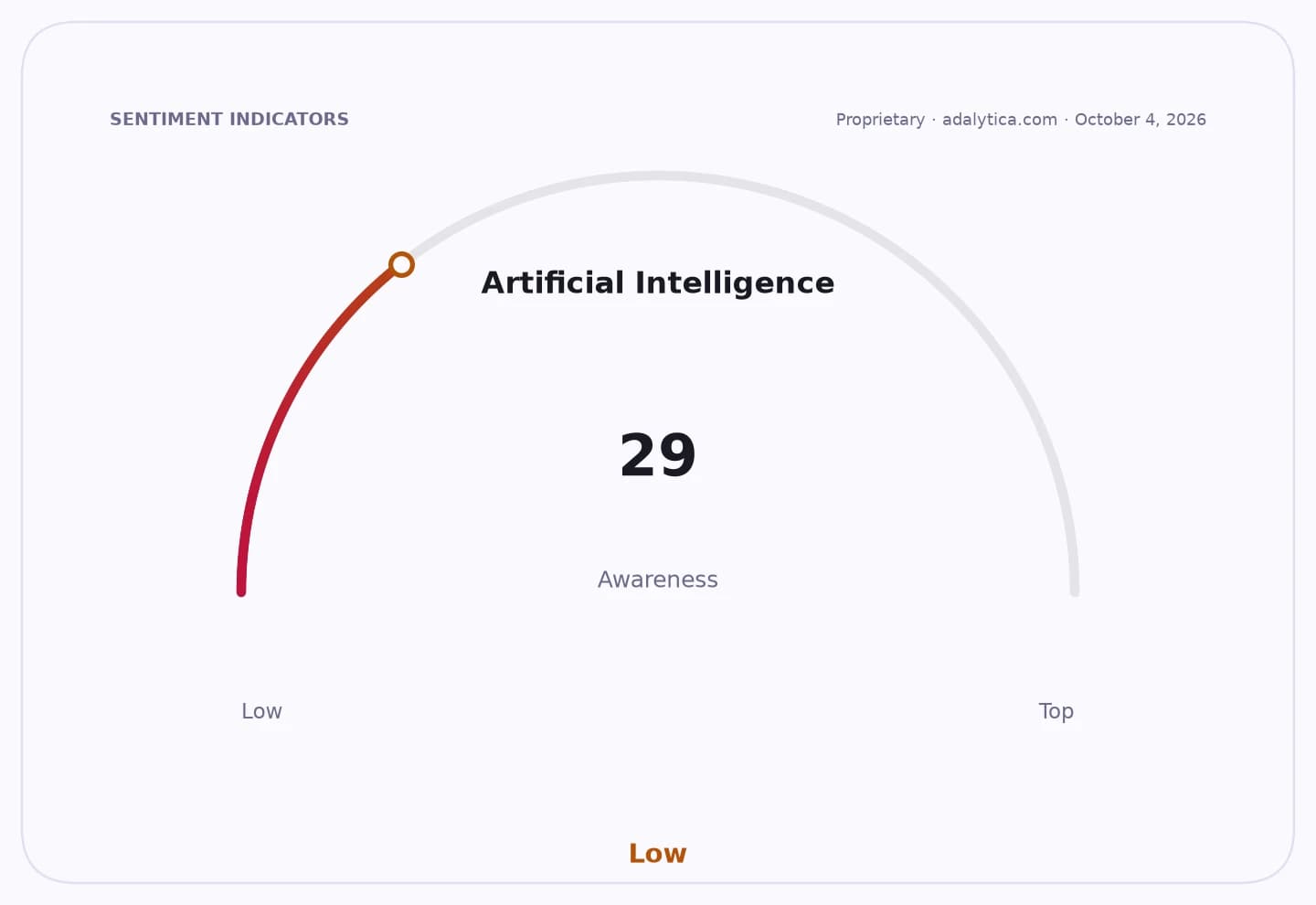
Artificial Intelligence
That matters far beyond the novelty of an “online temple.” The story of Sansa — a quiet digital space where users can pray, bow and listen to chants without social pressure — is a live case study in the next phase of AI adoption: not just bigger enterprises spending on models, but ordinary founders using AI to build products with almost no technical overhead. For investors, that is an important signal because it points to a broader surge in AI-enabled application creation, more traffic and storage demand, and more value accruing to the infrastructure layer that makes these products run.
Sentiment Indicators
Park Jin-won said he used ChatGPT’s Codex in a “vibe coding” workflow, describing what he wanted in natural language and letting AI write the code. He says the first minimum viable product took less than 30 minutes to make, while features such as prostrations and prayer beads were built in about 10 minutes. In a year, he says he has created more than 30 apps and services this way. That is exactly the sort of productivity leap the market has been underestimating: AI is not only a consumer product, it is a force multiplier for entrepreneurship.
The economics are straightforward. When a nonprogrammer can ship an app in half an hour, the bottleneck shifts away from coding and toward distribution, uptime, and compute. Sansa’s rapid rise forced Park to prioritize server stability after daily active users topped 100,000, and even a feature meant to help cover hosting costs had to be paused after an hour because the system could not handle the load. That is a small example of a much larger trend investors should care about: viral AI-native products can create sudden spikes in backend demand, benefiting cloud providers, data-center operators, networking gear makers and chip suppliers.
Artificial Intelligence vs MSFTadalytica.com
Explore this data interactively — full history, time series and cross-market comparisons.
Microsoft and Nvidia remain central to that infrastructure stack, even if their recent price action has been volatile. Microsoft’s shares have climbed above their 200-day moving average this year even as short-term momentum has cooled, while Nvidia’s stock has also stayed well above its 200-day average despite a sharp pullback from earlier highs. The broader point is that viral software creation is not just a consumer internet story — it feeds the need for the tools, chips and cloud services that power rapid iteration and scale.
There is also a second-order investment angle in the app layer itself. The market often assumes that software moats come from deep engineering teams and long development cycles. Sansa shows that AI can compress both. That raises competition, but it also expands the total number of software experiments reaching users. In that environment, the winners are likely to be the platforms selling picks-and-shovels: model providers, cloud services, developer tools, and infrastructure names tied to inference, storage and traffic management.
Park’s app also had about 20% of traffic coming from overseas, including Vietnam and Thailand, which reinforces how quickly AI-built products can cross borders with minimal localization. That kind of global reach, achieved without a traditional startup team, is a preview of a more crowded but more dynamic software market. For investors, the takeaway is not to chase every AI app story, but to position for the enablers: the companies that benefit every time a solo founder becomes a scaled product maker.
The market underestimates how many such launches are coming. As AI lowers the barrier to entry, app creation becomes more like content creation — cheap, fast and highly scalable — and that should keep demand strong for the industrial base of the AI economy. The most actionable thesis here is to own the infrastructure behind the explosion in AI-native software, not the fleeting novelty of any single app.
| Entity | Gains | Losses |
|---|---|---|
| AI infrastructure providers | ▲More inference demand | ▼None from startup creation boom |
| Microsoft | ▲Higher platform usage | ▼Pressure from faster rival app creation |
| Nvidia | ▲More GPU demand | ▼Volatility from market rotation |
| Traditional software startups | ▲Faster prototyping | ▼Defensibility of old moats |