Gene editing is moving a climate idea from theory to agronomy, with researchers at the Salk Institute reporting soybean varieties engineered to grow deeper roots that could lock more carbon into soil while improving drought tolerance and nutrient uptake.
Salk Institute engineers deeper-root soybean varieties
That matters because agriculture sits at the intersection of emissions, food security and land use. If plants can be bred to send more carbon below ground instead of back into the atmosphere, the farming sector could become part of the solution to climate change rather than just a source of it. The economic prize is not just carbon removal; it is higher resilience for growers facing heat, drought and fertilizer costs.
Sentiment IndicatorsⓘProprietary · adalytica.com · September 24, 2026
This is a snapshot — live sentiment, awareness and momentum for 130+ markets update continuously in the dashboard.Open AlphaPulse
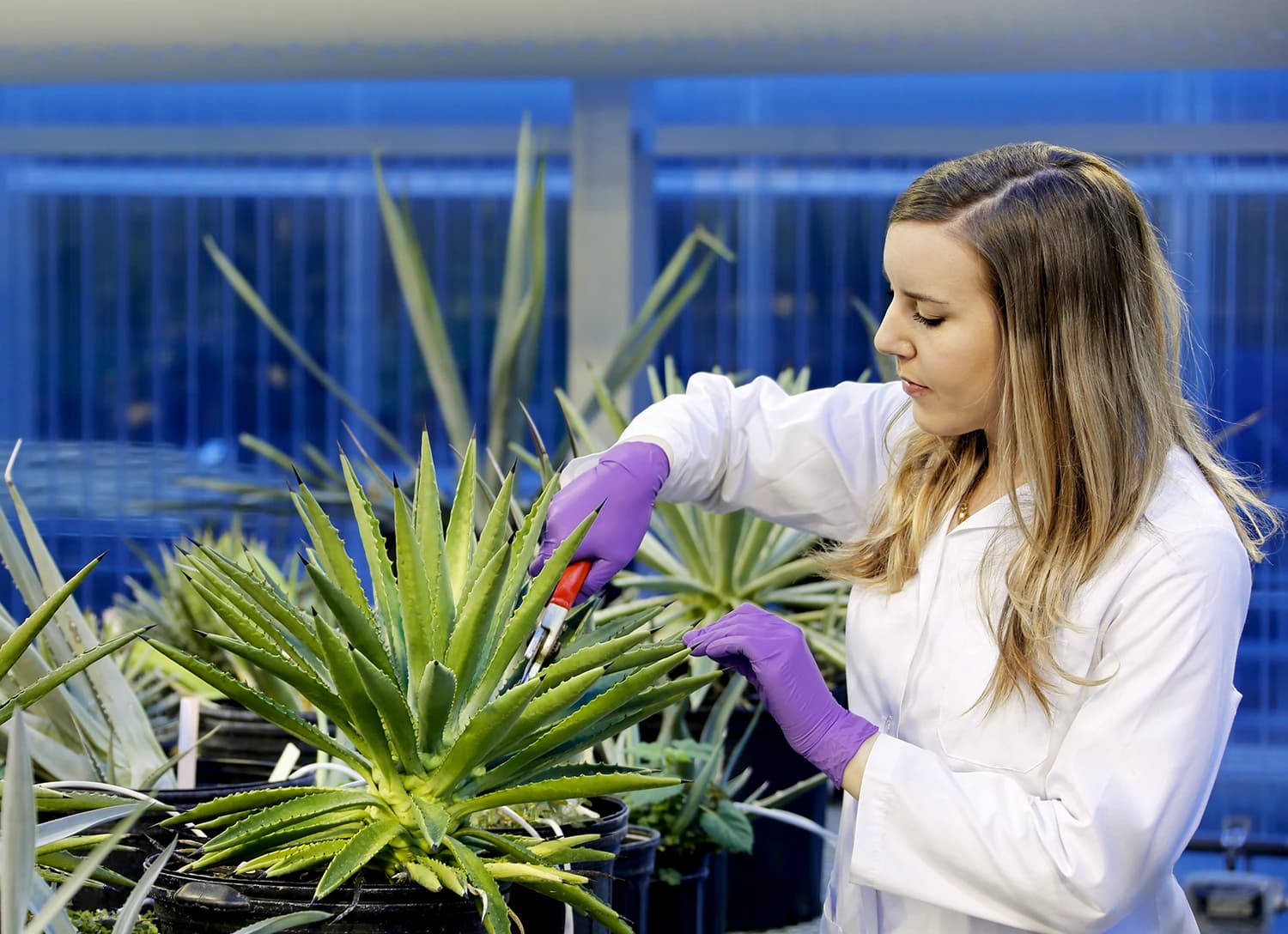
The Salk project, funded by a $18 million grant from the Bezos Earth Fund, builds on six years of genetic mapping across crops including soybeans and sorghum. The team says it identified 347 genes tied to carbon storage and root development, then used gene editing and breeding to reshape root architecture. Instead of spreading sideways like conventional soybeans, the edited plants are designed to push roots deeper into the soil, where stored carbon is less likely to be released again through plowing or other disturbance.
Researchers estimate the deep-rooted soybeans could store about 1 extra ton of CO2 per hectare each year under initial lab and early-stage testing assumptions. A 2025 modelling study cited by the team suggested that if deep-root varieties of soy, corn, cotton and canola were adopted broadly in countries that allow genetically modified crops, the approach could remove about 1 billion tons of CO2 a year by 2040.
For investors, the story is less about a near-term earnings catalyst than about the shape of the next agricultural platform. Seed developers, agricultural biotech companies, equipment makers and fertilizer suppliers all have stakes in whether root engineering becomes a commercially viable trait. Deeper roots could eventually reduce water stress and nitrogen runoff, which would strengthen the value proposition for farmers and regulators alike. But the commercial bar is high: the trait must prove itself in the field without hurting yields, and it must win acceptance from large seed companies and growers.
That hurdle is why the current phase of work is taking place in field trials at the University of Illinois Urbana-Champaign and research sites in Missouri, Kansas and Iowa, with movable shelters simulating drought and underground cameras and sensors tracking root growth and carbon accumulation. The emphasis on real-world performance is crucial. Climate benefits that look compelling in controlled settings often fade when exposed to weather, soil variability and farm economics.
The broader market backdrop is supportive but demanding. Oil prices and inflation remain a reminder that inputs still matter to agricultural margins, and crop markets continue to price weather risk and policy shifts. S&P 500 trade signals tracked by Adalytica point to strong risk appetite, while conventional technical indicators on agricultural ETFs show soybeans and wheat trading above their 50-day and 200-day moving averages in recent sessions, reflecting investor interest in the sector. But capital will ultimately follow proof, not promise.
The bull case is that root editing becomes a scalable, low-carbon productivity tool for a food system under climate pressure. The bear case is that yield drag, regulatory friction and farmer inertia keep it in the research lane. The next catalyst is whether the Salk trait can hold up across seasons and soils without compromising harvests — the difference between a headline and a new agricultural standard.
| Entity | Gains | Losses |
|---|---|---|
| Salk Institute / researchers | ▲Scientific validation | ▼Commercial uncertainty |
| Farmers in drought-prone regions | ▲Deeper-root resilience | ▼Adoption risk |
| Seed companies / biotech firms | ▲New trait platform | ▼Development costs |
| Climate policymakers / carbon markets | ▲New removal pathway | ▼Proof requirement |