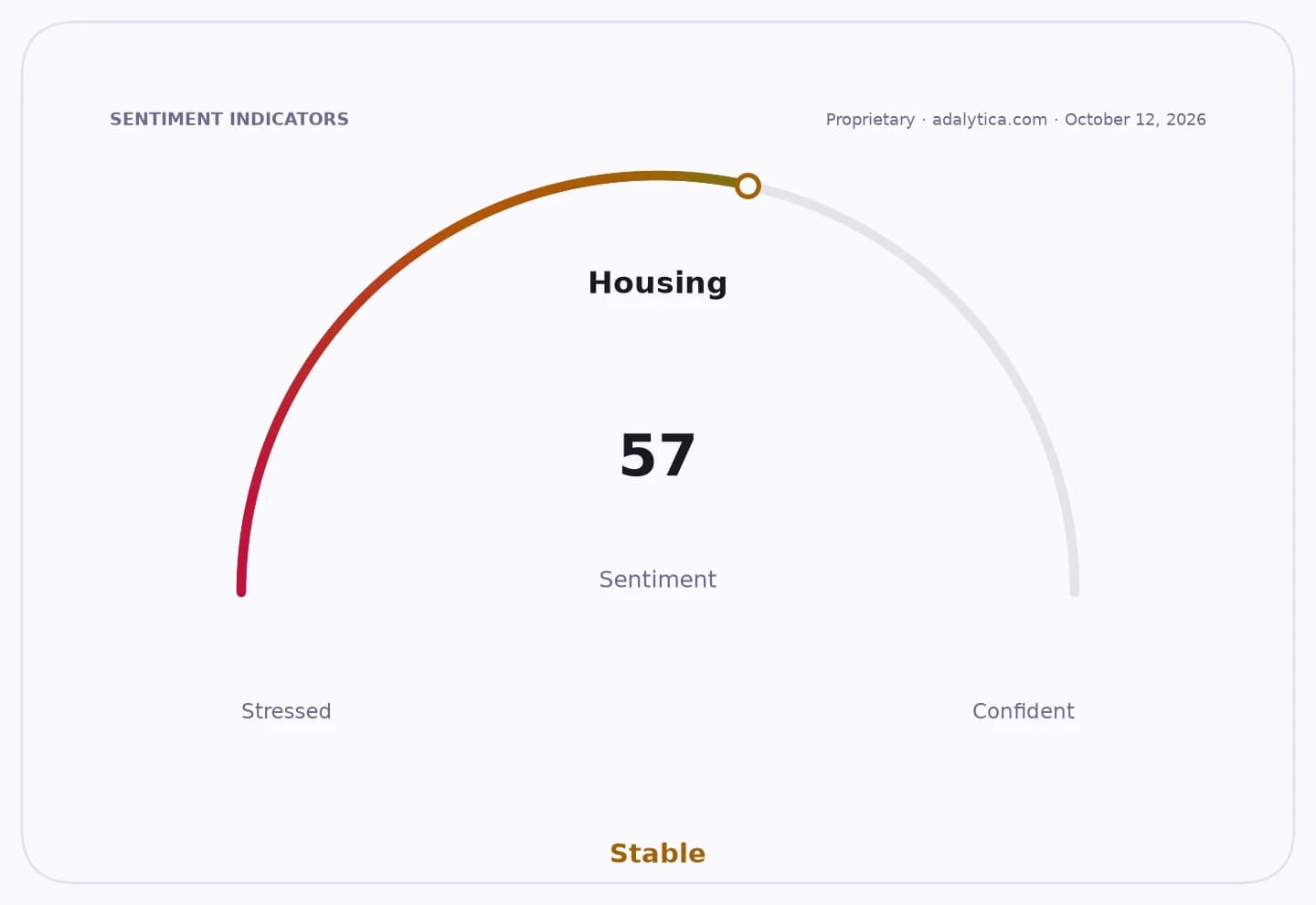
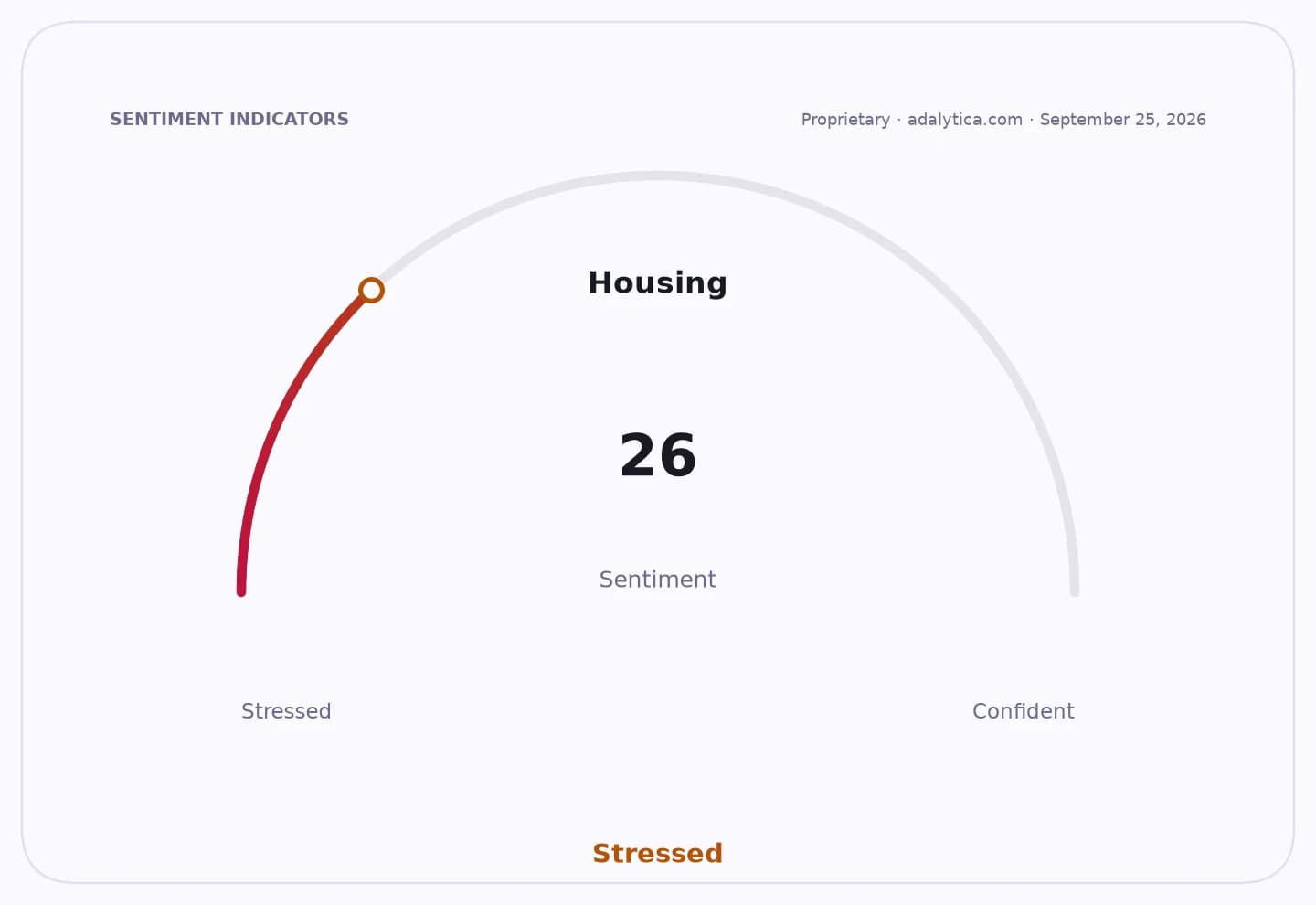
San Francisco’s housing market is being pulled higher by the AI boom, with cash-rich buyers from OpenAI, Anthropic and the wider tech ecosystem bidding prices far beyond asking levels and forcing even multimillion-dollar offers to lose out.
San Francisco Home Prices Rise on AI Wealth
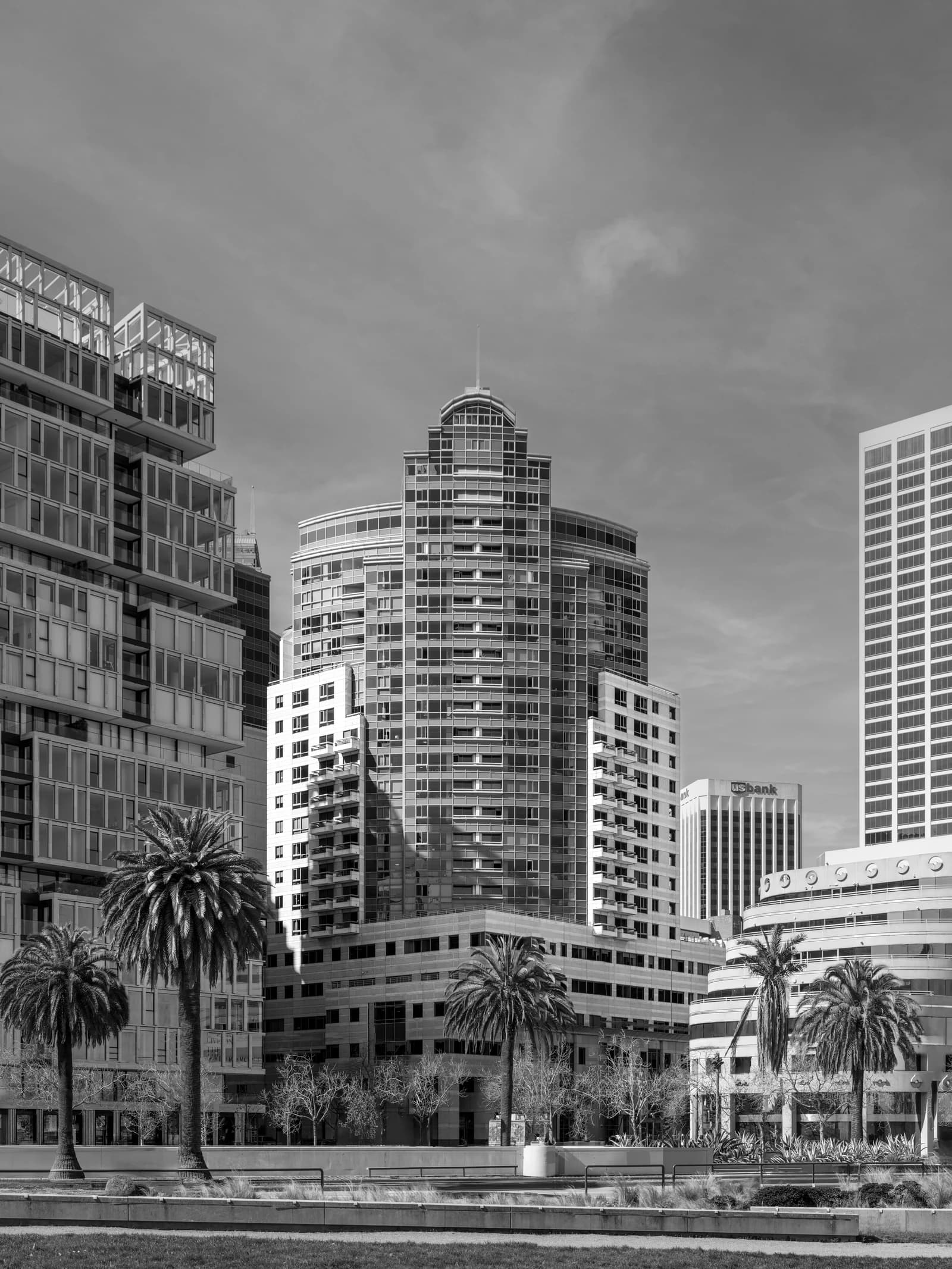
That matters because the city’s already tight supply of homes is now colliding with a fresh wave of wealth creation that is unusually concentrated in a handful of companies and neighborhoods. In San Francisco County, the median price of a single-family home rose to $2 million in September, up 23.1% from a year earlier, while condo medians climbed 15.9% to $1.275 million. Those are three-month medians, not across-the-board gains for every property, but they show how much higher the entry price has moved in a market where supply remains constrained by construction limits and persistent demand.
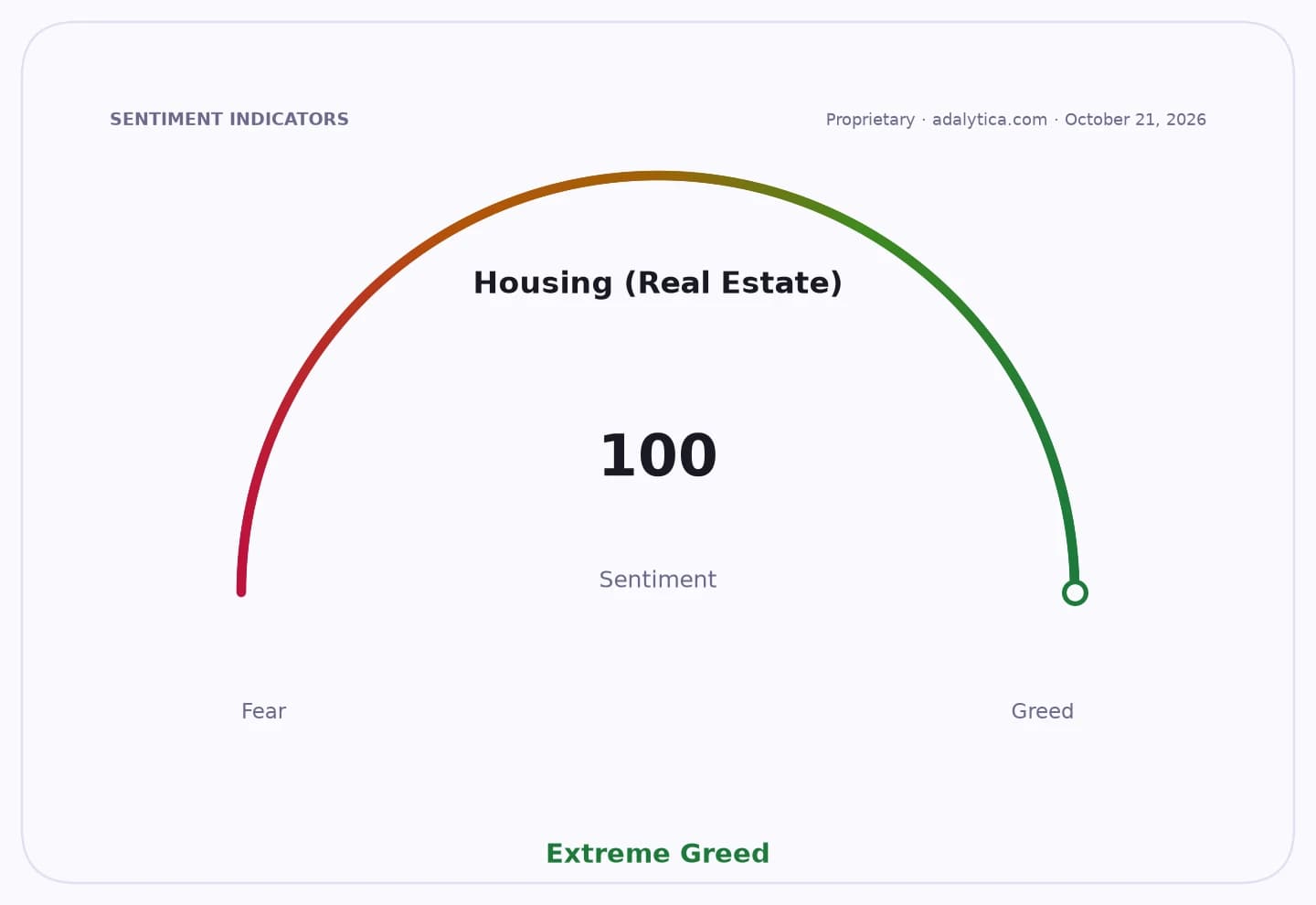
Sentiment IndicatorsⓘProprietary · adalytica.com · October 21, 2026
This is a snapshot — live sentiment, awareness and momentum for 130+ markets update continuously in the dashboard.Open AlphaPulse

The pressure is most visible in bidding wars. In Noe Valley, a house listed at $3.6 million drew a $4.8 million all-cash offer that still lost to a bid around $5.4 million to $5.5 million, according to agent Greta Tengattini of Mosaik Real Estate. The winning buyer also had no financing and could close in about a week, underlining how cash and speed now matter as much as headline affordability. Tengattini said single-family homes can sell 20% to 30% above asking in the fiercest contests, especially in neighborhoods such as Noe Valley, Bernal Heights and Glen Park.
The broader macro backdrop helps explain why the market can absorb such aggressive pricing. The local labor market is still benefiting from AI-related hiring, while expected paper wealth from future valuations is encouraging some employees to turn stock compensation into property. Reuters has reported that Anthropic is seeking a valuation of as much as $2 trillion for a potential listing, while OpenAI has been in talks that could lift its value beyond $1 trillion. Those are expectations rather than realized gains, but they are already shaping behavior. Redfin estimated in July that the net equity held by current and former OpenAI workers could reach about $135 billion, with Anthropic workers holding about $63 billion, a theoretical pool large enough to move a meaningful slice of the metropolitan housing market if even a fraction is converted into homes.
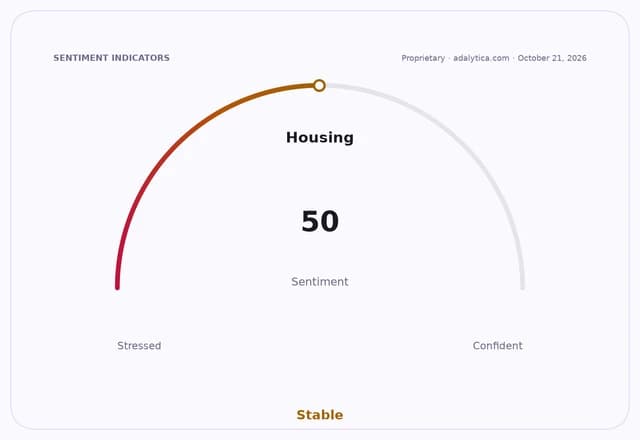
For investors, the story goes beyond a local real estate rush. It shows how AI capital formation is spilling into the physical economy, supporting asset prices, consumer spending and local services while widening the gap between workers who own equity and those who rely on wages. The imbalance also creates second-order effects for the Bay Area: higher housing costs can deepen labor shortages, pressure rents and complicate hiring for companies that are not handing out equity windfalls. Tengattini said even the rental market is tightening, with some homes listed at $3,000 a month leasing for $4,000 and two-bedroom units in sought-after areas commanding $6,500 to $7,000.
The risk for the market is that it has become dependent on expectations as much as actual cash. If AI valuations cool, or if employees delay selling shares, a portion of that demand could fade. For now, though, San Francisco remains the clearest example of how the AI boom is being translated into real-world prices — and why $4.8 million can no longer guarantee a house.
| Entity | Gains | Losses |
|---|---|---|
| AI employees and founders | ▲Equity wealth converts to homes | ▼Wage earners priced out |
| San Francisco sellers | ▲Higher bids, faster closings | ▼Buyers facing record affordability |
| OpenAI and Anthropic | ▲Local talent appeal | ▼Wider housing costs for staff |
| Renters and first-time buyers | ▲Little benefit from boom | ▼Higher rents and entry prices |