Santa Fe’s government says public-sector wages are now running slightly ahead of inflation, with a 5.5% increase from July through September versus 5.3% price growth, as the province moves to preserve purchasing power through the end of 2026.
Santa Fe public wages rise above inflation in Q3
The narrow outperformance matters because wages are one of the biggest recurring items in any provincial budget and a key driver of household spending. If pay checks keep pace with prices, civil servants are less likely to cut consumption, supporting local demand even as Argentina’s inflation remains volatile.
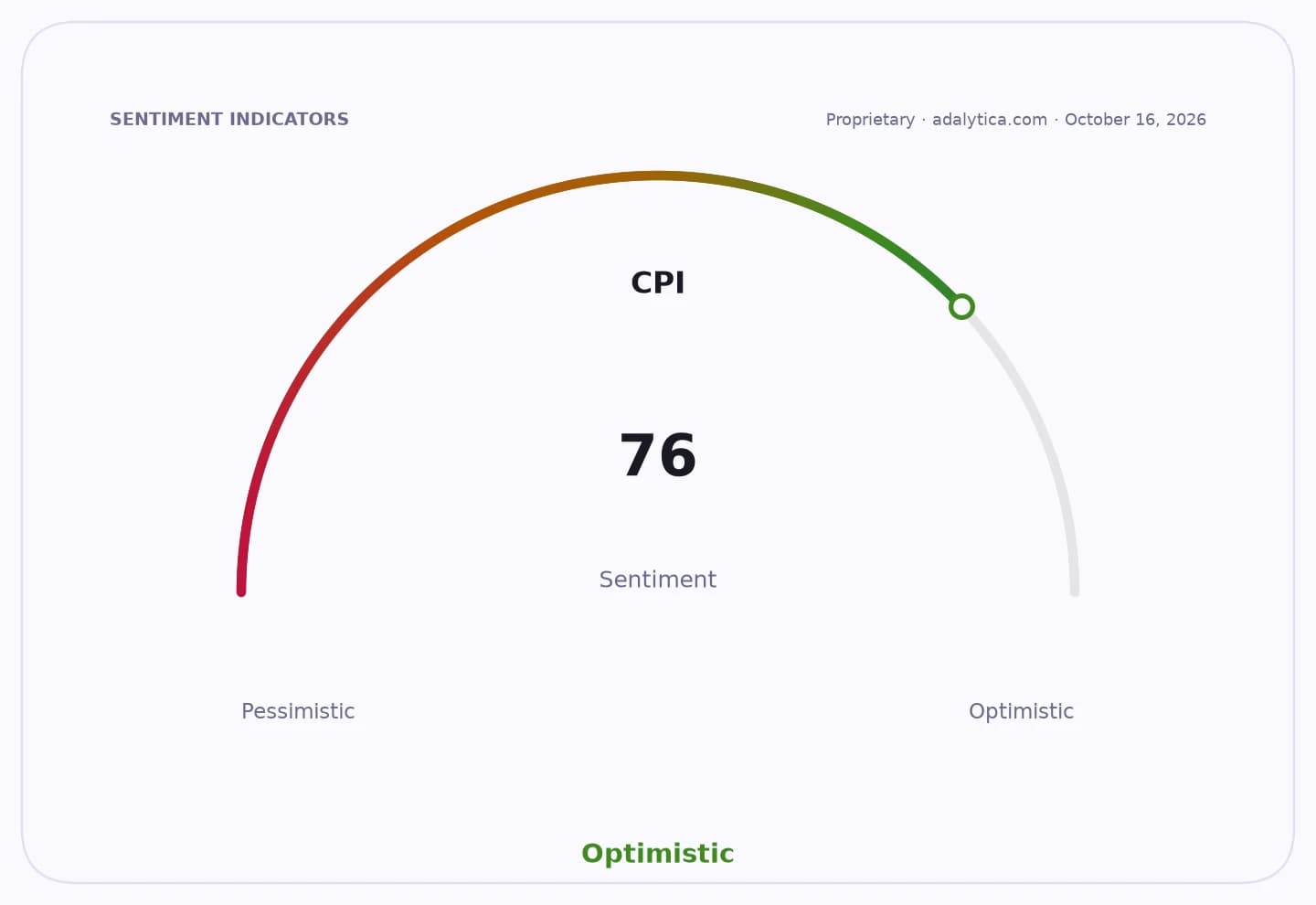
Sentiment IndicatorsⓘProprietary · adalytica.com · October 16, 2026
This is a snapshot — live sentiment, awareness and momentum for 130+ markets update continuously in the dashboard.Open AlphaPulse
The province said the third-quarter rise left salaries 0.2 percentage point above the local consumer price index compiled by the Ipec. Santa Fe also has scheduled raises of 1.6% in October and 1.5% in both November and December, which officials say should leave the second-half agreement roughly matched with inflation by year-end.
The deal includes minimum guaranteed increases, a feature designed to lift lower-paid workers more than the headline percentage suggests. Workers at the bottom of the scale saw pay climb 8.7% in the third quarter versus June, after minimum increases of 80,000 pesos in July and 100,000 pesos in August and September.
That structure matters for investors because it shows how Argentine provinces are managing wage pressure without letting real pay erode too sharply, a balancing act that affects fiscal flexibility, labor relations and consumption. The government said the current pact could deliver up to a 10.1% cumulative increase between July and December, while minimum guarantees rise to 180,000 pesos in December and will affect year-end bonus calculations.
For markets, the immediate read is less about Santa Fe’s share price — none is indicated — than about the broader wage-inflation dynamic in Argentina’s provinces, where payroll costs, transfer needs and public-sector bargaining often set the tone for fiscal discipline. The first-half adjustment already started from a 17.1% floor to offset inflation, underscoring how indexation remains central to wage setting.
The next test comes with the final three monthly raises and the 2027 bargaining round, where the province will need inflation to stay near 1.5% a month if it wants the agreement to end the year at parity.
| Entity | Gains | Losses |
|---|---|---|
| Santa Fe public workers | ▲Purchasing power protected | ▼Real wage erosion |
| Santa Fe provincial government | ▲Labor peace through year-end | ▼Higher payroll costs |
| Low-paid employees | ▲Bigger percentage increase | ▼Wage compression at top of scale |
| Provincial budget | ▲Predictable wage path | ▼Less room for spending flexibility |