Santander is broadening its education push in Brazil with a free training program for university teachers that targets one of the biggest shifts facing classrooms: the use of artificial intelligence in teaching and assessment.
Santander launches free AI training for Brazil teachers
The bank will open 2,000 places in October for the online course Santander Professores: Novas Competências, offered through Santander Open Academy with the Semesp corporate university. The program is aimed at higher-education professors across Brazil and is designed to strengthen skills in AI applied to teaching, active methodologies, communication and sustainable education.
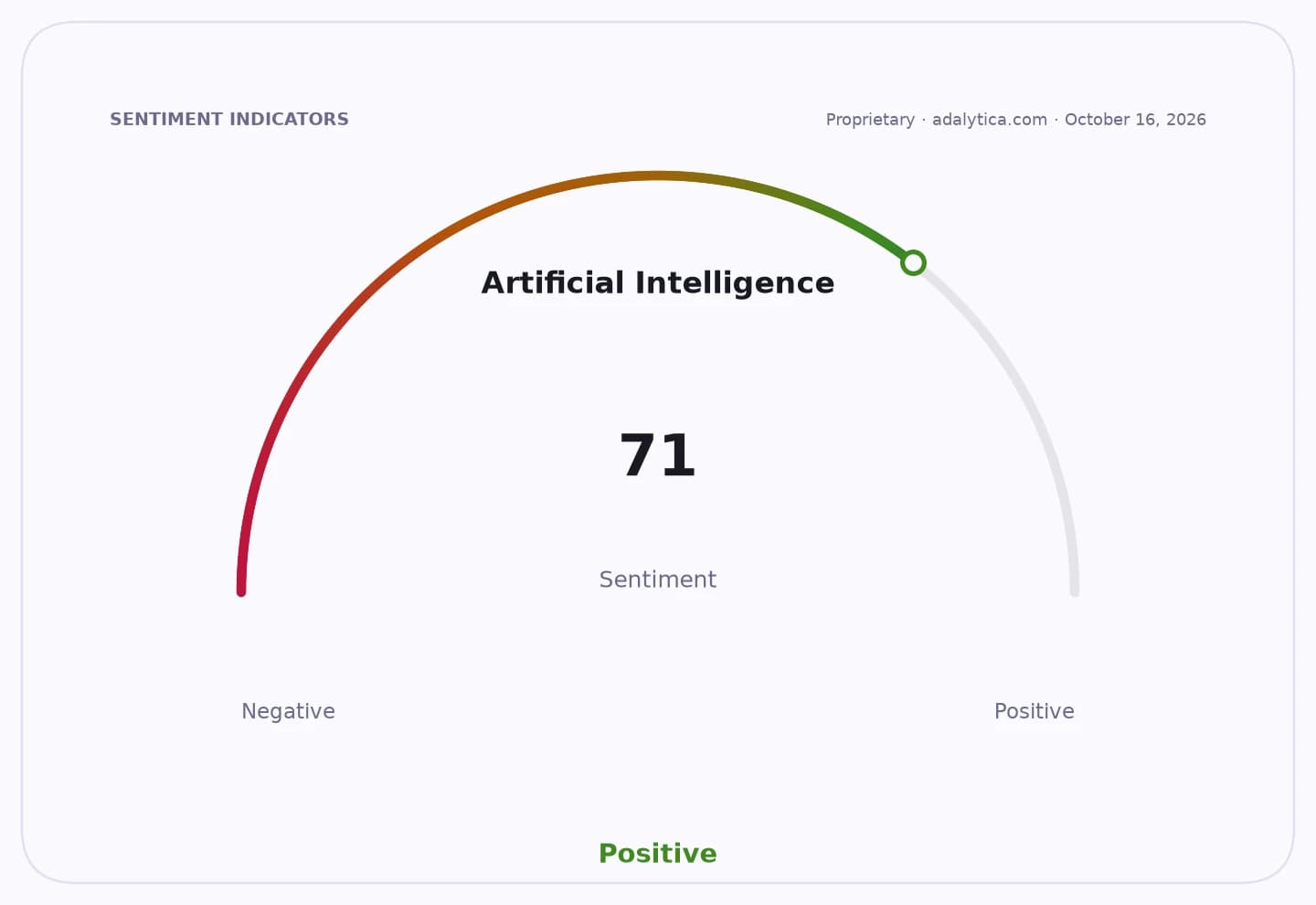
Sentiment IndicatorsⓘProprietary · adalytica.com · October 17, 2026
This is a snapshot — live sentiment, awareness and momentum for 130+ markets update continuously in the dashboard.Open AlphaPulse
The timing matters because universities are under pressure to adapt curricula and teaching methods as generative AI changes how students learn, research and complete assignments. For educators, the challenge is not just learning to use AI tools, but deciding how to design lessons, assess students and police responsible use. Santander’s course directly addresses those pain points, including ethics, evaluation and how to handle students who use AI.
That makes the initiative more than a corporate philanthropy headline. It reflects a broader market for reskilling in education, where institutions are trying to reduce the gap between theory and classroom practice. Santander said the course will include four learning tracks and masterclasses at the end of each one, plus a planned in-person immersion in São Paulo in July 2027 at the Fundação Getúlio Vargas, aimed at helping teachers apply the techniques in real classrooms.
For Santander, the program reinforces a long-running strategy of using education as a brand and relationship-building tool rather than a pure commercial product. The bank said it has committed more than 2.5 billion euros to education, employability and entrepreneurship over 30 years and has supported more than 8.3 million people and companies through agreements with more than 1,000 universities. That scale matters because it gives the group a wide institutional network and a reputational moat in a sector where trust and access are central.
Investors are unlikely to view the course as financially material on its own, but it fits a pattern that can support customer acquisition, institutional partnerships and long-term franchise value. In a banking sector where digital engagement and social credentials increasingly matter, programs like this can help preserve visibility with universities, public institutions and younger users who are harder to reach through traditional branch banking.
The bull case is that Santander continues to deepen a low-cost, high-visibility education platform that strengthens its presence in Latin America’s knowledge economy. The bear case is that such initiatives remain largely reputational unless they translate into measurable business outcomes. Still, in a period when AI adoption is forcing universities to rethink pedagogy, the bank’s 2,000 free places tap a genuine structural need.
For investors, the key takeaway is that Santander is using education not just as corporate social responsibility, but as a strategic channel into a sector being reshaped by AI, sustainability requirements and new teaching models.
| Entity | Gains | Losses |
|---|---|---|
| Santander | ▲Brand reach; university ties | ▼Short-term funding outlay |
| Brazilian university teachers | ▲Free AI training; new pedagogy | ▼Time commitment |
| Higher-education institutions | ▲Better-prepared faculty | ▼Pressure to adapt faster |
| Commercial training providers | ▲— | ▼Competition from subsidized course |