Saudi Arabia’s debt market is moving beyond a government funding tool and into a broader financing channel for banks and corporations, a shift that underscores both investor appetite for Saudi credit and the kingdom’s growing reliance on debt to support its economic transformation.
Saudi Arabia debt market expands beyond sovereign
The latest sovereign sukuk sale drew more than $16.5 billion of orders for a $3.25 billion issue, while Arab National Bank and Al Rajhi Bank pushed ahead with additional capital-raising, and Ma’aden tapped international lending markets for the first time with a $1 billion facility. Taken together, the transactions show that Saudi issuers are now increasingly converging in global debt markets, even as borrowing costs remain elevated.
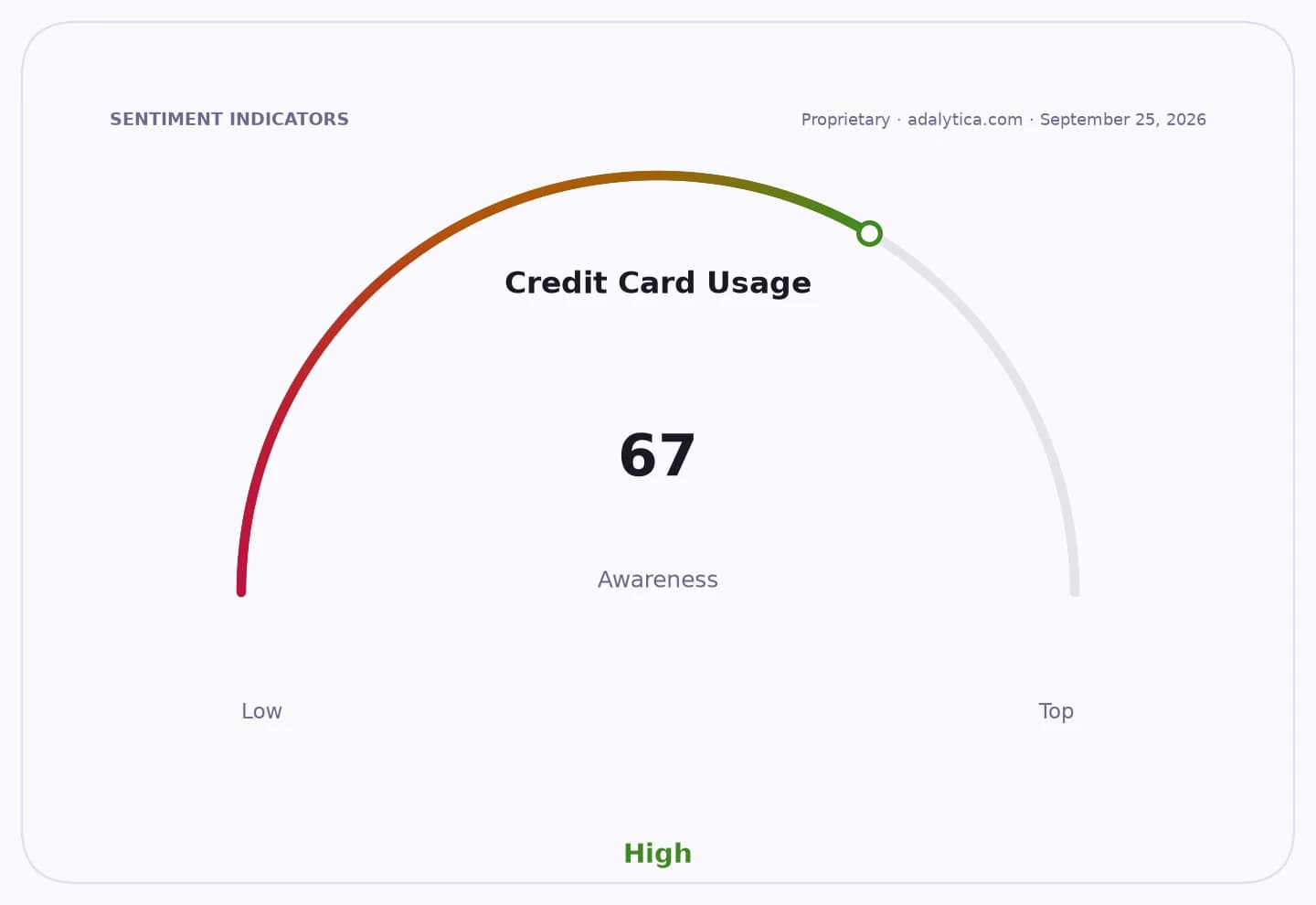
Sentiment IndicatorsⓘProprietary · adalytica.com · September 4, 2026
This is a snapshot — live sentiment, awareness and momentum for 130+ markets update continuously in the dashboard.Open AlphaPulse
For the state, the appeal is straightforward: debt is helping cover budget needs and refinance maturities without forcing a sharper drawdown of reserves. Saudi Arabia’s 2026 borrowing plan calls for roughly $57.9 billion in funding, including about $44 billion to finance an expected deficit and another $13.9 billion to repay maturing debt. The International Monetary Fund expects public debt to rise to 32.6% of GDP this year from 29.8% in 2025, still modest by international standards and consistent with the Finance Ministry’s 2026 budget projection of 33.9%.
What makes the latest wave notable is the breadth of the borrower base. The government’s two-tranche dollar sukuk priced at 70 basis points over US Treasuries for the five-year note and 80 basis points for the 10-year piece, a sign that global investors continue to view Saudi sovereign risk favorably relative to many emerging markets. Orders were more than four times the deal size, reinforcing the kingdom’s access to liquidity even at a time when the cost of money remains high.
Banks are using the same market to shore up capital and funding. Arab National Bank completed a $750 million Additional Tier 1 sukuk at a 6.5% annual yield, while Al Rajhi Bank has begun marketing a dollar-denominated social Tier 2 sukuk with a 10.5-year maturity. For lenders, these deals are about capital ratios, maturity management and diversifying away from local funding pools. For investors, they offer exposure to one of the region’s strongest credit stories with spreads that remain competitive against peers.
Ma’aden’s $1 billion term loan and revolving credit facility adds a corporate dimension that matters for Saudi Arabia’s broader growth model. As the kingdom channels capital toward mining, infrastructure, tourism and industrial projects, companies need longer-dated, more diversified funding sources to execute expansion plans without leaning excessively on bank balance sheets. That is especially important as the state pushes to build non-oil revenue streams and reduce dependence on hydrocarbons over time.
The risk is that higher rates make this strategy more expensive than in the era of near-zero global yields. Debt servicing costs are likely to rise if Saudi Arabia and its issuers continue to access markets at current pricing, and that could narrow fiscal room if oil revenue disappoints or project returns take longer to materialize. Even so, the current market response suggests investors are still willing to fund the kingdom’s transition, provided leverage stays manageable and projects continue to translate borrowing into growth.
For investors, the message is that Saudi credit is becoming a multi-layered market rather than a single sovereign story. That widens opportunities across sovereign sukuk, bank capital instruments and corporate loans, but it also makes funding conditions, refinancing calendars and spread behavior increasingly important catalysts to watch.
| Entity | Gains | Losses |
|---|---|---|
| Saudi government | ▲Broad investor demand | ▼Higher debt-service costs |
| Saudi banks | ▲Capital and funding diversification | ▼More expensive refinancing |
| Ma’aden and corporates | ▲Access to international liquidity | ▼Greater leverage exposure |
| Global investors | ▲Wider Saudi credit supply | ▼Lower yields if spreads tighten |