Saudi Aramco’s push to find new export routes is a reminder that the biggest risk in oil markets now is not just price, but access.
Saudi Aramco seeks new oil export routes
For the world’s largest crude exporter, route diversification is a strategic necessity, not a logistics tweak. Middle East supply still dominates global trade, but the market is being forced to price in a more brittle system where chokepoints, maritime security and state intervention can move barrels as much as geology can. That matters because every extra layer of shipping risk raises the cost of moving oil, tightens available supply and keeps inflationary pressure alive across fuel markets.
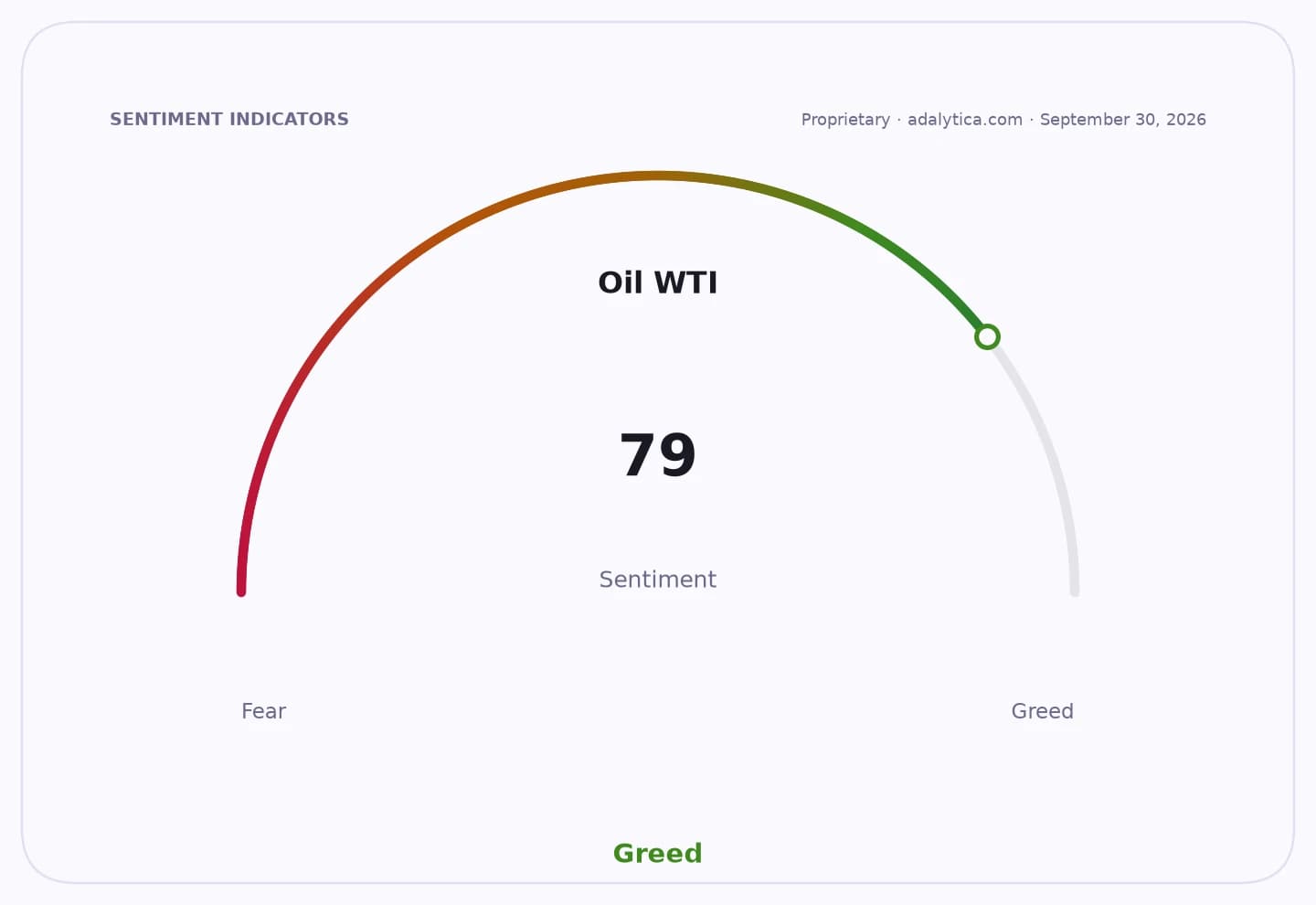
Sentiment IndicatorsⓘProprietary · adalytica.com · October 1, 2026
This is a snapshot — live sentiment, awareness and momentum for 130+ markets update continuously in the dashboard.Open AlphaPulse
The backdrop is a crude market that remains expensive and jumpy. WTI is hovering around $90 a barrel, with Brent near $98, levels that leave little room for further disruption before consumers feel the pinch. At the same time, the 10-year U.S. Treasury yield is above 5.2%, a sign that the macro environment is already carrying the burden of sticky energy and financing costs. When oil and rates are both elevated, the second-round effects spread quickly into transport, chemicals, airlines and broader consumer spending.
Aramco’s route review also underscores how geopolitics is reshaping the oil trade into a premium business for infrastructure, shipping and security providers. If exporters need more resilient paths to market, the winners are not only producers with flexible production systems but also tanker operators, port infrastructure owners, pipeline networks and energy services firms that can move crude around constrained corridors. The losers are refiners and importers exposed to higher freight and insurance costs, along with consumers who ultimately pay for every extra barrel-mile.
Technical indicators show the market is not treating this as a fleeting spike. WTI remains above its 200-day moving average, and Adalytica’s Oil WTI Trade Signals still show greed even after recent cooling, while global stability sentiment has deteriorated. In plain terms, investors are still leaning into energy exposure even as geopolitical risk and supply insecurity stay elevated.
For investors, the message is straightforward: the trade is shifting from simple oil beta to the picks-and-shovels of energy logistics. Saudi Aramco’s search for new routes is another sign that the next leg of value may come from infrastructure that makes crude flow possible when politics tries to stop it. That is where the asymmetric opportunity sits now.
| Entity | Gains | Losses |
|---|---|---|
| Saudi Aramco | ▲export flexibility | ▼chokepoint dependence |
| Tanker operators | ▲higher freight demand | ▼idle vessel risk |
| Pipeline/infrastructure firms | ▲route diversification demand | ▼underused legacy routes |
| Refiners/importers | ▲— | ▼higher supply costs |