A likely Scott Bessent nomination for Federal Reserve chair would matter less as a personnel change than as a signal that the White House wants a more dovish interest-rate path at a moment when markets are already leaning that way.
Scott Bessent Fed Chair Pick Could Signal Easier Rates

The case for Bessent is straightforward: he is seen as more aligned with Donald Trump’s preference for lower borrowing costs, and the market backdrop suggests investors would welcome any Fed leadership that reduces the risk of policy staying tight for too long. The federal funds rate is forecast at 3.625% in August 2026, only marginally below the current 3.63%, while the 10-year Treasury yield sits around 4.7%, leaving financing costs elevated relative to the post-crisis era. That combination keeps pressure on rate-sensitive assets, from housing to long-duration equities, and makes the chair choice a live market issue rather than a purely political one.
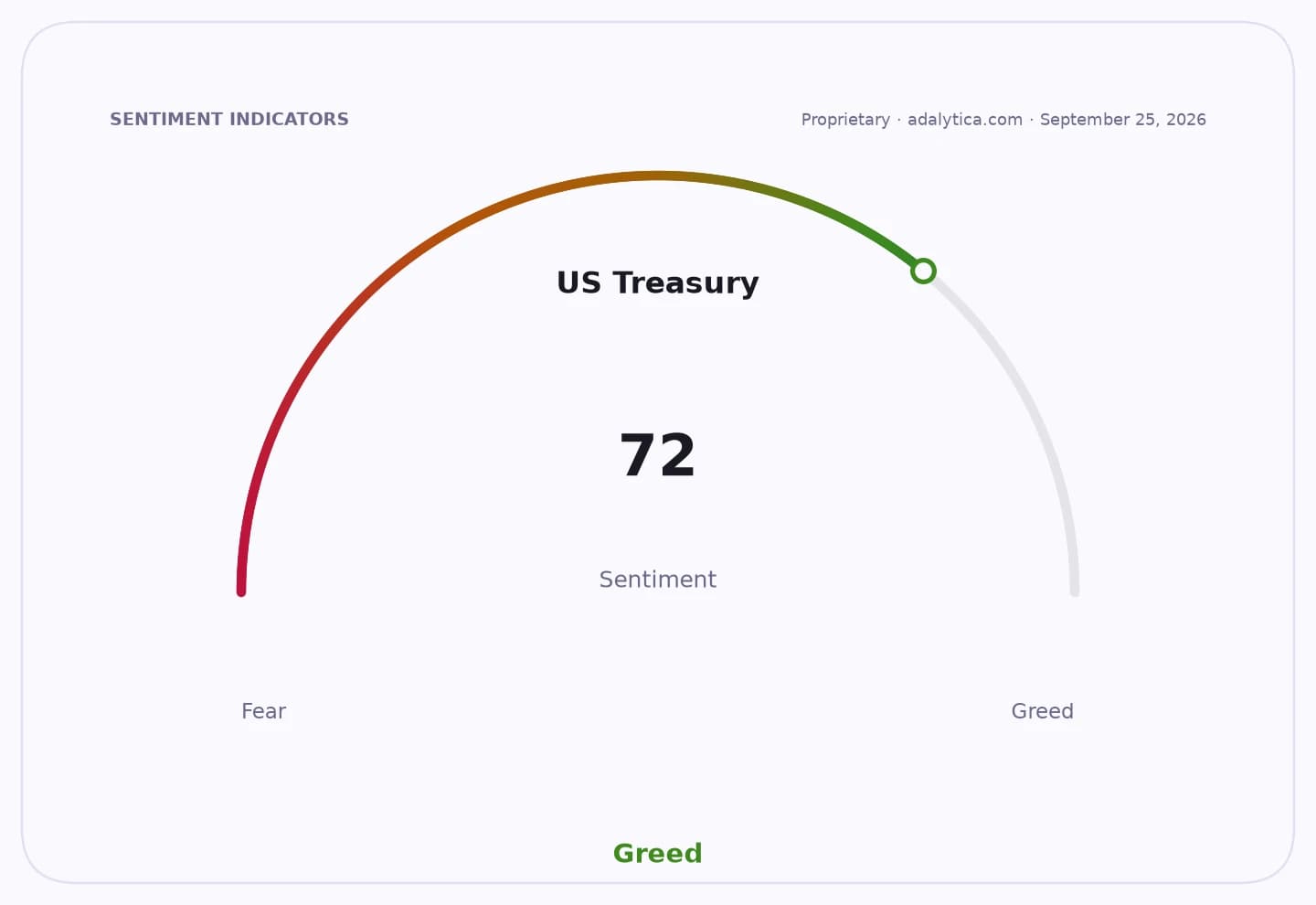
Sentiment IndicatorsⓘProprietary · adalytica.com · August 24, 2026
This is a snapshot — live sentiment, awareness and momentum for 130+ markets update continuously in the dashboard.Open AlphaPulse

Investors are already expressing that tension. The iShares 20+ Year Treasury ETF, TLT, has slipped to about $82, with its 50-day moving average below the 200-day line and RSI readings near neutral, a sign that bond traders are waiting for clearer guidance on cuts. The S&P 500, by contrast, remains near record territory, with SPY around $766, but Adalytica’s trade-signal snapshot shows sentiment has cooled from extreme optimism earlier in the month to a neutral reading, suggesting the market is no longer assuming an easy policy backdrop. The dollar looks even more exposed: UUP is trading near 27.9, below its 50-day average and with Adalytica’s dollar signal at extreme fear, reflecting expectations that a softer Fed would be a headwind for the currency.
That is why the chair pick matters economically. A more accommodative Fed would filter through to mortgage rates, corporate funding costs and the valuation of growth stocks that depend on lower discount rates. It would also affect the Treasury curve, which is already pricing a 10-year yield well above the policy rate, a configuration that can either deepen recession concerns or keep financial conditions tighter than the central bank intends. Banks such as JPMorgan, Goldman Sachs and Bank of America have all highlighted interest-rate sensitivity in recent filings, underscoring how quickly earnings assumptions can change if the Fed shifts toward easier policy.
FEDFUNDS vs DGS10 — macro contextadalytica.com
Explore this data interactively — full history, time series and cross-market comparisons.Open AlphaPulse
The bull case for Bessent is that he could bring a market-friendly reset after years of tension between the White House and the Fed, lowering the odds of an unnecessarily restrictive stance as inflation has cooled from its 2022 peak. The bear case is that overt political alignment would raise concerns about Fed independence, risking a flatter credibility premium in Treasurys and a weaker dollar if investors conclude the central bank is being steered toward short-term growth support over price stability.
For now, the market seems to be pricing not a clean dovish pivot, but a higher probability of one. If Trump wants a chair who can deliver lower rates without an open fight with Wall Street, Bessent fits the brief. The question for investors is whether that makes policy more predictable — or simply more political at a time when the next move in rates, and the person making it, will matter for every major asset class.
| Entity | Gains | Losses |
|---|---|---|
| Trump administration | ▲Policy alignment | ▼Fed independence concerns |
| Borrowers / rate-sensitive stocks | ▲Lower financing costs | ▼— |
| Dollar bulls | ▲— | ▼Weaker USD outlook |
| Treasury bears / long-duration bond holders | ▲— | ▼Higher yield volatility |