U.S. semiconductor stocks fell sharply as Treasury yields climbed and investors pulled back from one of this year’s most crowded trade-on-growth bets, underscoring how quickly the market can unwind when liquidity tightens and positioning becomes stretched.
Semiconductor ETFs fall as Treasury yields rise

The VanEck Semiconductor ETF, SMH, dropped 4.1% to $569.77 on Aug. 18 after touching 594.07 the previous day, while the iShares Semiconductor ETF, SOXX, slid 4.9% to $531.39 from 559.12. Nvidia, the market’s key AI bellwether, fell 2.3% to $219.74. The move came even as the 10-year Treasury yield was forecast at 4.694%, near recent highs, and the 2-year yield at 4.159%, levels that keep pressure on long-duration equity valuations.
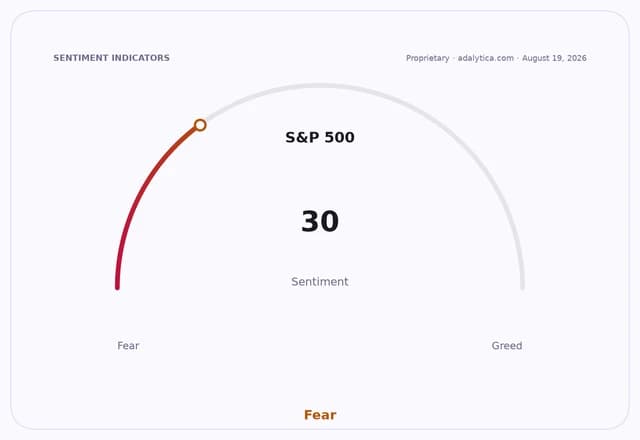
Sentiment IndicatorsⓘProprietary · adalytica.com · August 19, 2026
This is a snapshot — live sentiment, awareness and momentum for 130+ markets update continuously in the dashboard.Open AlphaPulse
The selloff matters because semiconductors sit at the intersection of AI capex, growth expectations and discount rates. When yields rise, the present value of future earnings falls most heavily on high-multiple technology stocks, which helps explain why chip ETFs often trade with bigger swings than the broader market. SOXX is still well above its 200-day moving average at 417.26 and SMH remains above 464.0, but both funds are retreating from stretched technical conditions after a rapid summer run.
Investor positioning has also become more fragile. SOXX had surged to 655.01 in late June before sliding to 465.0 on July 29, then rebounding toward 559, while SMH followed a similar pattern, climbing to 655.89 in June before dropping to 504.22 on July 29 and recovering to the high 500s. Those moves left both funds with elevated relative strength readings, which can leave little cushion when momentum fades. Nvidia’s own technical indicators showed the stock cooling from overbought levels even before the latest decline.
The macro backdrop is doing much of the work. The 10-year yield’s climb to 4.72% on Aug. 17 and forecast near 4.7% suggests the market still sees persistent term-premium pressure, while the high-yield credit spread at 2.70% remains contained, implying this is not yet a full-blown credit event. Instead, investors appear to be repricing risk assets as rate expectations stay elevated and earnings quality becomes more important than narrative. Adalytica’s S&P 500 trade signals showed sentiment falling to 30, or “Fear,” on Aug. 18 from 41 a day earlier, while awareness stayed neutral, a sign that the deterioration is broadening beyond semiconductors.
For investors, the key question is whether this is a routine reset after an AI-led melt-up or the start of a broader de-rating for megacap growth. Bulls will point out that chip demand tied to AI infrastructure, data centers and advanced packaging remains structurally strong, and that the sector’s long-term earnings growth still justifies premium valuations. Bears will counter that when yields are near multi-month highs and leadership is concentrated in a handful of names, even strong fundamentals can be overwhelmed by multiple compression and crowded positioning.
Near term, the sector will likely trade on the same variables that drove the latest reversal: Treasury yields, inflation-sensitive macro data and any sign that AI spending is slowing or rotating. If rates ease, semiconductors could quickly resume leadership. If not, the recent drop may be less a buying opportunity than a warning that the market’s most expensive growth trade is still highly vulnerable to a change in the cost of capital.
| Entity | Gains | Losses |
|---|---|---|
| Treasury bears | ▲Higher yields | ▼Growth-stock valuations |
| Semiconductor bulls | ▲AI capex thesis | ▼Near-term price momentum |
| Cash buyers | ▲Better entry points | ▼Late buyers in the rally |
| Long-duration tech longs | ▲Structural earnings growth | ▼Multiple compression |