Chip stocks are slipping as the market’s biggest growth names run into a familiar problem: rising Treasury yields are making richly valued semiconductor shares harder to defend, even as demand for AI infrastructure remains strong.
Semiconductor stocks fall as Treasury yields rise
Nvidia, Advanced Micro Devices and Intel were all lower in premarket trading on Thursday, with the weakness spreading across the sector and the iShares Semiconductor ETF also under pressure. The move reflects a broader repricing of long-duration tech assets as investors digest stronger U.S. data, sticky input costs and the possibility that the Federal Reserve could be forced to keep rates higher for longer.
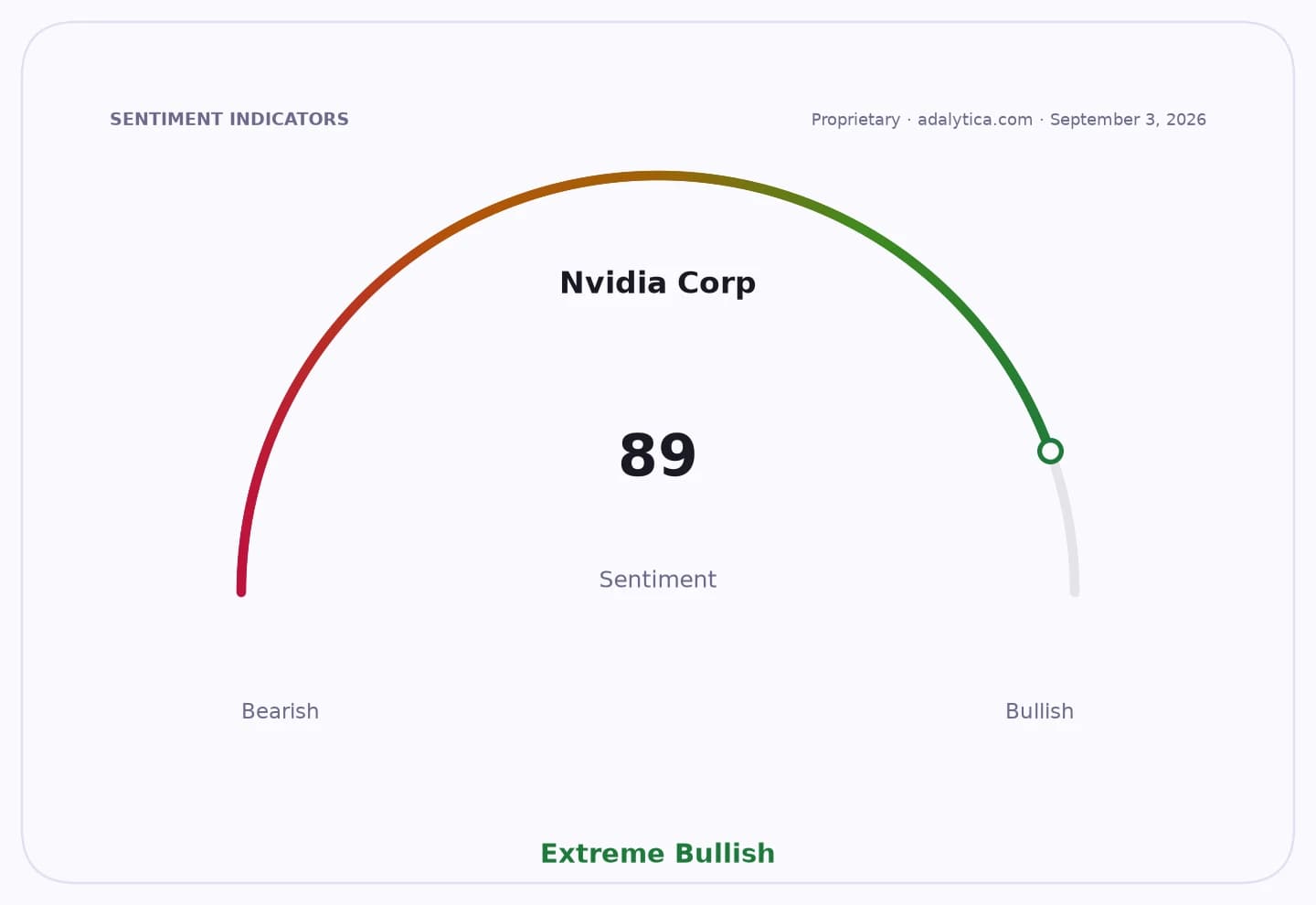
Sentiment IndicatorsⓘProprietary · adalytica.com · September 29, 2026
This is a snapshot — live sentiment, awareness and momentum for 130+ markets update continuously in the dashboard.Open AlphaPulse
The macro backdrop matters because semiconductors have become one of the market’s most crowded AI trades. When the 10-year Treasury yield moves above 5%, future earnings are discounted more aggressively, which tends to hit the highest-multiple stocks first. That is why chipmakers can fall even on news that would normally be supportive of fundamentals.
For Nvidia, the pullback comes despite evidence that its AI-driven demand story remains intact. The company’s latest quarterly revenue reached $96.2 billion, up 18% sequentially, and it continues to lock in large infrastructure commitments, including an August agreement with Amazon Web Services to deploy another 2 million GPUs across AWS systems. Nvidia’s outlook still assumes no data-center compute revenue from China, leaving room for upside if access improves. Analysts remain overwhelmingly bullish: all 31 covering the stock over the past three months rate it a buy, with an average target of $324.32, implying about 44% upside.
AMD is also being marked down after a powerful run that recently pushed its market value past $1 trillion. The stock has benefited from major AI-related wins, including a multi-year deal with OpenAI for as much as 6 gigawatts of Instinct GPUs and Oracle’s commitment to 50,000 MI450 accelerators. Investors have also been buying into the idea that AI agents could raise demand not just for accelerators but for traditional CPUs as well. Even after Thursday’s weakness, Wall Street still sees room for more gains, with 29 of 35 analysts rating AMD a buy and the average target at $644.62, or roughly 35% above recent levels.
Intel’s slide shows that the same sector rotation can hit laggards and turnaround stories alike. The company had jumped about 12% on Monday as traders reassessed whether wider AI-agent adoption could lift CPU demand, and CEO Lip-Bu Tan has said Intel can meet only about half of customer CPU demand, pointing to supply constraints. But the stock remains the least favored of the three with analysts, who largely see it as range-bound despite the recent bounce.
The broader message for investors is that AI spending is still supporting the semiconductor cycle, but valuations are increasingly hostage to macro rates. Bulls can point to resilient cloud capex, large-scale GPU commitments and new workloads that may expand CPU demand. Bears will argue that a higher-for-longer rate regime leaves less room for disappointment and compresses multiples across the entire group.
What happens next will depend less on near-term AI demand than on whether bond yields keep climbing. If Treasury markets stay elevated, chip stocks may keep consolidating even as their fundamental growth stories remain intact. If yields ease, the sector’s earnings power could reassert itself quickly.
| Entity | Gains | Losses |
|---|---|---|
| Bond yields | ▲Higher discount rates | ▼Chip valuations |
| Nvidia bulls | ▲AI demand narrative | ▼Near-term share price |
| AMD bulls | ▲Long-term AI revenue upside | ▼Momentum traders |
| Intel buyers | ▲CPU demand rebound thesis | ▼Those expecting quick rerating |