Shell is leaning on Venezuela’s offshore gas fields and its existing Trinidad LNG infrastructure to turn a politically fraught return to the country into a faster-moving, lower-capital route to growth.
Shell Venezuela Gas Plans Use Trinidad LNG Assets
The strategy matters because it gives Shell exposure to a large gas resource base without forcing the company into Venezuela’s more capital-intensive and operationally difficult heavy-oil sector. In a global LNG market where Europe and Asia are still competing for cargoes and new supply remains tight, even incremental volumes from nearby Venezuelan fields could help ease bottlenecks and strengthen Shell’s position in one of the industry’s most profitable growth areas.
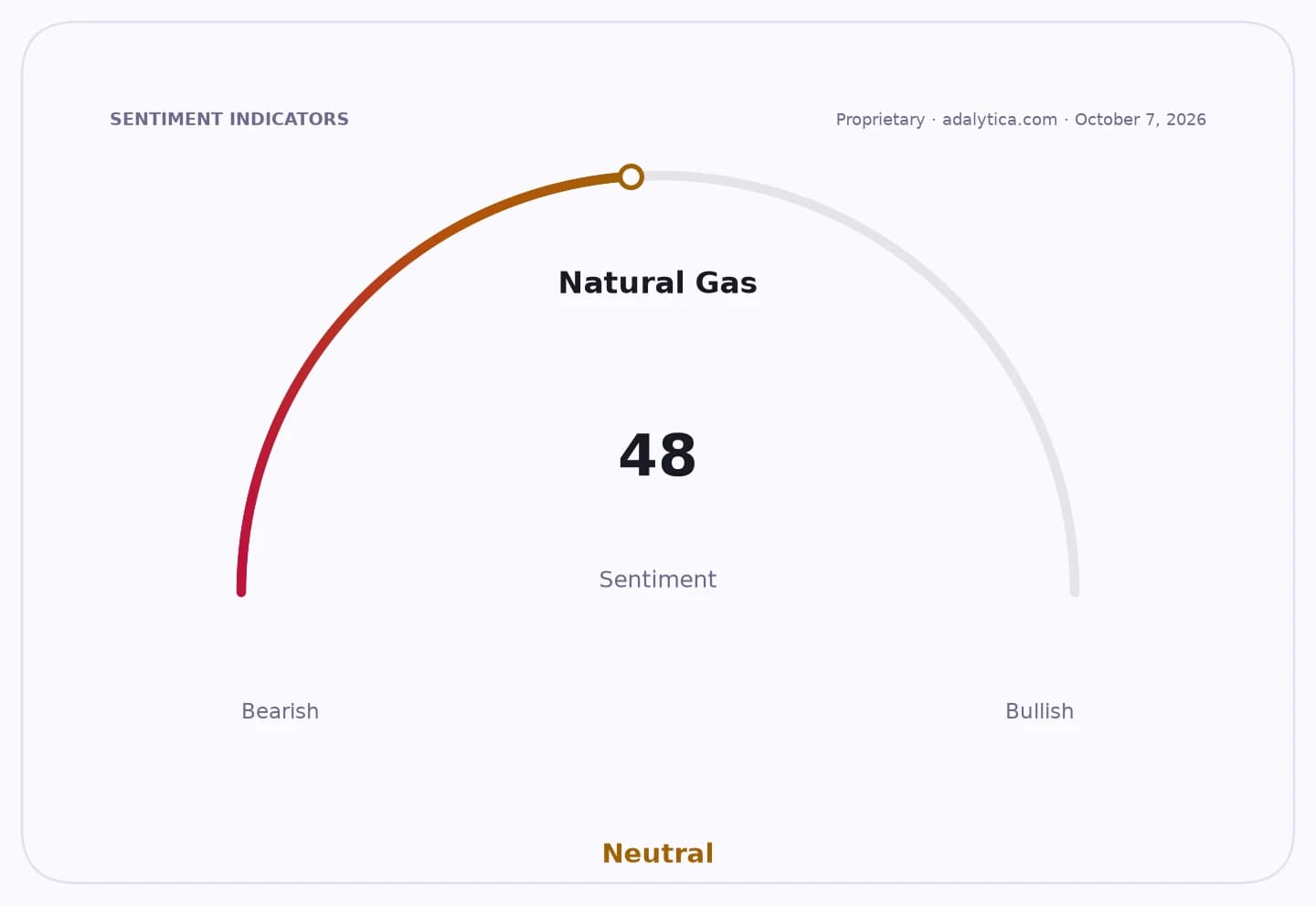
Sentiment IndicatorsⓘProprietary · adalytica.com · October 7, 2026
This is a snapshot — live sentiment, awareness and momentum for 130+ markets update continuously in the dashboard.Open AlphaPulse
At the center of the plan are the Loran and Dragon fields, both offshore Venezuela and both linked to Shell’s assets in Trinidad and Tobago. Shell already owns 45% of Atlantic LNG, a regional plant with annual capacity of about 12 million tonnes, and that existing infrastructure gives the company a commercial shortcut: gas from Venezuela could be processed without waiting for entirely new liquefaction terminals to be built.
Loran is the more immediate opportunity. Venezuela signed five agreements with Shell in June, including a licence for the first phase of development at the field, which is estimated to hold 7.3 trillion cubic feet of gas. Six of its seven reservoirs straddle the maritime border with Trinidad and Tobago, where Shell is already developing the Manatee field. That is strategically important because Loran and Manatee are effectively the same geological system, allowing Shell to use infrastructure that is already being built for Manatee to support Venezuelan gas later.
Manatee is expected to start production in 2027 and could peak at about 604 million cubic feet a day, part of which would feed Atlantic LNG. Shell has said the first phase of Loran could unlock about 1.7 trillion cubic feet of gas, and it has argued the project could move relatively quickly because it can piggyback on the Trinidad buildout.
Dragon offers a similar prize, if more delicately. The field holds more than 4 trillion cubic feet of gas, and Shell plans to move that gas to Trinidad for liquefaction and sale into the global LNG market. If development stays on schedule, Shell could make a final investment decision in 2027.
For investors, the appeal is twofold. First, the projects fit Shell’s broader shift toward gas and LNG, a business that has offered stronger cash generation and better relative resilience than some of the company’s oil exposure. Second, the Venezuelan projects could add long-duration supply with a potentially lower upfront cost than greenfield LNG developments, improving the economics if sanctions, politics and logistics stay manageable.
The bull case is straightforward: Shell has a first-mover advantage, existing infrastructure and a large gas resource base close to market. The bear case is just as clear: Venezuela remains one of the most operationally and politically complex energy jurisdictions in the world, and any delay in licensing, financing, sanctions compliance or cross-border coordination could slow monetization.
Shell is not abandoning oil in Venezuela entirely — it has also signed agreements tied to projects in Monagas and measures to reduce gas flaring — but the company is making a deliberate choice about where it can create value. For shareholders, the message is that Shell is trying to convert geopolitical risk into LNG supply optionality, and if Loran and Dragon progress as planned, Venezuela could become a meaningful feedstock source for Shell’s growing gas business rather than a distraction from it.
| Entity | Gains | Losses |
|---|---|---|
| Shell | ▲Low-cost LNG supply growth | ▼Higher geopolitical exposure |
| Trinidad LNG / Atlantic LNG | ▲More feed gas | ▼Reliance on Venezuela-linked volumes |
| Venezuela | ▲Investment and export revenue | ▼Limited leverage over project pace |
| Rivals without nearby LNG assets | ▲Less advantage | ▼Higher new-build costs |