Silver could be the bigger winner or loser from today’s U.S. midterm elections because the white metal is more exposed than gold to the policy mix that follows: Treasury yields, the dollar and the likelihood of fresh spending that could support industrial demand.
Silver reacts to U.S. midterm election outlook
Markets are not betting on a clean policy reset. Prediction markets are pricing roughly a 90% chance Democrats retake the House, while the Senate remains close. That setup points to gridlock rather than sweeping fiscal change, but even gridlock matters for precious metals because it can shape expectations for deficits, real rates and the dollar. Those variables tend to matter more for gold, but silver has an extra lever: its use in solar panels and other industrial applications.
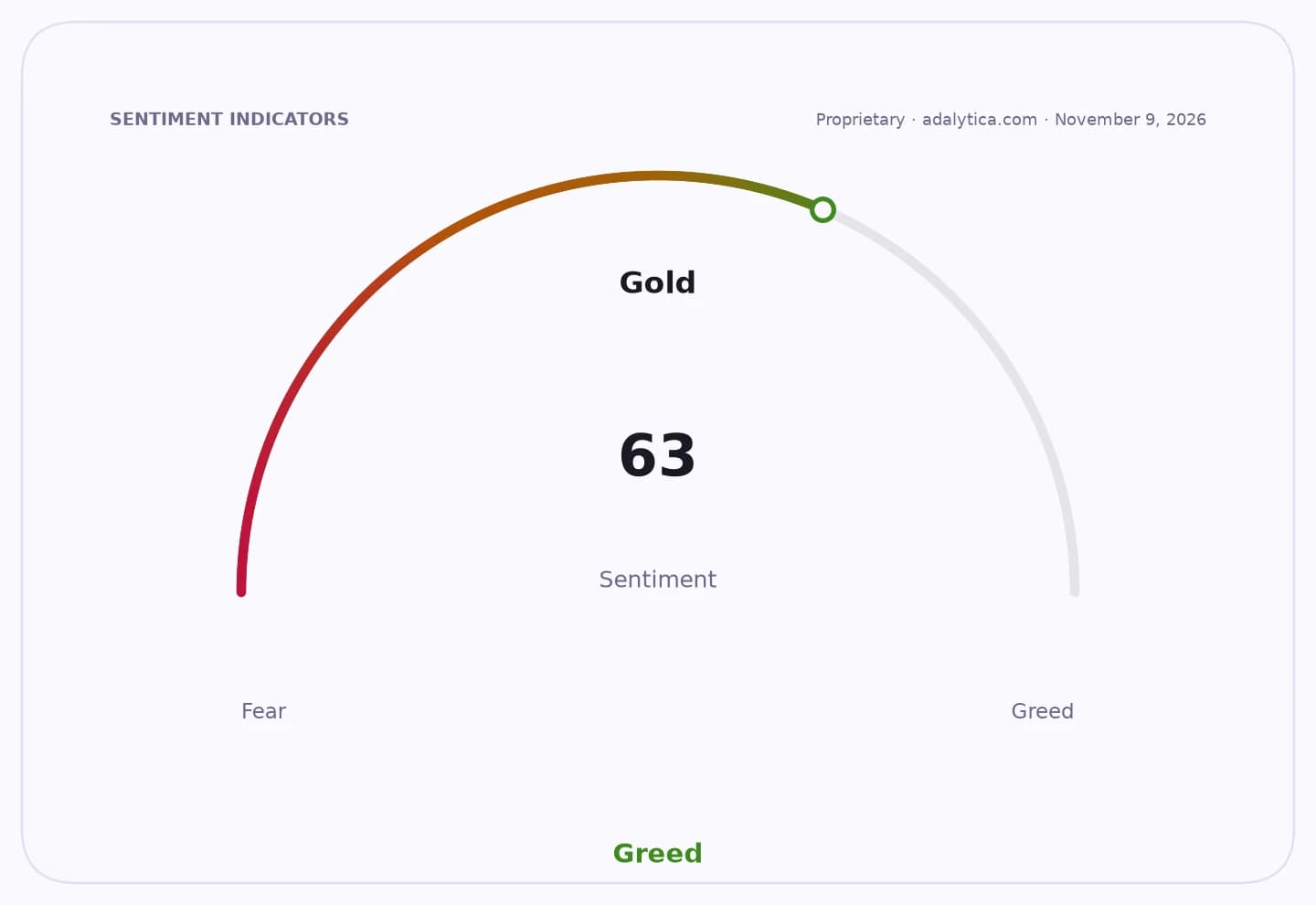
Sentiment Indicators
Silver is also entering the vote from a more fragile technical position. It has broken below its 2026 lows, with the iShares Silver Trust trading at $46.93, still about $0.20 below the psychologically important $50 level that has capped and attracted traders since 1980. The metal’s relative weakness contrasts with gold, which is holding above its own key thresholds. SLV remains below both its 50-day moving average of $54.53 and its 200-day average of $63.49, with a 14-day relative strength index around 33, underscoring how oversold the market has become.
The macro backdrop explains why investors are watching Washington at all. The 10-year Treasury yield is near 4.89%, while inflation and industrial output remain elevated enough to keep real-rate expectations in focus. Gold and silver typically struggle when yields stay high for longer, but any political outcome that weakens the dollar or reinforces expectations of larger deficits can quickly revive interest in hard assets. Adalytica’s US dollar trade signals show extreme fear in the currency, reinforcing the sense that the dollar is already vulnerable to a softer fiscal or geopolitical tone.
For gold, the election is more of a macro filter than a direct catalyst. The yellow metal usually reacts to the same forces as silver, but it lacks silver’s industrial demand kicker. That is why analysts see a Democratic sweep as potentially more bullish for silver than for gold: larger spending plans, especially around domestic manufacturing and clean energy, could support demand for physical silver even if higher deficits or sticky yields cap the broader precious-metals rally.
The bear case is equally clear. If the vote does not change the policy outlook much, or if markets decide a divided Congress keeps real rates higher for longer, both metals could struggle. In that scenario gold may hold up better because it is the cleaner monetary hedge, while silver would be left exposed to weaker investment demand and the risk that its industrial story fails to offset tighter financial conditions.
That leaves the election as a catalyst with asymmetric implications. A blue sweep would likely be read first through the lens of yields and the dollar, but silver would probably see the sharper reaction because it sits at the intersection of macro hedging and industrial demand. If the metal cannot reclaim $50, traders may instead focus on support near $47 and then $42, making the next move after the vote decisive for momentum and positioning.
| Entity | Gains | Losses |
|---|---|---|
| Silver bulls | ▲Fiscal-demand boost | ▼Real-yield pressure |
| Gold holders | ▲Safe-haven bid | ▼Less industrial upside |
| Dollar bears | ▲Softer USD catalyst | ▼Stronger-rate scenario |
| Solar/clean-energy stocks | ▲Higher silver demand | ▼Cost inflation if silver spikes |