A stronger-than-expected Democratic showing in U.S. elections is keeping foreign-exchange traders focused on the yen, with the currency likely to benefit if a crowded AI-driven rally in U.S. stocks unwinds and money rotates out of dollar assets.
Yen Gains Attention After U.S. Election Results

The setup matters because the yen has become a proxy for shifts in global risk appetite and U.S. rate expectations. If investors trim exposure to the technology-heavy trade that has helped power U.S. equities, the dollar can lose some support while the Japanese currency, often funded in carry trades, gets a lift.
Sentiment Indicators
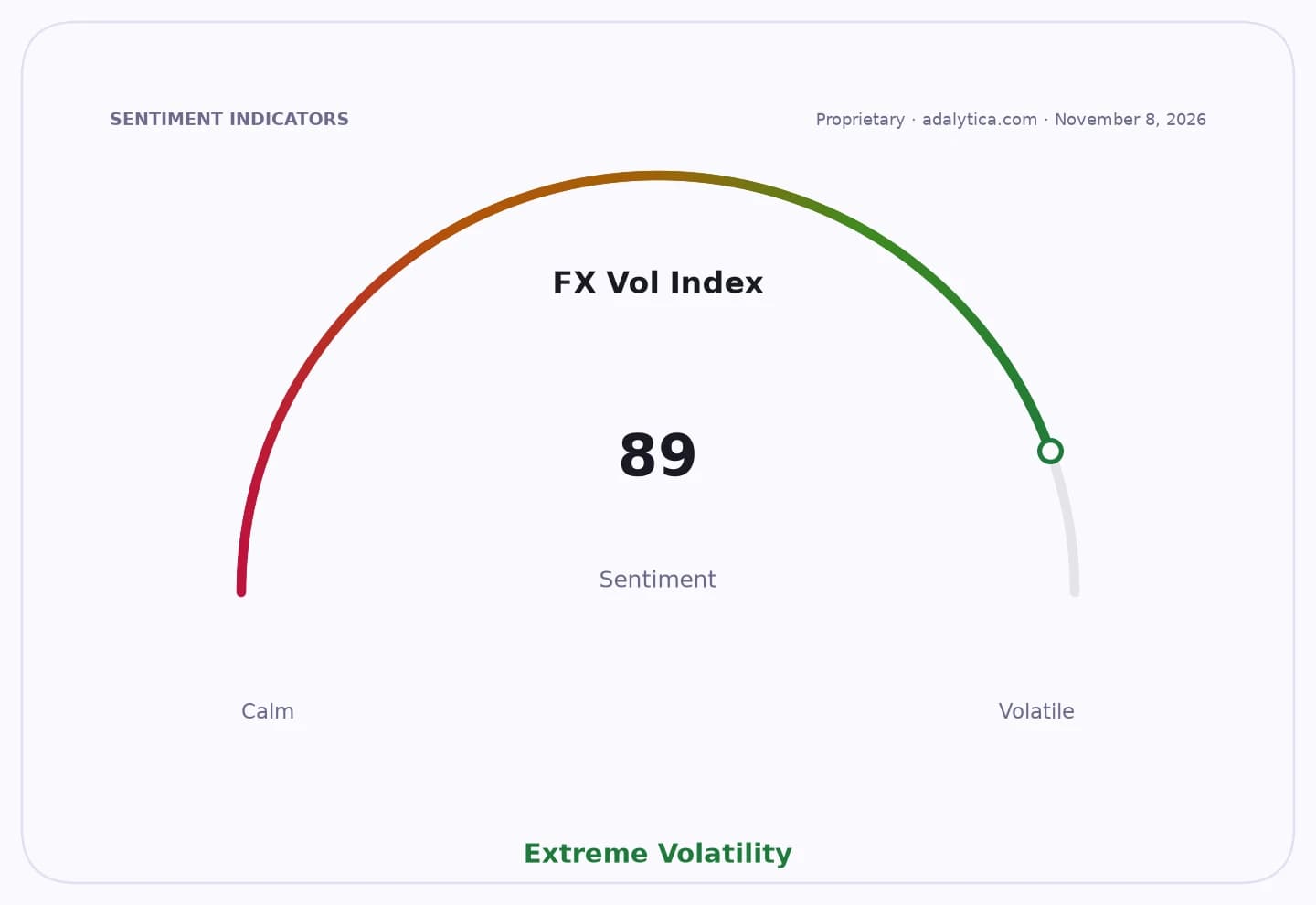
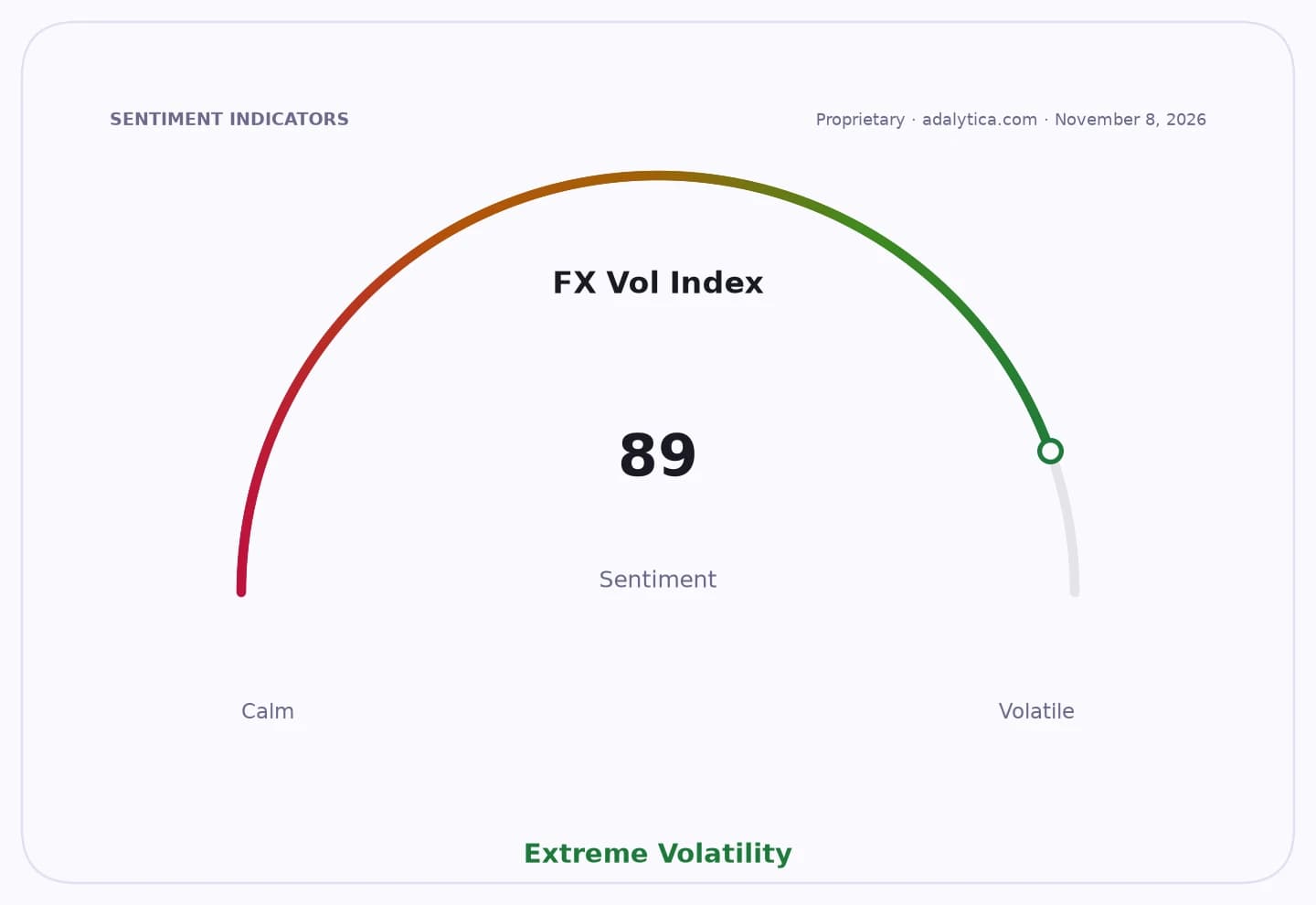
That dynamic is showing up in market pricing. The yen-tracking FXY ETF finished at 58.04 on Nov. 9, close to its recent range and above its 50-day moving average of 58.23, while the U.S. dollar ETF UUP held at 28.97, just below its 50-day average of 28.70 and above the 200-day average of 27.98. The dollar trade signal from Adalytica.com was at 85, labeled “Greed,” with awareness at 66, while FX volatility sentiment stood at 89, also “Extreme Greed,” suggesting traders are already bracing for larger moves.
Bond markets are adding to the uncertainty. The 10-year Treasury yield was forecast at 4.829% for Nov. 9, after recent prints around 4.86%, while the 10-year/2-year spread sat at 0.32 percentage point, down from 0.38 earlier in the week. That combination points to a market still trying to balance hopes for growth with lingering questions over how long the investment boom can last.
For investors, the key issue is whether the post-election mood change in Washington reinforces or disrupts the U.S. exceptionalism trade. A blue-wave outcome could weaken expectations for aggressive policy shifts that have supported dollar strength, while any sharper pullback in AI-related stocks could reduce demand for the greenback and support the yen through unwinding of leveraged positions.
The next catalyst is whether the market extends the move beyond election headlines into rates and equity positioning. A further drop in U.S. tech shares or a softer Treasury yield backdrop would likely favor the yen; a renewed bid for risk assets would keep the dollar in control.
| Entity | Gains | Losses |
|---|---|---|
| Japanese yen | ▲Safe-haven demand | ▼Carry-trade unwinds |
| U.S. dollar | ▲Risk-on flows | ▼AI trade reversal |
| U.S. tech stocks | ▲Stable risk appetite | ▼Portfolio de-risking |
| FX volatility traders | ▲Higher swings | ▼Low-volatility carry bets |