Singapore’s manufacturing sector stayed in expansion in July, with the Purchasing Managers’ Index rising to 51.4 from 51.0, but the modest gain comes as supply-chain pressures tied to Middle East disruptions continue to hang over trade-dependent exporters.
Singapore Manufacturing PMI Rises to 51.4 in July

The reading matters because Singapore is a bellwether for Asian trade and shipping, and a level above 50 still points to growth even if the pace remains thin. For investors, the data suggests factories are holding up rather than accelerating, leaving little room for a broad re-rating in cyclical stocks unless supply conditions improve and external demand firms.
The July PMI improvement also comes against a backdrop of uneven global manufacturing. US factory activity has remained resilient, while parts of Europe and Asia have shown a more mixed recovery, leaving Singapore exposed to shifts in shipping routes, freight costs and delivery times linked to geopolitical tensions in the Middle East.
That combination is relevant for markets watching inflation and margins. Persistent transport bottlenecks can support input costs even when demand is only gradually recovering, a risk for manufacturers, logistics firms and companies dependent on just-in-time inventory flows.
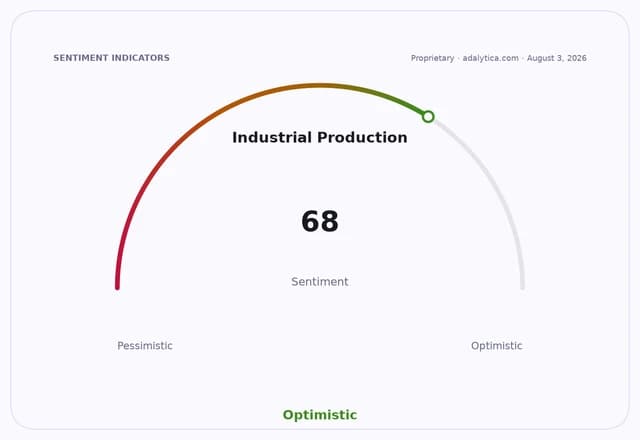
Adalytica’s industrial production sentiment is still neutral at 68, while its PMI trend recession gauge remains in fear territory at 29, underscoring the market’s caution even as headline data stays in expansionary mode. The next focus is whether August surveys show the July uptick broadening out or fading under continued supply-chain strain.
| Entity | Gains | Losses |
|---|---|---|
| Singapore manufacturers | ▲Continued expansion | ▼Thin margin for error |
| Shipping and logistics firms | ▲Higher demand for rerouting | ▼Higher disruption costs |
| Exporters with diversified supply chains | ▲Relative resilience | ▼Firms exposed to delays |
| Consumers and importers | ▲Avoid deeper slowdown | ▼Potentially higher freight prices |