Smaller-company funds have done something investors should notice: they have reduced their liquidity risk even as valuations climbed.
Small-cap funds cut liquidity risk as valuations rise
That combination matters because small-cap stocks usually carry the twin dangers of richer prices and thinner trading. When those risks move in opposite directions, it suggests fund managers are getting better at owning a market that still has the potential to swing hard in a sell-off.
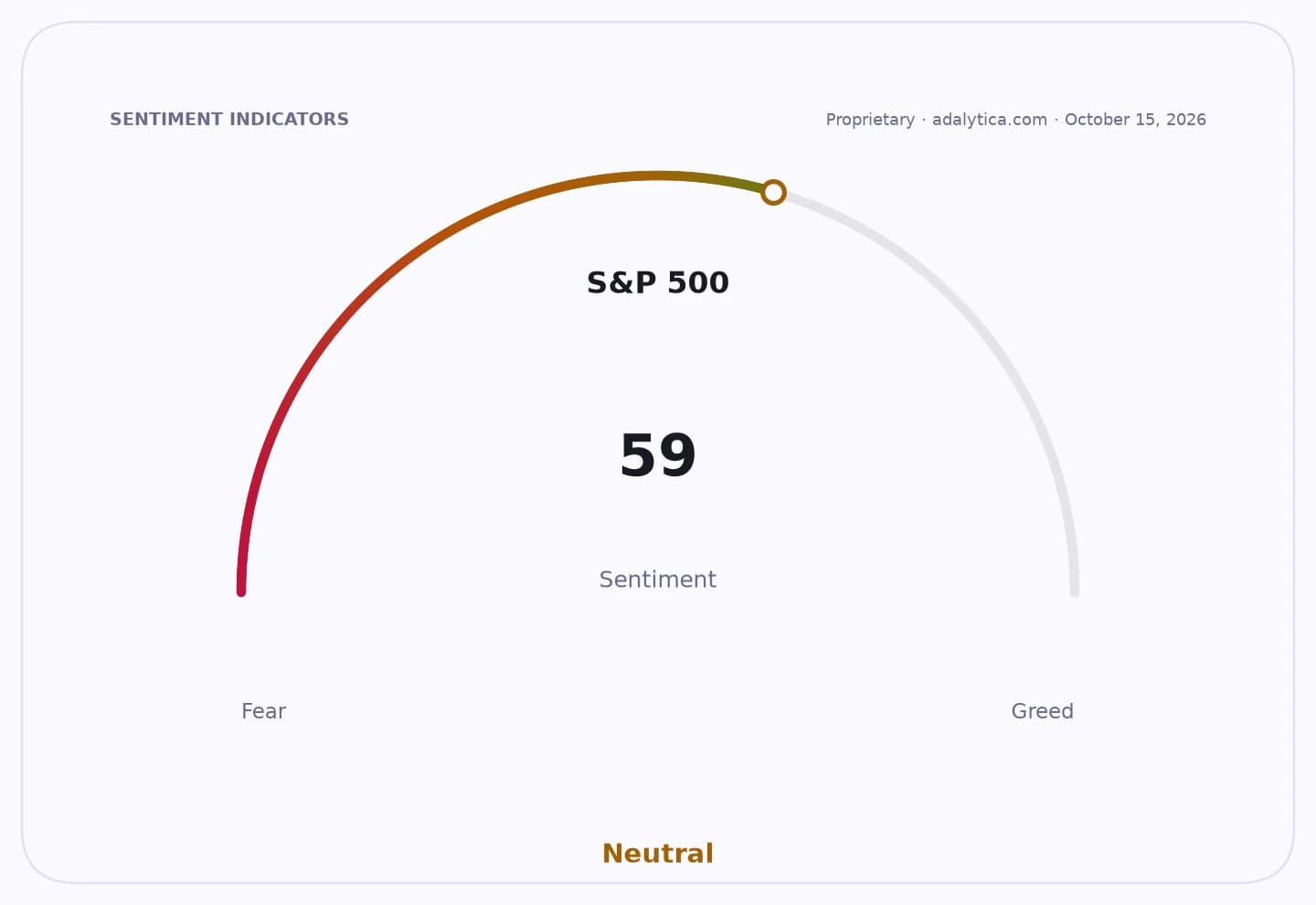
Sentiment IndicatorsⓘProprietary · adalytica.com · October 21, 2026
This is a snapshot — live sentiment, awareness and momentum for 130+ markets update continuously in the dashboard.Open AlphaPulse
A bl.portfolio analysis of AMFI stress-test data for 31 actively managed small-cap schemes found the category’s average time to liquidate half a portfolio fell to 11.9 days in September 2026 from 17.6 days a year earlier. The time to unwind 25 per cent of holdings dropped to 6.2 days from nine days, even as the Nifty Smallcap 250’s price-to-earnings ratio rose to 34.45 from 29.96.
For long-term investors, that is a meaningful shift. It does not make small caps safe, but it does make them less fragile than they were a year ago. In a market where liquidity can vanish quickly, that improvement can limit forced selling, reduce portfolio damage in stressed conditions and give fund managers more room to stay invested through volatility.
The improvement was broad-based. Nineteen of the 31 schemes improved their 50 per cent liquidation time, including several large funds. Tata Small Cap cut its estimate to 35 days from 63 days, Quant Small Cap to 46 days from 71 days, HDFC Small Cap to 52 days from 69 days, SBI Small Cap to 51 days from 61 days and Nippon India Small Cap to 27 days from 43 days.
Only five schemes saw their liquidity metrics worsen, while seven were unchanged. That pattern suggests the category is not just relying on one or two outliers; the whole segment has become easier to trade around.
The main driver was higher market activity. Trading value in Nifty Smallcap 250 stocks on the NSE rose 24% to ₹31.8 lakh crore in April-September 2026 from ₹25.6 lakh crore in the prior six months. That is crucial because liquidity stress tests are heavily influenced by trading volumes: the more stock changes hands, the faster a fund can theoretically exit positions.
Managers also appear to have made portfolios more liquid. The share of Nifty 100 stocks in small-cap fund portfolios rose to 22% from 18% a year earlier, indicating a tilt toward larger, more actively traded names. Several funds also increased midcap exposure, while 22 of the 31 schemes added more holdings overall. Bandhan Small Cap now owns 269 stocks, the most in the category, after adding 39.
That diversification matters for investors because it lowers reliance on any single position. A wider portfolio can make it easier to meet redemptions without dumping a concentrated book into a weak market. In plain English: managers have made the funds more resilient.
Still, investors should not confuse better stress-test results with a guarantee of safety. Small-cap liquidity can disappear quickly during a market-wide panic, especially if valuations are already stretched. The recent easing in risk is reassuring, but it does not erase the structural reality that small-cap funds remain more vulnerable than large-cap funds when sentiment turns.
That is why the story matters beyond one fund category. It shows disciplined portfolio construction can reduce some of the dangers of owning expensive small caps, but it also reinforces the case for patience and diversification. For investors building wealth over years, not weeks, small-cap funds can still play a role — just not as the whole portfolio. The best takeaway is to keep them on the watchlist, size them modestly and treat liquidity as a permanent risk, not a one-time problem. | Entity | Gains | Loses |
| -------- | ------- | ------- |
|---|---|---|
| Small-cap fund managers | ▲Lower stress risk | ▼Less room for complacency |
| Long-term investors | ▲Better exit profile | ▼Still exposed in sell-offs |
| Large-cap funds | ▲Relative stability premium | ▼Less excitement from small caps |
| Illiquid small-cap holdings | ▲More portfolio attention | ▼Potentially lower weightings |