Solar and broader clean-energy stocks are trading as one of the market’s most battered corners, even as the case for long-term demand remains intact and in some areas is strengthening.
Solar Stocks Fall as Rates and Oil Stay High

The immediate force weighing on the group is simple: high interest rates, volatile policy support and intense competition have compressed valuations across the sector, while a rebound in oil and fear over geopolitics has kept traditional energy attractive to investors. The result is a stark divergence between the economics of renewable projects and the market price being assigned to them. For investors, that disconnect matters because it is pushing solar and renewable assets toward distressed pricing just as the secular buildout in power demand, storage and electrification continues.
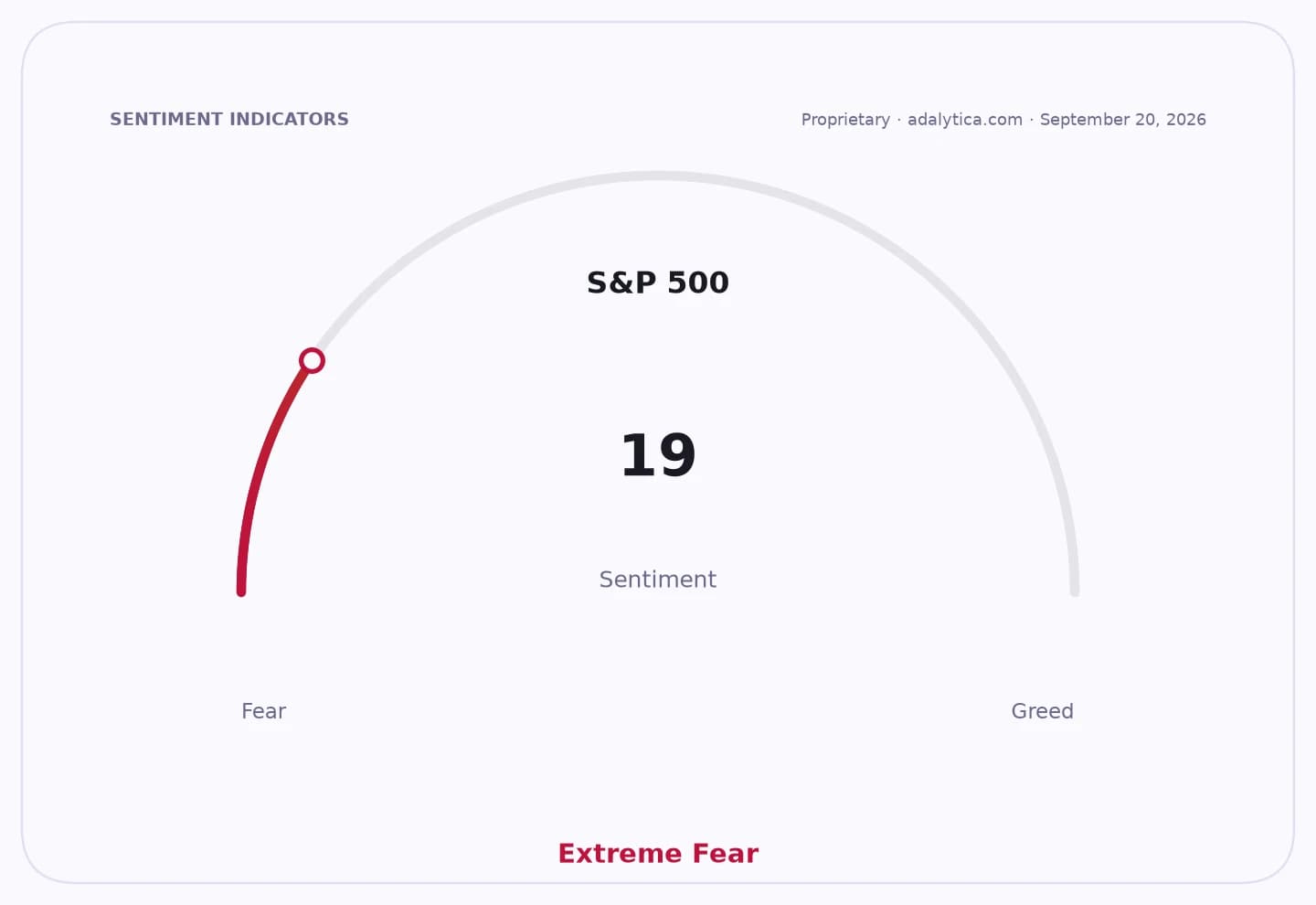
Sentiment IndicatorsⓘProprietary · adalytica.com · September 27, 2026
This is a snapshot — live sentiment, awareness and momentum for 130+ markets update continuously in the dashboard.Open AlphaPulse
The 10-year Treasury yield rising to around 5.19% in the latest data underscores why the market has punished capital-intensive clean-energy names. Higher discount rates hit solar developers, independent power producers and yield-oriented renewable vehicles harder than most sectors because their cash flows are long dated and heavily financed. That has been visible in solar exchange-traded funds and listed names alike: the TAN solar ETF fell to 44.06 on Sept. 25 from 58.10 in early February, while ICLN, a broader clean-energy fund, slipped to 17.23 from a 2026 high of 23.69. First Solar, one of the sector’s strongest U.S. manufacturers, dropped to 177.71 from 284.59 in December, a reminder that even the higher-quality balance-sheet stories have not escaped the de-rating.
The pressure is not just about rates. Oil at about $94.13 a barrel in the latest forecast, after trading above $100 earlier this month, keeps fossil fuels in the conversation for policymakers and investors focused on near-term energy affordability and security. Adalytica’s USO oil trade signal sits at “Extreme Greed,” while its global stability gauge remains elevated, reflecting the market’s preference for assets tied to immediate cash flow and geopolitical risk hedging. That has helped sustain capital flows into conventional energy and coal at the same time clean-energy valuations have been cut down.
DGS10 — macro contextadalytica.com
Explore this data interactively — full history, time series and cross-market comparisons.Open AlphaPulse
For solar companies, the harshest part of the story is that operating conditions remain fragile even where demand exists. First Solar’s own filing highlights the importance of subsidies, tax incentives and trade policy to the economics of utility-scale solar. Rival Enphase said the prolonged softness in solar demand has contributed to distributor and installer bankruptcies and closures across the channel, a sign the pain is moving beyond share prices and into the industry’s distribution base. That matters because weaker channel health can delay installations, pressure pricing and slow revenue recognition even for companies with solid technology franchises.
Yet the bear case is not the whole story. The bull argument is that today’s pricing reflects a cyclical washout, not the end of renewables. Solar remains one of the fastest-growing forms of power generation, and utility-scale projects still benefit from speed of deployment and the need for new electricity supply. For investors with a longer horizon, that suggests the market may be discounting too much bad news at once: financing conditions, policy risk, trade friction and a weak installation cycle. If rates eventually ease and supply chains normalize, the sector could re-rate sharply from depressed levels.
The crucial question is not whether renewables are under pressure now — they clearly are — but whether the market is already pricing in a prolonged slump that proves too pessimistic. If power demand continues rising and policy support holds in the U.S. and key overseas markets such as India, the companies with the strongest balance sheets and the least reliance on fragile channel partners could emerge as the survivors of a sector-wide reset. For now, though, solar looks less like a growth trade and more like a liquidation sale.
| Entity | Gains | Losses |
|---|---|---|
| Fossil fuel producers | ▲Higher near-term cash flow | ▼Less investor urgency to rotate out |
| Solar developers | ▲Lower replacement costs over time | ▼Higher financing costs, weaker valuations |
| First Solar | ▲Relative quality premium | ▼Shares hit by sector de-rating |
| Installers/distributors | ▲Potential consolidation later | ▼Bankruptcy and margin pressure now |