Sony and Warner have put Anthropic in the middle of the AI industry’s most expensive problem: who pays when models are trained on copyrighted works. The new lawsuit matters because it raises the odds that AI developers will have to spend far more on licensing, settlements and legal defenses, and those costs could eventually reshape the economics of the entire sector.
Sony and Warner sue Anthropic over AI training

For investors, that is a bigger issue than one company’s court fight. Anthropic is backed by Amazon, and the dispute lands at a moment when the market is already asking whether the race to build larger, smarter models will force Big Tech and AI start-ups to trade growth for margin pressure. If courts decide that songs and lyrics used in training were copied without permission, the fallout could extend well beyond Anthropic to the broader cloud and model-building ecosystem.
This is part of a wider pattern. AI firms have been hit with a growing wave of copyright suits from publishers, authors, media companies and now music rights holders, all arguing that the value of their content is being used to power systems that can compete with them. The industry’s defense has generally been that training falls under fair use or other legal protections, but that argument is increasingly being tested in courtrooms as the commercial stakes rise.
The economics are straightforward. Data is one of the most important inputs in AI, and if that input has to be licensed at scale, the cost structure changes. Instead of a software-like model with huge operating leverage, the business could start to look more like media or telecom, where access to content and distribution comes with recurring fees. That would not kill AI investment, but it could slow the pace of profit expansion and reward the biggest players with the deepest balance sheets.
Amazon investors should pay attention because Anthropic is one of the companies helping to make AWS more relevant in the AI build-out. A prolonged legal overhang would not necessarily derail that strategy, but it could add noise around a key growth narrative at a time when cloud providers are trying to prove that AI spending can translate into durable returns.
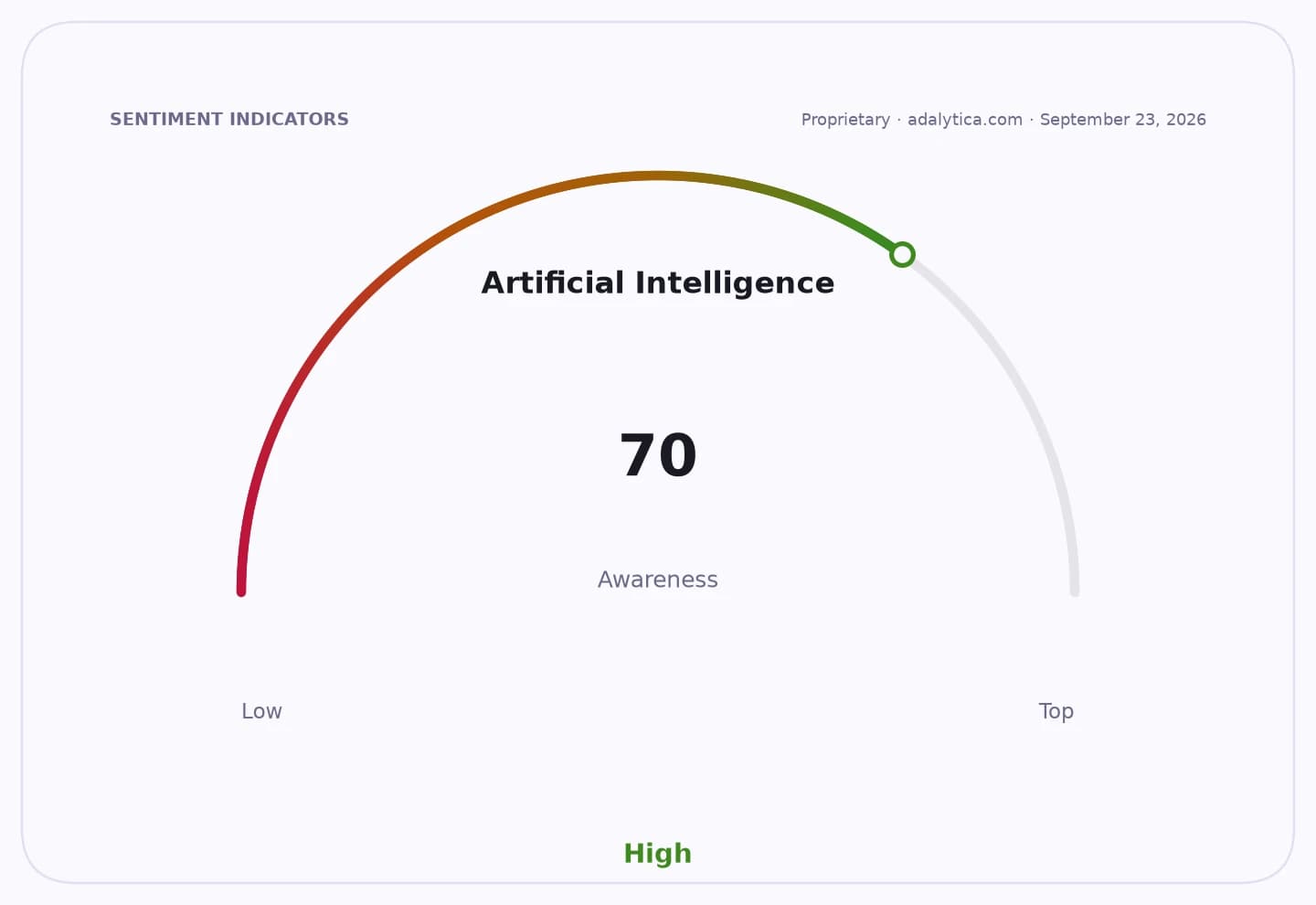
Technically, the sentiment around AI remains fragile. Adalytica’s AI sentiment snapshot shows “Extreme Fear,” which fits the mood when headline risk shifts from product launches to lawsuits and regulation. That does not change the long-term case for artificial intelligence, but it does reinforce a simple investor lesson: the winners may be the firms that can combine model quality with legal durability, licensing discipline and enough scale to absorb the cost of doing business.
For long-term investors, this is less a reason to abandon AI than to respect the risks behind the boom. The best approach is still to own the companies with the strongest moats, the largest cash flows and the ability to keep investing through turbulence. This lawsuit is worth watching because it could help decide which AI businesses become enduring compounders and which ones get squeezed by the price of their own ambition.
| Entity | Gains | Losses |
|---|---|---|
| Sony and Warner | ▲Leverage in licensing talks | ▼Litigation costs and uncertainty |
| Anthropic | ▲— | ▼Legal risk and higher training costs |
| Amazon | ▲More scrutiny on Anthropic stake | ▼AWS AI narrative pressure |
| AI content owners | ▲Stronger bargaining power | ▼Faster model development by rivals |