South Africa’s business confidence slid to its weakest level in two years in the third quarter, underscoring how fragile domestic demand and global uncertainty continue to hold back investment and hiring.
South Africa business confidence falls to two-year low

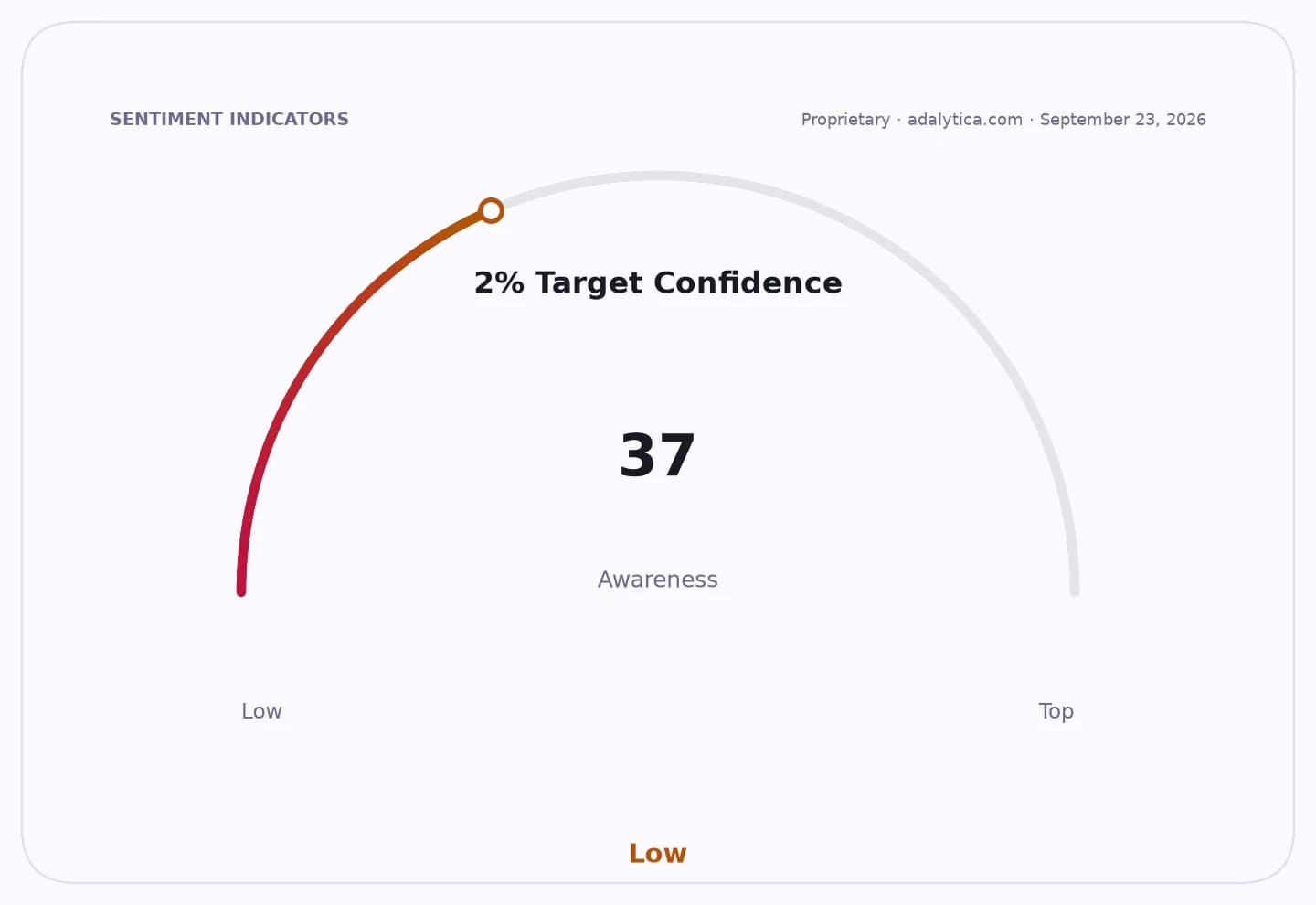
The quarterly confidence index compiled by FirstRand’s Rand Merchant Bank and Stellenbosch University’s Bureau for Economic Research fell to 38 from 39 in the three months through September, the lowest reading since the third quarter of 2024. While the move was modest, the level remains deeply subpar by historical standards and suggests companies are still operating in a low-growth, high-caution environment.
That matters economically because business confidence is often an early read on capital spending, inventory decisions and job creation. RMB’s chief economist Isaah Mhlanga said sentiment has stabilised, but at a level “too low to support the stronger investment and employment growth South Africa needs.” In practical terms, that means the economy risks remaining stuck with limited fixed investment, weak productivity growth and only sluggish labour market gains.
The decline was broad-based, with confidence falling in four of the five sub-indexes. New-vehicle dealers saw the sharpest deterioration, with the sector index dropping 11 points to 38 as stock levels outpaced demand and stronger new-car sales were nearly offset by weakness in the used-car market. Manufacturers were the second-biggest drag, with their gauge falling to 27 from 31 as local demand stayed weak and export volumes deteriorated amid slower global growth.
The manufacturing reading is especially important because it points to spare capacity across the industrial base. RMB said capacity utilisation also fell, a sign firms are not yet seeing enough demand to justify running plants harder, much less expanding them. That weakens the transmission from any temporary easing in input costs into broader activity, because cheaper costs do little if order books remain thin.
The survey was conducted in the second half of August, after some of the acute pressure from the earlier oil shock tied to the war in Iran had eased and inflation moderated. The South African Reserve Bank also left its benchmark rate at 7% after a 25-basis-point hike in May, citing growth concerns and softer inflation assumptions. That pause may help support borrowers, but it is not yet enough to revive confidence in a meaningful way.
For investors, the message is that South Africa’s equity and credit story still depends less on a quick cyclical rebound than on a more durable improvement in policy execution, municipal governance and household demand. The country’s listed retailers, car dealers, industrials and manufacturers all need stronger end-demand to translate lower cost pressures into earnings growth. In that sense, the business confidence data is less a market-moving surprise than a warning that the earnings recovery remains narrow and vulnerable.
RMB said local government elections will be an important test for sentiment in the final quarter, given lingering concerns over service delivery and governance. If uncertainty persists, businesses may keep delaying spending and hiring decisions, leaving the economy vulnerable to another quarter of subdued activity even if inflation and input-cost pressures continue to ease.
| Entity | Gains | Losses |
|---|---|---|
| Businesses with strong balance sheets | ▲Wait for better conditions | ▼Firms reliant on weak demand |
| South African consumers | ▲Benefit from easing input costs | ▼Face limited job creation |
| Manufacturers with spare capacity | ▲Avoid overexpansion | ▼Underutilized plants and margins |
| Investors in reform-led recovery | ▲Gain if certainty improves | ▼Those betting on a quick rebound |