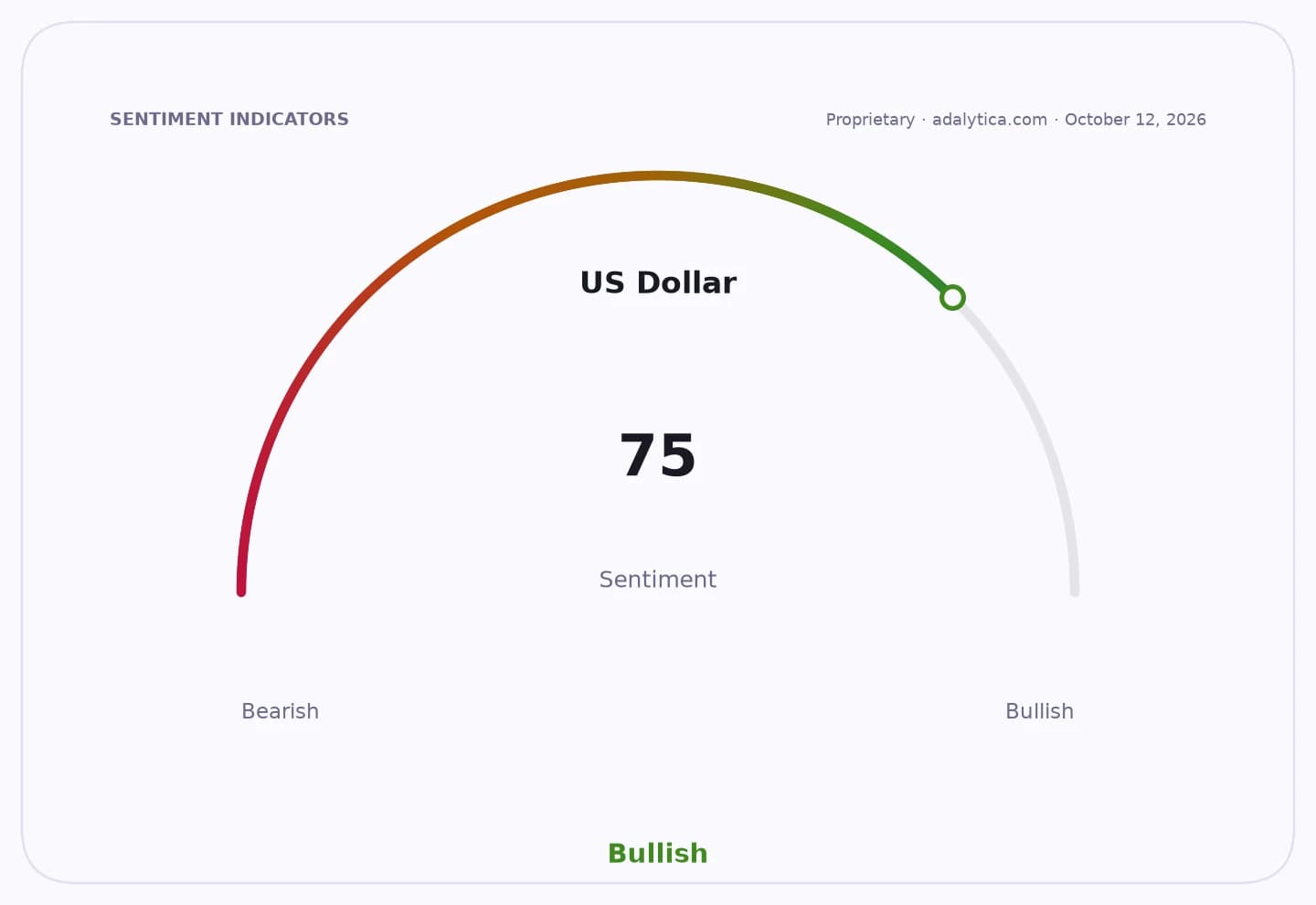
The South African rand edged up 0.2% against the dollar on Wednesday as markets positioned for US inflation data that could decide whether the Federal Reserve keeps rates unchanged later this month and how long dollar strength can persist.
South African Rand Edges Up Before US Inflation Data

That move matters far beyond a single currency tick. For South Africa, a firmer rand can ease imported inflation, support local bond prices and give the Reserve Bank a little more room to stay patient. For global investors, the bigger question is whether the dollar’s recent surge has run ahead of itself ahead of the next Fed decision, or whether hot inflation keeps US yields elevated and leaves emerging-market currencies vulnerable.
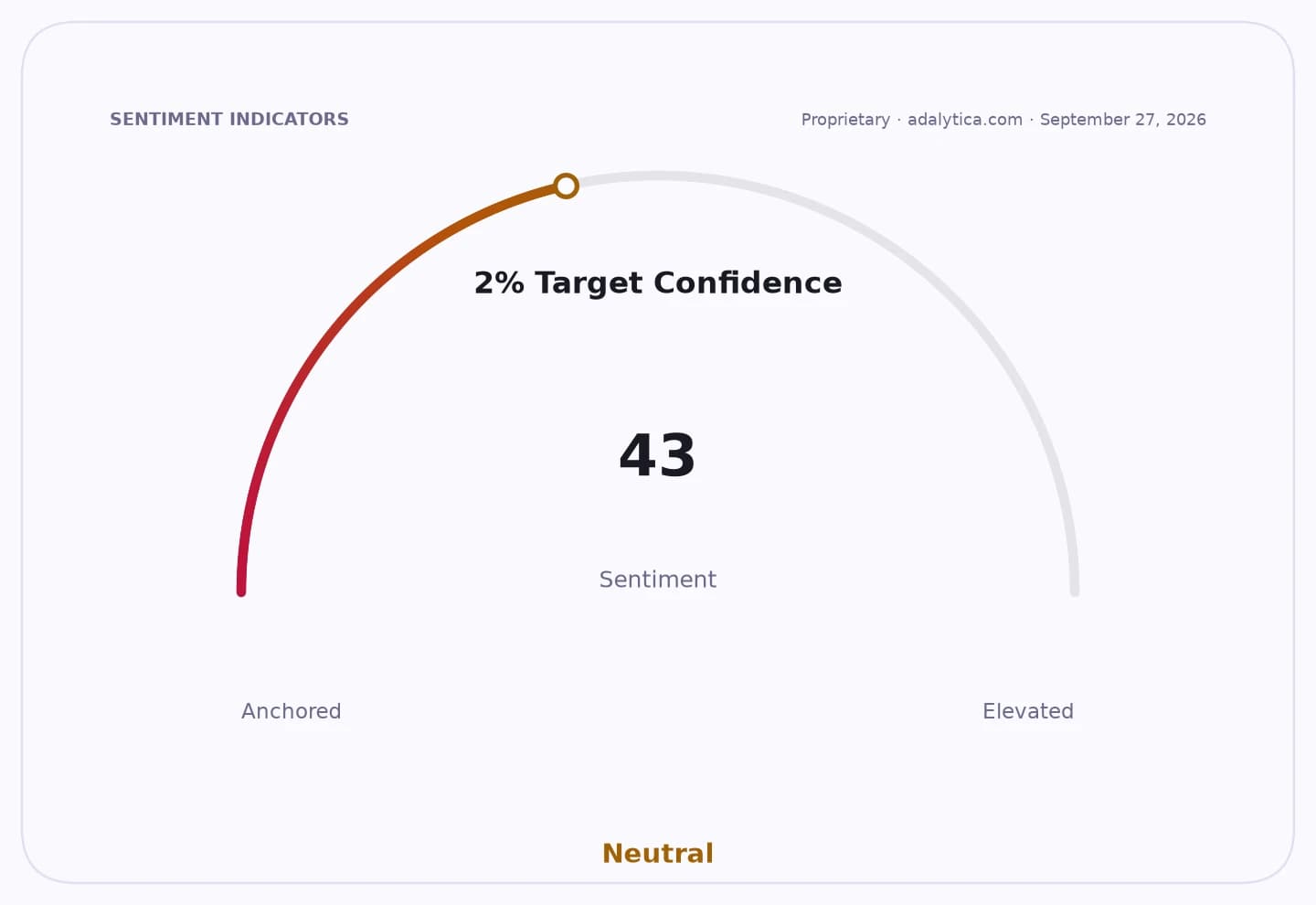
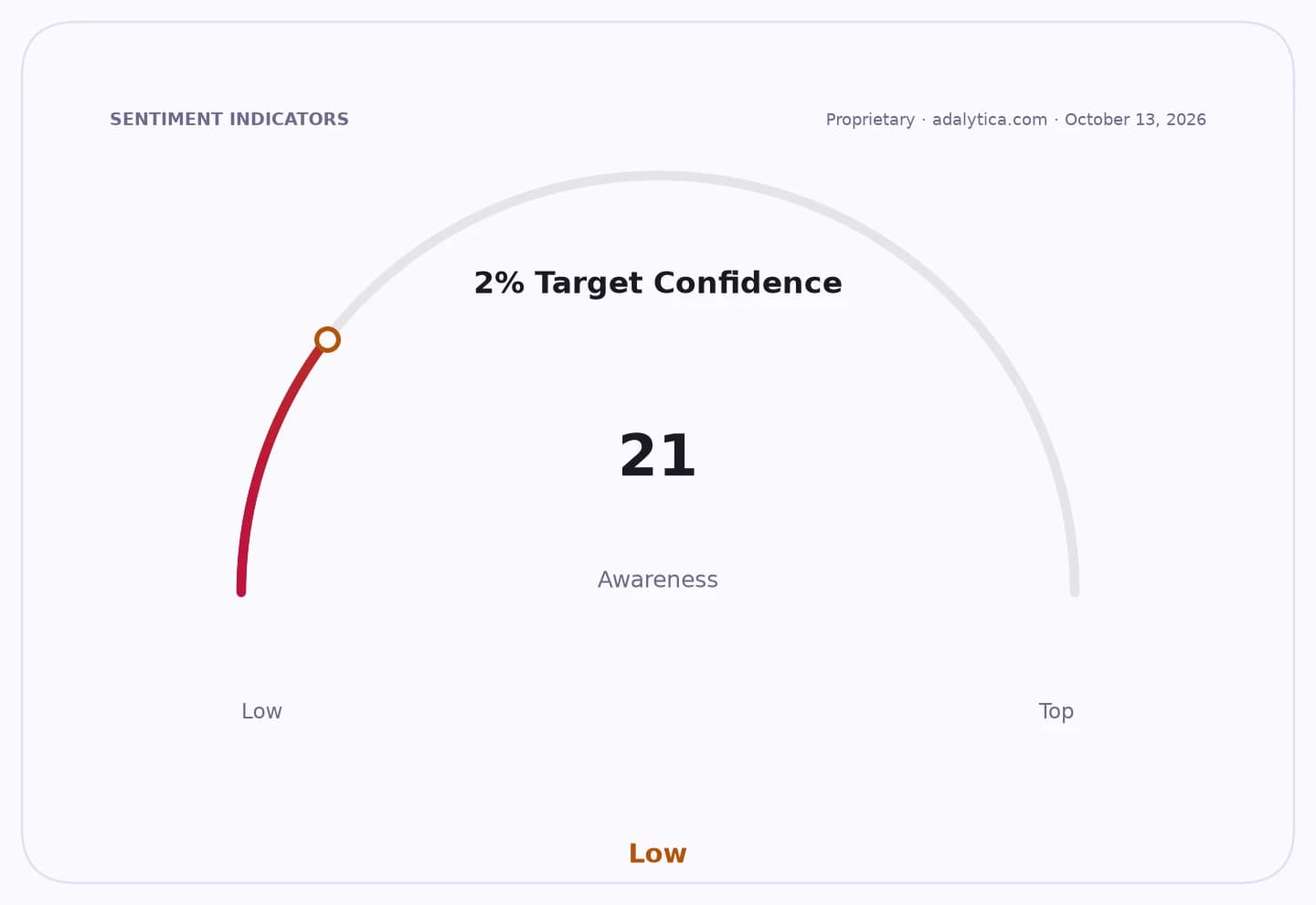
Sentiment IndicatorsⓘProprietary · adalytica.com · October 15, 2026
This is a snapshot — live sentiment, awareness and momentum for 130+ markets update continuously in the dashboard.Open AlphaPulse
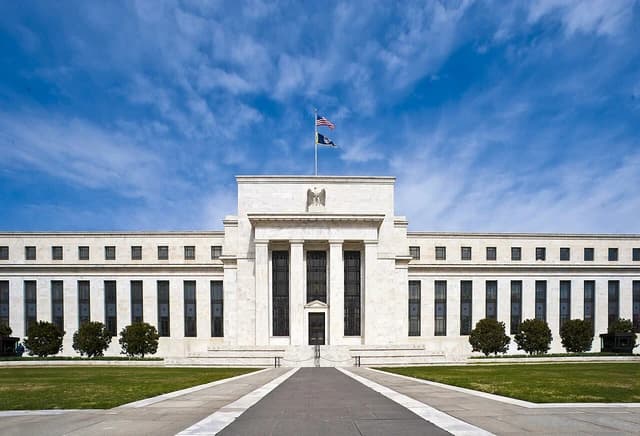
The rand was quoted at 16.4550 per dollar, while the dollar index slipped to 102.1 after falling 0.35% on Tuesday. Traders are focused on US consumer price data due later in the day, a key input ahead of the Federal Reserve’s Oct. 27-28 meeting. CME FedWatch data showed markets saw a 77% chance of no change in rates, up from 51% a month ago, underscoring how quickly expectations have shifted toward a pause.
That shift is the real market driver. Even a modestly softer US inflation print can trigger a sharp relief bid in high-yield emerging-market assets such as the rand, because it reduces pressure on Treasury yields and trims the dollar’s carry advantage. A hotter reading would do the opposite, reinforcing the case for tighter-for-longer US policy and pressuring risk-sensitive currencies that depend on global capital inflows.

South Africa has little domestic data to offset the external impulse, leaving the rand unusually exposed to the direction of US rates and global risk appetite. That is why the currency is trading less like a local story and more like a proxy for the market’s view on the Fed, inflation and dollar liquidity.
The bond market is already signaling some support for that view. South Africa’s benchmark 2035 government bond yield fell 8 basis points to 8.68% early in the session, implying firmer prices and a small easing in financial conditions.
For investors, the setup argues for staying close to the dollar and to rate-sensitive emerging-market assets rather than treating the rand’s move as noise. If US inflation cools, the trade could extend into a broader rotation into carry currencies and local bonds. If it does not, the dollar rebound may resume quickly, and the rand would likely give back today’s gain just as fast.
| Entity | Gains | Losses |
|---|---|---|
| South African rand | ▲Relief if US inflation cools | ▼If dollar rebounds on hot CPI |
| South African government bonds | ▲Lower yields, firmer prices | ▼Higher US yields, tighter global liquidity |
| US dollar | ▲Benefits from hawkish Fed repricing | ▼If inflation undershoots expectations |
| Emerging-market FX bulls | ▲Better carry appetite | ▼Stronger-for-longer US rates |